

A record Ebola outbreak has crossed three borders, while the global treaty meant to guarantee Africa fair access to vaccines remains stuck in negotiation, leaving the continent funding its response through emergency appeals instead of guaranteed shares.
The Bundibugyo Ebola outbreak, which has already spread beyond the Democratic Republic of Congo (DRC) to Uganda and through imported cases to Germany and France, is now the fastest-growing Ebola outbreak ever recorded and the second largest since the virus was first identified in 1976, surpassing the notorious 2018-2020 eastern DRC epidemic.
However, the global treaty built to stop exactly this kind of catastrophe from overwhelming the world’s poorest regions is still unfinished, more than a year after member states formally adopted it.
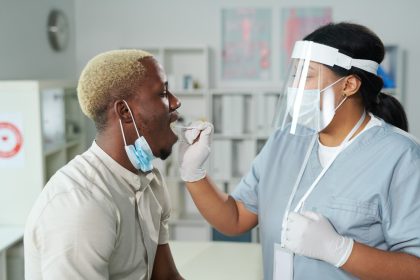
The current epidemic is caused by the Bundibugyo species of Ebola, a rarer and less-studied variant than the Zaire strain that underpins most existing vaccines and therapeutics. The World Health Organization (WHO) declared it a Public Health Emergency of International Concern on 17 May, moving before its own Emergency Committee had even finished convening.
Director-General Dr Tedros Adhanom Ghebreyesus cited five factors behind the decision, including rising infections, healthcare workers among the dead, the mass displacement of more than 100,000 people in the conflict-torn Ituri province, a high-traffic mining corridor accelerating spread, and a bare medical cabinet.
The numbers have only worsened since. By late July, the Democratic Republic of Congo (DRC) had reported more than 3,600 confirmed cases and close to 1,600 deaths. It is the country’s 17th Ebola outbreak since 1976, arriving barely five months after the last one ended.
The Africa Centres for Disease Control and Prevention (Africa CDC) and the WHO launched a joint continental response plan in June, costing about US$518 million (Ksh67 billion). Within weeks, Africa CDC Director-General Jean Kaseya told the African Union that figure had very nearly tripled, to US$1.4 billion (about Ksh181 billion), as the outbreak outran its own projections.
The gap between billion-dollar pledges and a stalled $16 million ask is close to what the Pandemic Agreement exists to prevent
An AU high-level meeting mobilised US$910 million (Ksh118 billion) in pledges, the vaccine alliance CEPI put in more than US$60 million (Ksh7.8 billion) for candidates, and the Pandemic Fund released a US$220 million (Ksh28.5 billion) emergency package. Even so, Africa CDC was still appealing in early July for a comparatively modest US$16 million (Ksh2.1 billion) just to keep therapeutic trials running in Bunia.
That gap between billion-dollar pledges and a stalled $16 million ask is close to what the Pandemic Agreement exists to prevent. Adopted at the 78th World Health Assembly in May 2025, the agreement grew directly from the recognition that Covid-19 had exposed a multilateral system too slow and too fragmented to match the pace of an escalating health threat. Its single most consequential piece, the annex on Pathogen Access and Benefit Sharing (PABS), remains unresolved.
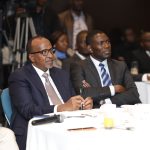
Aggrey Aluso, director for the Africa region at the Pandemic Action Network, does not think the timing is a coincidence. Speaking on Willow’s Lifeline Dialogues recently, he was candid about what is at stake. “If it is not passed, then the agreement is not operational.”
WHO’s own record of the talks shows how hard consensus has been to reach. The Intergovernmental Working Group tasked with drafting the annex has now met at least seven times. Member states blew through their original May 2026 deadline and agreed to keep going. At the seventh round, held in Geneva in mid-July, Bureau co-chair Matthew Harpur described the talks as “reflecting a shared determination to build an equitable system”, while conceding the annex was not finished. Negotiators have pencilled in an eighth round for 14–18 September.
Aluso’s read on why the talks keep stalling is sharper than diplomatic language usually allows. “We are only as safe as our weakest link,” he said. Covid-19, he argued, should have taught the world that pandemic risk respects neither borders nor bank balances, yet the instinct to protect the privileged corner of the room first is playing out again.
A small country cannot bargain as equals with a major pharmaceutical power when the leverage is access to lifesaving drugs
At the heart of the disagreement is a proposed requirement for manufacturers to set aside 20 per cent of pandemic-related vaccines, diagnostics and treatments for WHO-coordinated distribution, half free and half at cost price. Aluso calls this a starting point.
A blanket percentage, he says, does nothing to build manufacturing capacity where none exists, and Africa carries roughly a quarter of the global disease burden with around a sixth of the world’s population, yet manufactures almost none of the vaccines it consumes.
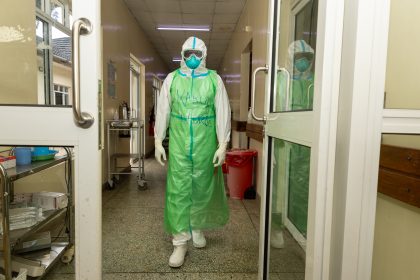
His case is that any credible benefit-sharing deal has to go further than product allocation and include intellectual property and technology transfer, building the industrial capacity to respond to outbreaks rather than handing over doses after the fact. He is equally sharp about a parallel trend worrying civil society, where wealthier states strike bilateral pathogen-sharing deals directly with individual African governments while the multilateral talks drag on.
“You can’t claim they’re negotiating on the same terms,” he said. His argument is that a small country cannot bargain as equals with a major pharmaceutical power when the leverage is access to lifesaving drugs, and that fragmenting the African position country by country weakens everyone’s hand.
Kenya’s own delegation in Geneva has named PABS one of its central priorities, underscoring what African states say they stand to lose from further delay. Ambassador Fancy Too, Kenya’s Permanent Representative to the UN Mission, said after an earlier World Health Assembly session that the pathogen and benefit-sharing system (PABS) was among the issues Kenya had been at the core of to get onto the global health agenda.
Deputy Permanent Representative Ambassador James Ndirangu added that Kenya had kept its subscriptions to international bodies current despite domestic fiscal pressure, a record he said some wealthier nations cannot match.
The continental emergency fund built for exactly this kind of outbreak remains thinly resourced, leaving countries to appeal for money from scratch
That is precisely why the delay carries such weight for Kenya and its neighbours. Without a finished PABS annex, there is no guarantee that vaccines, tests and treatments developed from pathogens African outbreaks supply will reach African patients on fair terms, or that the continent builds the manufacturing base needed to stop relying on emergency appeals every time a new epidemic strikes.
That reliance is measurable. The continent still spends under half a per cent of GDP on research and development, against a modest 1 per cent target, and it has never met the 2001 Abuja commitment to put 15 per cent of national budgets into health.
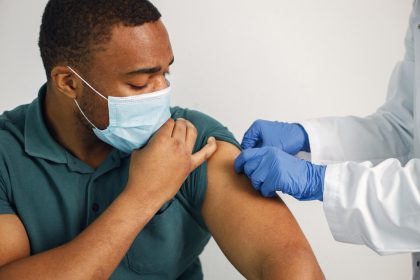
The continental emergency fund built for exactly this kind of outbreak remains thinly resourced, leaving countries to appeal for money from scratch every time a new epidemic strikes rather than deploying pre-committed reserves on day one.
Asked what African governments should prioritise while PABS talks continue, Aluso pointed home rather than to Geneva. “Africa needs to lead first,” he said. Sovereignty over health security, in his view, cannot just be language in a communiqué. It has to show up as budget lines, functioning regional institutions, and laboratories that can sequence a novel pathogen without waiting weeks for outside help.
He wants Africa CDC and the African Medicines Agency built up to full operational strength, so the continent negotiates PABS and the next crisis as a single bloc rather than 54 separate, unequal conversations.
For now, the Ebola response and the PABS negotiations run on separate tracks that keep intersecting. One is measured in daily case counts and funding shortfalls, the other in negotiating rounds and draft annexes still unresolved.
Until they meet, in a treaty that matches Africa’s disease burden with real manufacturing power and financing, the continent’s next outbreak looks set to be fought the same way this one has, with borrowed doses, emergency appeals, and a seat at the table that comes without a vote on its terms.