

Seven rounds in, negotiators still can’t agree whether Africa’s pathogen data will buy it real access to vaccines, or just goodwill.
Global negotiators have wrapped up a fresh round of talks on how pathogens and the benefits derived from them should be shared between countries, as the Bundibugyo strain of Ebola continues to spread across the Democratic Republic of Congo (DRC) and Uganda. The talks, which concluded on July 17 in Geneva, focused on the Pathogen Access and Benefit Sharing (PABS) Annex of the WHO’s Pandemic Agreement, a framework meant to ensure countries that share outbreak data and samples are guaranteed fair access to the vaccines, treatments and diagnostics developed from them.
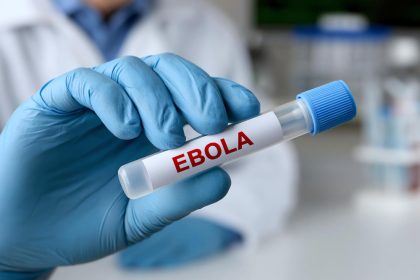
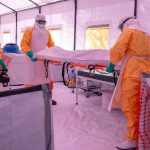
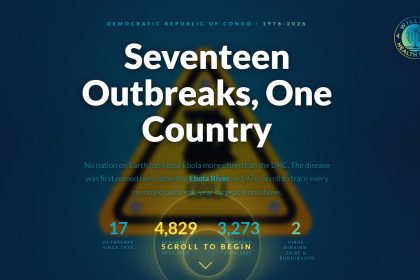
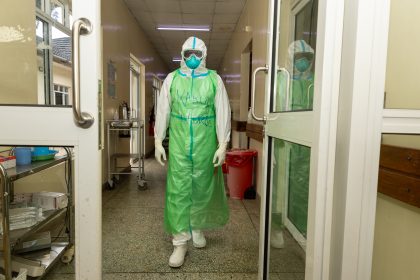
As of July 7, 2026, the Ebola outbreak had recorded 2,145 confirmed cases and 830 confirmed deaths, according to the CDC. The vast majority of cases have been reported in the Democratic Republic of Congo, while Uganda has recorded 20 confirmed cases and two confirmed deaths. The outbreak has added urgency to talks that had stalled for months, giving the Intergovernmental Working Group (IGWG), the UN sub-body negotiating the agreement, what observers describe as a real-world stress test for the PABS system it is trying to build.
The seventh IGWG negotiating session on the PABS Annex ended with member states reporting progress, according to a WHO statement, which said the text had been streamlined while consultations continue on more complex issues. Discussions centred on the contractual arrangements underpinning the framework, the structure of the laboratory networks handling shared pathogens and their sequence data, and how “benefits” arising from that sharing should be defined.
WHO Director-General Dr Tedros Ghebreyesus commended member states for their commitment to “multilateralism, dialogue and to finding common ground,” warning that the next pandemic would not wait for consensus to be reached. “While differences remain, those differences can be bridged if we keep our shared goal in sight: a world where pathogens and scientific information are shared rapidly, and the benefits they generate are shared fairly and equitably. The task is vital, and urgent. The next pandemic will not wait. Neither should we,” he said.
Guarantee countries fair access to products sharing as pathogens move faster than negotiations
Anthony Ombara, a senior advisor at the Resilience Action Network Africa (RANA), told Willow Health Media that PABS is urgent “because pathogens move faster than negotiations.” He said that if countries are expected to share pathogen samples and genetic data, they must in turn be guaranteed fair access to the products developed from that sharing, warning that continued delay carries real costs.

“If the current negotiations continue to stall, countries will continue to face real risks of delayed sharing, slower response, unequal access to lifesaving tools, and growing mistrust among affected communities. This goes against the very reason why the Pandemic treaty came into existence,” he said.
Vaccine inequity has long been a reality on the African continent. A study conducted during the Covid-19 pandemic pointed to vaccine nationalism, where governments signed direct supply agreements with manufacturers, as a key driver of high-income countries securing doses ahead of poorer nations, limiting access to vaccines needed to end the pandemic.
At the centre of the current stalemate is whether the benefits negotiated under PABS will be enforceable or largely voluntary. The Coalition for Epidemic Preparedness Innovations (CEPI), a public-private partnership that funds vaccine development for diseases with pandemic potential, told the seventh IGWG meeting that the Ebola outbreak offers a live test case for the system, and that PABS must be built to support rapid, open sharing of pathogen sequences for AI-enabled research and development.
Africa continues to carry a disproportionate burden of outbreak response despite pathogen sharing
CEPI also called for investment in organisations that fund R&D and hold developers to equitable access commitments, so shared genetic sequences can be turned into products that reach affected populations quickly. It urged the IGWG to consider obligations for PABS-participating manufacturers that improve access without discouraging pathogen sharing upstream.
The outbreak has also fed directly into the data underpinning the negotiations. Ugandan-led scientists first shared Bundibugyo genome data on Pathoplexus on May 19. Pathoplexus, a non-profit, independent viral genome database, describes itself as offering researchers, public health laboratories and response teams a dedicated space to submit, search, download and analyse Ebola Bundibugyo genomic data.
Since its founding in 2024, The Lancet Microbe has quoted its founders describing the platform’s aim to contribute to a more equitable distribution of the benefits derived from pathogen sequence sharing.
African governments have generally been swift and transparent in sharing pathogen data, studies have found, even as the continent continues to carry a disproportionate burden of outbreak response. Ombara said this asymmetry is central to why PABS matters for Ebola specifically: African countries are typically on the frontline of detection but at the back of the queue when benefits are distributed.
“The current Ebola outbreak shows why this cannot wait. As such, the push for the continent is that if African samples, data and frontline intelligence help the world develop tools, then African communities, health workers and response systems should not wait for charity, but have guaranteed access,” he said.
We believe in the free flow of information
Republish our articles for free, online or in print, under Creative Commons licence.