

Experts warn that a dangerous mix of rising disease outbreaks, shrinking donor support, and climate-linked health threats are brewing a perfect storm for the continent.
When health officials from the Africa Centres for Disease Control and Prevention convened their latest weekly briefing, the message was clear: the continent is facing overlapping disease crises while its health systems remain structurally fragile, donor funding is shrinking drastically, and climate change is widening the window for new outbreaks.
The warning arrived as fresh evidence emerged that the threats are not hypothetical. Cholera, measles, mpox, malaria and HIV are all active. Hantavirus disease, a rodent-borne viral illness that causes severe respiratory and haemorrhagic illness in humans, has also recorded new cases in recent weeks, adding to the list of pathogens demanding surveillance attention.
Behind every disease name are families burying children, households losing breadwinners, and communities losing trust in systems that failed to protect them.
“We are dangerously unprepared for the next pandemic,” said Dr Tolbert Geewleh Nyenswah, Africa CDC’s Director of Pandemic Preparedness, Prevention and Response.
The numbers tell a stark story. Since January 2026, cholera has killed 4,000 people and infected 300,000 across 28 African countries. Measles has recorded 75,198 cases and 557 deaths across 21 countries. Mpox remains active with 45,000 cases and 1,200 deaths. Malaria, still Africa’s greatest killer, accounted for 249 million cases and 597,000 deaths in 2025, with the continent bearing 94 per cent of the global burden.
These are not isolated events. They share common roots: weak water and sanitation infrastructure, under-resourced laboratories, fragmented surveillance systems, and health budgets that depend heavily on external donors now pulling back their support. Africa CDC officials said some governments are nearing a “cliff edge,” where international funding drops faster than domestic systems can fill the gap.
Between January 2022 and December 2024, Kenya recorded 12,666 cholera cases and 209 deaths
For Kenya, that vulnerability is not abstract. The country has made measurable gains in health governance while still confronting recurring outbreaks and structural gaps that leave millions exposed. On cholera, Kenya was among a small group of countries, alongside Sudan and Tanzania, that declared an end to recent outbreaks in 2026. But the country’s broader record shows the disease keeps returning.
Between January 2022 and December 2024, Kenya recorded 12,666 cholera cases and 209 deaths across successive outbreaks, repeatedly hitting informal settlements, refugee camps, and counties struck by drought or floods. In Migori County, a 2025 outbreak lasted 58 days, infecting 53 suspected cases, confirming 16 and killing one. Officials credit rapid testing and faster emergency reporting for containing it.
Yet 60 per cent of Kenyans still lack access to safe sanitation, according to 2025 Kenya National Bureau of Statistics surveys. When rains come, they bring not just water but risks, including damaged sanitation systems, overwhelmed drainage and contaminated sources, which push households toward unsafe alternatives. Experts said until that changes, cholera will keep coming back.
Professor Yap Boum, Africa CDC’s Deputy Incident Manager, said vaccines can interrupt outbreaks quickly, but they cannot substitute for infrastructure. “The vaccination is great to stop the spread,” he said. “But WASH is critical to sustain gains.” Water, sanitation and hygiene systems (WASH) are not health sector investments alone; they are the foundation on which every outbreak response is built.
Malaria remains a leading cause of illness and death despite being preventable and treatable
Kenya is also among the three countries alongside Madagascar and Guinea, accounting for 81 per cent of Africa’s confirmed mpox cases in the past six weeks. Since detecting its first case in July 2024, Kenya has recorded 314 mpox cases. The response has included border screening, laboratory testing, contact tracing, and isolation.
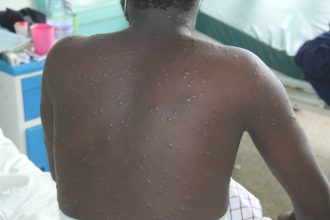
Officials say countries that bring testing closer to communities rather than centralising it in capital cities are achieving faster diagnosis and better containment. On malaria, Kenya’s data shows what sustained investment can achieve.
National incidence fell from 104 to 72 cases per 1,000 population between 2023 and 2025, and malaria mortality dropped 32 per cent over the same period. The country recorded 4.2 million cases in 2024, which is still enormous, but trending downward.
Principal Secretary for Public Health Mary Muthoni, speaking ahead of World Malaria Day last month, acknowledged that the disease “remains a leading cause of illness and death” despite being preventable and treatable.
She said the government’s Kenya Malaria Strategy 2023-2027 aims to cut incidence by 80 per cent, reduce mortality by 90 per cent, and interrupt local transmission in selected counties by 2028. Critically, she said Kenya is expanding domestic co-financing to reduce dependence on external aid, a signal that sustainability is now part of the plan.
Rising temperatures are shifting mosquito habitats and causing resurgence in countries that were approaching elimination
But climate change is complicating that trajectory. Dr Landry Tsague, Africa CDC’s Director for Primary Health Care, warned that rising temperatures are shifting mosquito habitats and causing resurgence in countries that were approaching elimination. “There is a lot to learn about the impact of climate change on malaria,” he said. In Kenya, lake-region counties, coastal areas and arid zones face rising risk as rainfall patterns shift.

Kenya’s HIV response is among Africa’s most innovative. In February 2026, the country became the first in East Africa and among the first globally to introduce Lenacapavir, a long-acting injectable pre-exposure prophylaxis (PrEP) given twice a year.
Health Cabinet Secretary Aden Duale noted that new HIV infections had fallen from 110,000 in 2013 to 15,000 in 2024. About 1.4 million Kenyans still live with HIV. The first rollout phase covers 21,000 starter doses across 15 high-burden counties, including Nairobi, Kisumu, Mombasa, Homa Bay and Kilifi.
That progress, however, faces a new and largely invisible threat. Africa CDC warned that global condom prices could rise by 30 to 40 per cent due to supply chain disruptions. For programs where condoms remain a frontline prevention tool alongside PrEP and treatment, the impact could be significant. “HIV is a health security matter,” Dr Tsague said. “The increase in the cost of condoms is a significant threat to our HIV response.”
African governments should negotiate for technology transfer, production rights, and decision-making authority
Dr Derric Nimmo, Director of Technical Development at the Innovative Vector Control Consortium, speaking in a different forum ahead of World Malaria Day, argued that the continent’s dependency on external partnerships must be redesigned from within. “Empowerment does not happen by accident,” he said. “It must be deliberately built into partnership design.”
That means African governments negotiating not just for aid, but for technology transfer, production rights, and decision-making authority.
“Together, we can accelerate toward a future where no one gets HIV, everyone who needs treatment receives it, and no community is left behind,” said WHO Acting Representative to Kenya Dr Neema Kimambo.
Africa CDC is pushing countries to improve budget execution, reduce fiscal inefficiencies, and explore mechanisms such as health taxes and debt-for-health swaps that can convert national economic assets into health investments. Kenya’s President William Ruto serves as the African Union champion for local manufacturing, placing the country at the centre of that agenda.
Already, Kenya is investing heavily through the Kenya BioVax Institute, where a $60.8 million (Ksh7.85 billion) fill-and-finish vaccine manufacturing facility is under construction, with the capacity to produce up to 72 million doses annually. A second, end-to-end vaccine manufacturing facility valued at $248 million (Ksh32.03 billion) is also under development at the Konza Technopolis.
We believe in the free flow of information
Republish our articles for free, online or in print, under Creative Commons licence.