

Rape, abduction and exploitation are being used systematically against civilians. With healthcare destroyed and stigma silencing survivors, most never receive help within the critical 72-hour window.
Three years of war in Sudan have turned sexual violence into a weapon, collapsed the healthcare system, and left millions of women and girls without protection, medical care or justice.
A 2026 report by Doctors Without Borders, known internationally as Médecins Sans Frontières (MSF), documents the systematic abuse of women and girls in Darfur and other conflict-affected regions, warning that the true scale of the crisis is far greater than reported figures suggest. The findings come as the World Health Organisation (WHO) declares Sudan the site of the world’s largest humanitarian crisis, with 34 million people in need of aid.
Fighting erupted in April 2023 between the Sudanese Armed Forces (SAF) and the Rapid Support Forces (RSF), triggering a collapse of civilian protection across the country. MSF, which has worked in South Darfur since the early 2000s, compiled the report from direct testimonies of survivors. What emerges is a pattern of rape, gang rape, abduction and sexual exploitation carried out during village raids, at displacement sites, and during routine activities such as collecting firewood or searching for food.
“There is something I want to tell you, they came at night and took everything, then they took us,” one survivor recounts.
“They were shooting everywhere. We tried to run, but they caught us. They beat us and raped us in front of our children,” another woman is quoted in the report.
Health facilities across conflict-affected areas have been destroyed, looted or forced to close
The violence is not incidental. The report finds that sexual violence in Sudan is being used deliberately as a weapon of war, particularly in Darfur, where attacks on civilians have been most intense. Perpetrators have used assault as a means of asserting territorial control. “They told us this is our land now, you are nothing,” one survivor recalled.
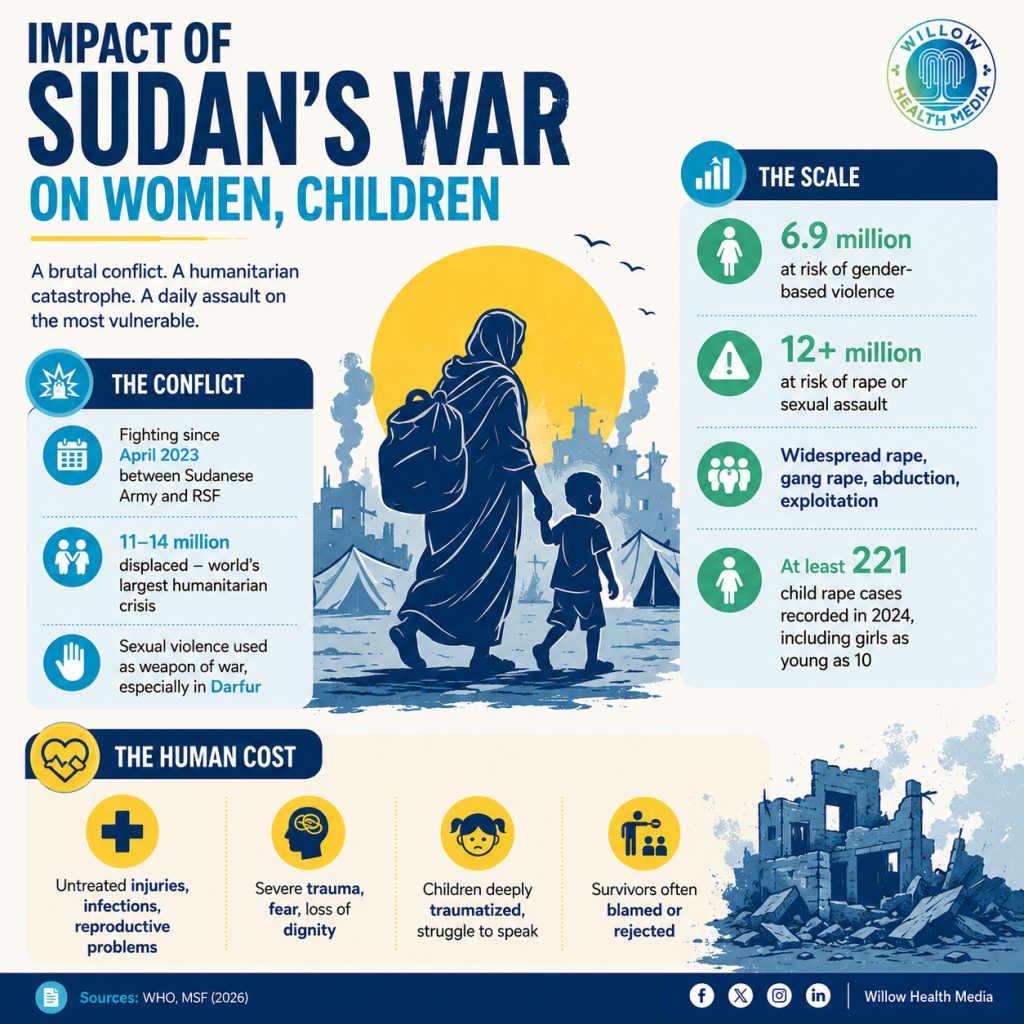
Humanitarian actors cited in the report warn that documented cases represent only a fraction of the actual scale of abuse. “Most survivors remain invisible. They suffer in silence,” an aid worker is quoted as saying.
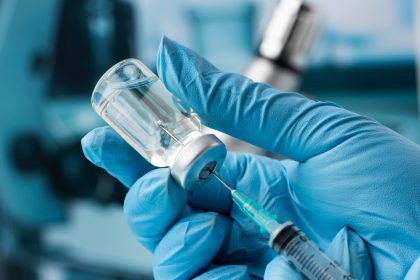
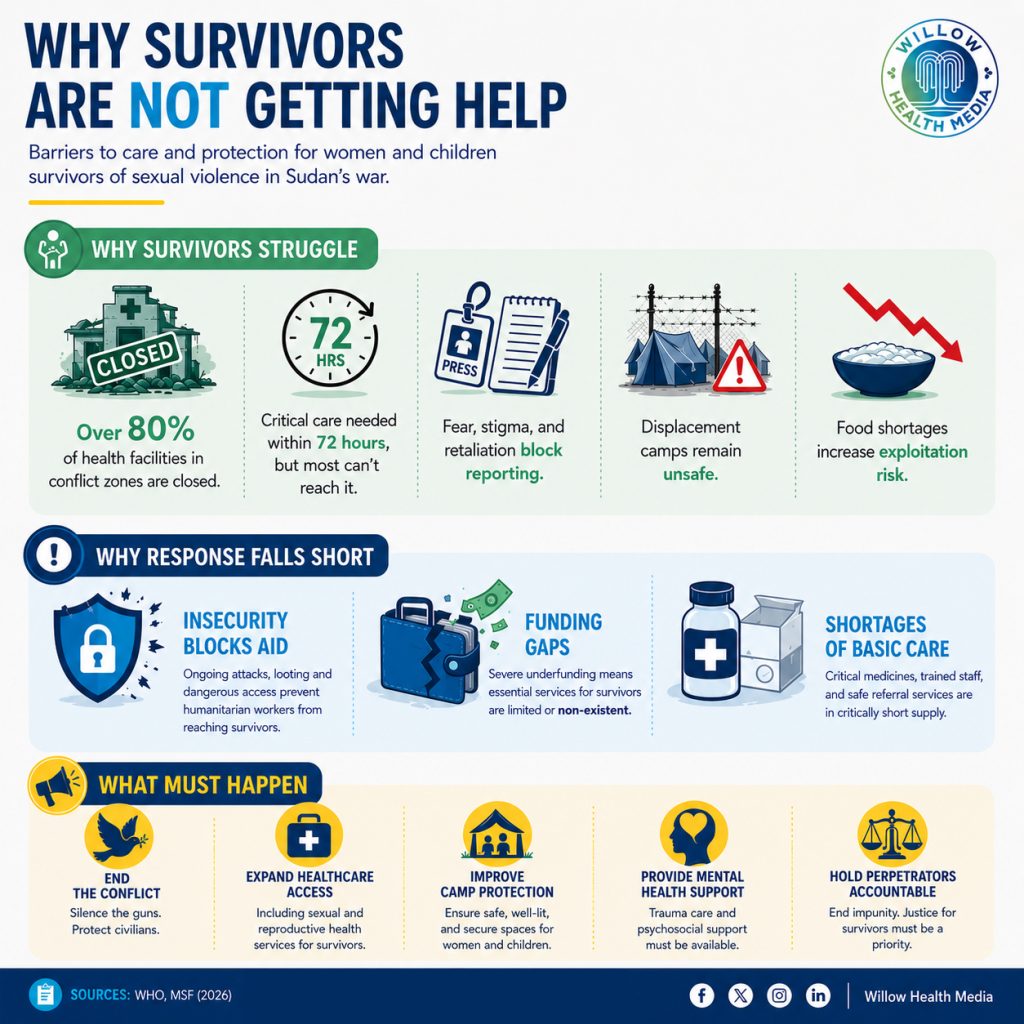
Central to the crisis is the near-total collapse of Sudan’s healthcare system. Health facilities across conflict-affected areas have been destroyed, looted or forced to close due to insecurity. For survivors of sexual violence, timely medical care is critical, particularly within the first 72 hours, when post-exposure prophylaxis can prevent HIV transmission and other interventions can reduce long-term harm. That window is out of reach for most.
“We don’t have the medicines, we don’t have the kits, and sometimes we don’t even have a safe place to treat patients,” a healthcare provider said. “I walked for two days to find a clinic. When I arrived, they told me there was nothing they could do,” one survivor narrates.
Fear compounds the barriers to access. “I was too afraid to go. What if they saw me again?” another woman said.
10-year-old girls have been subjected to sexual violence with devastating psychological consequences
Beyond the lack of services, stigma and fear of retaliation prevent many survivors from reporting abuse or seeking care. In many communities, survivors face blame, rejection and social exclusion. “They will say it is your fault. They will not want to marry you. They will not even want to sit with you,” one young survivor said. The threat of further violence silences many others. “If you speak, they can come back for you, so you stay quiet,” another woman explained.
The report raises particular alarm over the growing number of children among survivors. Girls as young as 10 have been subjected to sexual violence, often with devastating psychological consequences.
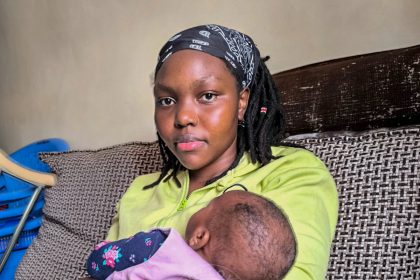
One aid worker described encountering a child who was unable to speak after an attack. “She just stared at us. She could not say a word about what happened,” the worker said. Many survivors, including children, report severe and persistent trauma. “I don’t sleep. When I close my eyes, I see them,” one girl said. For those who become pregnant as a result of rape, the challenges are compounded further by severely limited access to maternal healthcare.
Mass displacement has deepened the risks. Millions of people have been forced into overcrowded camps where protection measures are inadequate. “We are not safe here. Even in the camp, they can come,” survivors said. Scarcity of food and basic necessities has also driven cases of sexual exploitation. “If you don’t have food, what do you do? Some men will say they can help you, but they want something in return,” one survivor explained. Daily survival activities continue to expose women to danger. “We are afraid to go out for firewood. That is where they find us,” another woman said.
The long-term consequences for survivors are severe. Many suffer from untreated physical injuries, infections and reproductive health complications. Psychological harm is widespread, with survivors describing a profound loss of dignity and safety. The report highlights the urgent need for expanded mental health and psychosocial support services in conflict-affected areas.
Influx of refugees to Kenya has placed severe pressure on public health system, compounded by malnutrition
Humanitarian organisations face significant obstacles in responding. Insecurity limits access to the areas where abuses are most severe. Funding shortfalls have left large areas without any services for survivors. “There are places where there is nothing, no clinics, no counsellors, no protection services,” the report states. “Insecurity is one of our biggest challenges. We cannot access many of the areas where these crimes are happening,” a humanitarian worker said.
The crisis in Sudan is also being felt beyond its borders. Kenya has not been spared. According to the United Nations High Commissioner for Refugees (UNHCR), more than 850,000 refugees reside in Kenya’s camps, including Kakuma and Dadaab, with thousands more arriving from Sudan since 2023. South Sudanese arrivals alone totalled 25,000 in 2025.
The influx has placed severe pressure on Kenya’s public health system, with overcrowded facilities reporting outbreaks of malaria, acute respiratory infections and diarrhoea, compounded by malnutrition among refugee children and pregnant women.
Gender-based violence cases among displaced Sudanese women have increased, while demand for reproductive health services has surged. The situation has been worsened by the World Food Programme cutting rations to 30 per cent of minimum recommended levels, increasing vulnerability to exploitation and disease.
Doctors and health workers can save lives in Sudan, but they must have safe places to work
The report calls for urgent action, including improved access to healthcare, stronger protection measures and sustained efforts to combat stigma. It also calls for accountability for perpetrators. “This is not random violence but a systematic one. There must be consequences,” one advocate said. Survivors, however, expressed doubt about the prospects for justice.
After three years of war, WHO Director General Dr Tedros Adhanom Ghebreyesus offered a stark assessment. “The war in Sudan is devastating lives and denying people their most basic rights, including health, water, food and safety. The health system has been crippled, leaving millions without essential health care. Doctors and health workers can save lives, but they must have safe places to work and the medicines and supplies they need. Ultimately, the best medicine is peace.”
The WHO reports that Sudan now accounts for the world’s largest humanitarian crisis, with 34 million people needing aid and 21 million lacking access to health services, with repeated attacks continuing to cripple a medical system already weakened by disease and hunger.
The MSF report concludes that the ongoing conflict remains the primary driver of sexual violence and that without peace, the protection of women and girls cannot be guaranteed. For survivors, the need for an end to the war is not a political abstraction. It is immediate, urgent and deeply personal.
We believe in the free flow of information
Republish our articles for free, online or in print, under Creative Commons licence.