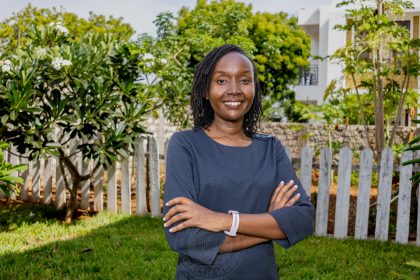



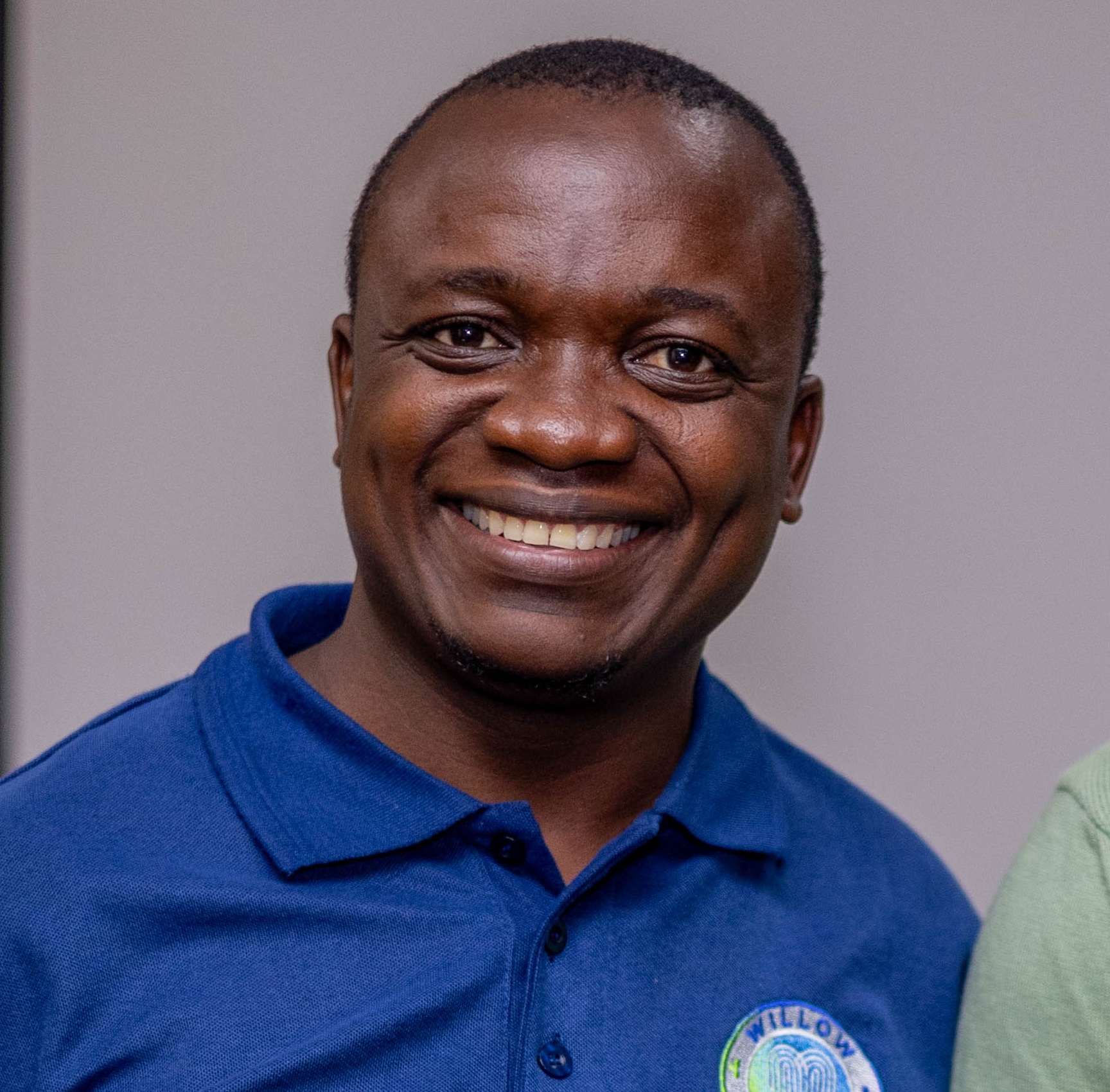
When you learn about fertilisation, conception and implantation, you realise all the signatures of future human life are imprinted within a woman’s body– Prof Obimbo
In the silent world beneath a microscope, where invisible bacteria can decide whether a baby takes his first breath or a mother survives childbirth, Prof Moses Obimbo searches for answers that could save generations.
By day, he walks through the hospital corridors haunted by the urgency of ringing alarms, blood running thin and lives that can disappear in the space between one heartbeat and the next.
Prof Obimbo has watched mothers bleed on operating tables, newborns arrive too early, and families cling desperately to hope as doctors fight against time.
By night, he returns to the laboratory, studying hidden ecosystems inside women’s bodies of microscopic worlds carrying consequences powerful enough to shape life, death, and the future of entire families.
But Prof Obimbo’s mission stretches far beyond science. It is a fight for women too often forgotten by global research, especially African women whose bodies continue to bear the weight of underfunded healthcare, weak systems and preventable suffering.
When a woman is healthy, benefits extend to her children, grandchildren and great-grandchildren
For him, the stakes are deeply human and generational. “Every woman we save is not just one life but generations protected,” Prof Obimbo told Willow Health Media’s White Coat Diaries. “Women’s health is not just a medical specialty for me. It is a mission shaped by science, advocacy and a deeply personal understanding that when women are healthy, societies survive.”
He adds: “Science shows that when a woman is healthy, the benefits extend to her children, grandchildren and even great-grandchildren.”
As the Chair of the Department of Human Anatomy and Physiology at the University of Nairobi and Honorary Secretary of the Kenya Obstetrical and Gynaecological Society (KOGS), Prof Obimbo occupies a rare intersection between science, clinical medicine and public advocacy.
But his journey into women’s health began long before lecture halls and operating theatres.
Growing up in the village, Prof Obimbo says he was fascinated by the central role women played in society.
“I loved listening to stories of women going to the river, fetching water, and singing together. I could see how influential women were in the fabric of the society,” he recalls. That fascination deepened in medical school while studying embryology and developmental anatomy.
He was determined to understand biology behind pregnancy, disease, maternal outcomes in African women
“When you learn about fertilisation, conception, and implantation, you realise all the signatures of future human life are imprinted within a woman’s body,” said Prof Obimbo.
For him, that realisation was enough to push him towards reproductive health science, not just as a clinician, but also as a researcher determined to understand the biology behind pregnancy, disease and maternal outcomes in African women.
Today, much of his work focuses on the vaginal microbiome, the community of bacteria that naturally lives inside the vagina and plays a critical role in reproductive health.
To many people, the word “microbiome” sounds abstract and scientific. But Prof Obimbo says it could explain why many women experience complications such as preterm birth, stillbirth, and recurrent infections.
“The vagina contains beneficial bacteria called lactobacillus that help maintain an acidic environment, which protects women from harmful infections,” he explains. “When this delicate balance is disrupted, women may develop conditions such as bacterial vaginosis that is most cases is often without symptoms. Some studies suggest as many as 73 per cent of women may have these infections without knowing it.”
Women’s health research, particularly African women, remains dangerously underfunded
Prof Obimbo says that consequences can be devastating as “These silent infections increase the risk of preterm birth, stillbirth, sexually transmitted infections and even HIV acquisition.”
But despite carrying some of the heaviest health burdens, women’s health research, particularly involving African women, remains dangerously underfunded. “If some of the health issues affecting women affected men, there would probably be a G7 summit immediately.”
He believes one of the biggest gaps in global science is the limited understanding of African women’s biology.
“There has been a lot of research done on European, Asian, and Latino populations, but African women remain underrepresented in research,” said Prof Obimbo and argues, “That gap is partly why maternal mortality, which remains stubbornly high across Sub-Saharan Africa,”
Prof Obimbo has spent years managing complicated pregnancies and emergencies. But some cases never leave him. Like the case of a woman who developed severe postpartum haemorrhage after delivering twins. The mother was bleeding heavily and urgently required blood to save her life. However, the family was informed that relatives had to donate blood first before a transfusion could proceed.
Maternal healthcare isn’t just about medics, lab scientists, finance officers, blood bank teams also matter
Prof Obimbo argues that such a situation should never happen during a medical emergency. The experience exposed the deeper cracks within Kenya’s healthcare system, as “You realise maternal healthcare is not just about doctors and nurses. The laboratory scientist, finance officer, blood bank team and everybody matters.”
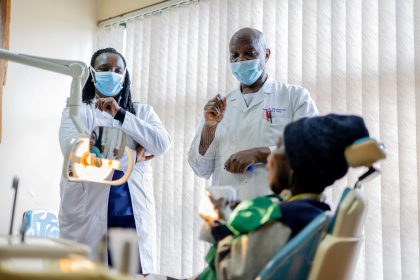
For him, reducing maternal deaths requires strengthening entire health systems, not isolated departments. “You cannot only train doctors and midwives. Every person within the system must understand the urgency of maternal emergencies.”
As part of continuous learning, Prof Obimbo trained and conducted research at the University of California, San Francisco (UCSF), with additional exposure at Stanford and Berkeley.
What struck him most was not just the technology, but the deliberate investment in science and “The US invests heavily in research because they understand science builds future solutions.”
If we know how many women are developing preeclampsia, we can plan drugs, staffing properly
He remembers the nights he left the laboratory at 11pm only to return at dawn and find colleagues still working. He also admired the culture of teamwork, noting that leadership should not create hierarchy as doctors, nurses, laboratory scientists and everyone else all matter, a philosophy he applies in Kenya, where he advocates for better investment in healthcare workers, data systems and research funding.
One of Prof Obimbo’s biggest frustrations is Kenya’s fragmented maternal health data system.
Kenya officially reports maternal mortality at about 355 deaths per 100,000 live births, but some development partners estimate the number could be significantly higher. “We should not rely on estimates alone. We need real-time data.”
He is currently involved in efforts to strengthen maternal health data systems. That is, besides establishing dashboards capable of tracking maternal complications nationally, because “If we know how many women are developing preeclampsia, we can plan properly on how to get medicines, staffing, equipment and everything,” Without data, he warns, healthcare systems operate blindly.
When patients look at me, they should see ‘Hope and healing’
Despite his achievements, Prof Obimbo openly speaks about rejection and failure, considering “In science, you write grants, fail, try again and sometimes succeed.”
He recalls applying unsuccessfully for a major international grant as “I had not prepared adequately” before later winning the prestigious Calestous Juma Science Leadership Fellowship supported by the Gates Foundation, as in “The second time, I learned the value of preparation.”
That experience shaped one of the philosophies he now teaches young doctors and researchers about resilience. “The best time to plant a tree was yesterday. If you forgot, plant it today.”
He urges young professionals to focus less on quick wealth and more on solving real community problems since “When you solve community problems, the community pays you back.”
For all the science, advocacy, and leadership, Prof Obimbo says he still sees medicine as fundamentally human, and when patients look at his white coat, they should see “Hope and healing.”