

Kenya’s new insurance formula is watching your assets, not your payslip. Here is why that matters.
Kenya’s shift from the National Health Insurance Fund (NHIF) to the Social Health Authority (SHA) has ignited fierce debate over whether the new contribution formula truly protects low-income earners or unfairly squeezes them. At the heart of the controversy is means-testing, a system that estimates household income to determine how much each Kenyan should pay in healthcare premiums.
Defenders of the model say it was deliberately designed to charge people according to their ability to pay, correcting what they describe as a deeply unfair flat-rate system that hurts the poor most. Critics, however, have opposing views.
To understand why the SHA model was designed the way it was, it helps to first understand what it replaced.
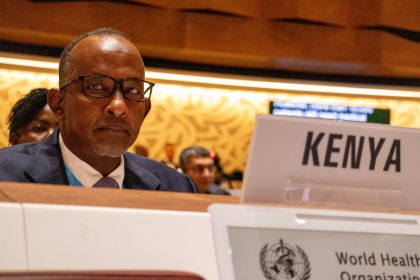
Under the old NHIF, contributions were fixed regardless of income. SHA Chairperson, Dr Abdi Mohammed and University of Nairobi economics professor and Presidential Advisor on Health Financing, Dr Daniel Mwai, speaking at the Willow Health Media Lifeline Dialogues, described that structure as fundamentally regressive.
Dr Mwai illustrated the problem with a straightforward example. An individual earning Ksh10,000 monthly paid a fixed Ksh500 NHIF contribution, which amounted to about five per cent of their income. A wealthier earner paying the same fixed amount contributed a far smaller share of what they earned. “The poorer you were, the higher proportion of your income you paid,” he explained.
Majority of Kenya’s workforce often have no payslips or formal income records hence the proxy means test
That inequity, he argued, made the NHIF model structurally unfair, even if it appeared simple and uniform on the surface.
Under the Social Health Insurance Fund (SHIF), the contribution structure varies by employment status. Formal employees contribute 2.75 per cent of their gross salary each month. Informal sector workers, who make up the majority of Kenya’s workforce and often have no payslips or formal income records, are assessed through a proxy means test that estimates their income using a range of socioeconomic indicators.

These indicators include household assets, housing conditions, land ownership, business activity and spending patterns. The logic, Dr Mwai explained, draws from established economic thinking. “In economics, income is best estimated through consumption,” he said. “You don’t ask somebody how much they earn because people tend to underestimate their income. You estimate based on what they spend on.”
The SHA model then classifies households into three broad income bands. Low-income households are those earning up to Ksh15,000 monthly, middle-income households Ksh100,000 and above Sh100,000 monthly for high-income earners. According to the Kenya National Bureau of Statistics (KNBS) data from 2024, only 387,418 Kenyan workers fall into the highest income category.
Dr Mwai said the means-testing formula was developed using data collected from between 16,000 and 30,000 households by KNBS, followed by ground-truthing exercises conducted across eight counties to verify its accuracy.
After several adjustments SHA Means-Testing model achieved an accuracy rate of 97.9 per cent
Researchers physically visited more than 2,000 households, comparing estimated incomes against actual living conditions and consumption patterns. The model was subsequently stratified according to socioeconomic class, distinguishing between informal settlements, middle-income areas and affluent neighbourhoods to improve precision. After several rounds of adjustment, Dr Mwai said the model achieved an accuracy rate of about 97.9 per cent.

During SHA registration, Kenyans deemed the process intrusive, but Dr Mwai explained that “We have many questions because you have to use a wide range of variables,” adding that the country should eventually move toward triangulating government data such as tea sales, coffee earnings, milk deliveries and business licences to verify incomes more efficiently.
Under the current contribution structure, informal sector households pay a minimum annual premium equivalent to roughly Ksh300 to Ksh500 monthly, depending on their estimated income. Salaried employees contribute 2.75 per cent of their monthly earnings.
Dr Abdi said that more than 90 per cent of households assessed through the model were placed below the Ksh600 monthly contribution mark. About 45 per cent of contributors were placed in the lowest premium category, paying below Ksh500 per month.
He argued that these figures demonstrate the system was intentionally calibrated to avoid overestimating poor households. Dr Mwai reinforced this point, saying the designers made a deliberate choice to err on the side of underestimation. “We chose to make an error on underestimation rather than overestimation; everybody is underestimated, including the rich,” he said.
Kenyans appealing SHA premiums are not driven by genuine financial hardship, but universal desire to pay less
For wealthier Kenyans, particularly salaried individuals earning over Ksh1 million monthly, contributions have risen sharply compared to what they paid under NHIF. However, Dr Abdi said about 60 per cent of formally employed Kenyans are actually paying less than they did previously.

One significant challenge the system faces is human behaviour. Dr Mwai acknowledged that many of the appeals filed by individuals dissatisfied with their assigned premiums are not driven by genuine financial hardship, but by the universal desire to pay as little as possible. “Even somebody who should pay Ksh2,000 would still want to pay Ksh300. Humans are naturally inclined to minimise payments,” he said, citing economist Adam Smith.
This tension between what people can afford and what they are willing to pay is a defining challenge for any insurance system, and SHA is no exception.
Kenya currently has about 30 million registered, according to SHA, out of an estimated population of 56 million, a figure that includes principal members, spouses and children. Registration continues at an average rate of about 20,000 people daily.
However, of those 30 million registered members, only five million are actively contributing premiums to SHIF. This gap has raised concerns about the long-term financial sustainability of the scheme.
Premium SHA contributions mainly finance inpatient services, dialysis, cancer treatment, surgeries, intensive care
Dr Abdi and Dr Mwai explained that this gap exists because registration and contribution are treated separately under the SHA framework. All registered Kenyans automatically qualify for government-funded primary healthcare and emergency services, even without contributing premiums.
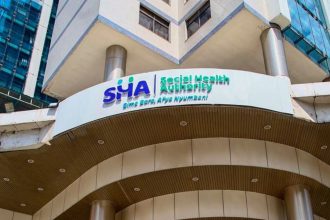
Primary healthcare services funded through taxation, Dr Abdi said, already address between 80 and 90 per cent of the population’s health needs. Premium contributions mainly finance inpatient services, dialysis, cancer treatment, surgeries and intensive care.
About 800,000 vulnerable households, equivalent to about 3.2 million Kenyans, have already been identified for state-sponsored coverage because they are unable to pay. Dr Abdi underscored the practical value of the premium model by drawing a direct comparison. “You cannot compare paying Ksh150,000 cash for surgery against paying a Ksh600 premium,” he said.
On SHA’s broader financial standing, Dr Mwai said the authority had mobilised a total resource base of about Ksh169 billion and made payouts of around Ksh125 billion. He dismissed claims that SHA was financially collapsing, arguing that some reports had misunderstood standard insurance accounting concepts such as incurred but not reported claims, which represent projected liabilities expected to be settled over time.
Dr Abdi revealed that SHA currently pays between 68 and 80 per cent of hospital claims submitted for reimbursement. Claims that are rejected are turned down because of fraud, duplicate billing or failure to meet clinical documentation requirements. Dr Mwai argued that rejected claims were not a sign of failure.
Artificial intelligence in claims verification is exposing fraudulent billing that went undetected under NHIF
“Rejected claims are not evidence that SHA is failing; it shows the system is actually working,” he said, pointing to the use of digital systems and artificial intelligence in claims verification as tools that are now exposing fraudulent billing practices that went undetected under NHIF.
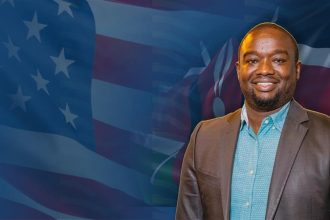
Both Dr Abdi and Dr Mwai conceded that the SHA model is not without flaws. Dr Mwai acknowledged that means-testing will continue to be refined as more national socioeconomic data becomes available. Dr Abdi framed the broader mission in unambiguous terms. “We cannot build the country on the sweat of the few who are employed. Everyone must step up and participate in contributing in one way or another,” he said.
For Kenya, the debate over SHA ultimately rests on a question with no easy answer: how to fairly finance healthcare in a country where millions work outside formal payroll systems, incomes fluctuate unpredictably, and a single medical emergency can wipe out a household’s savings. Means-testing, its architects insist, is not perfect. But it is the closest Kenya has come to matching what people pay with what they can actually afford.