

Closure of over 900 healthcare facilities by KMPDC uncovers conflict of interest, toothless regulations, medical profiteers and crisis for insured patients.
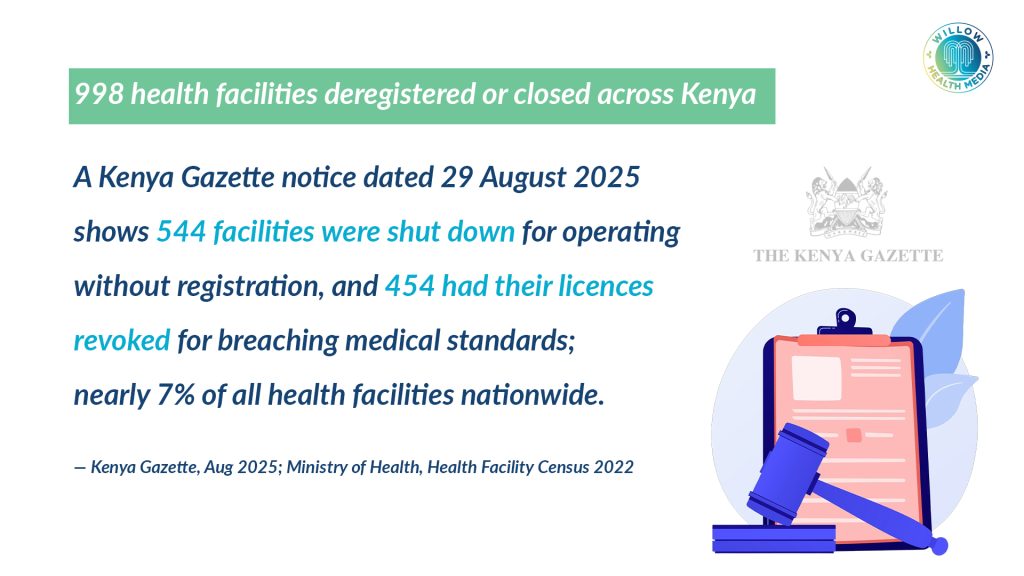
Hundreds of healthcare facilities were shut down countrywide over making fraudulent claims, not meeting basic medical standards and operating without licenses.
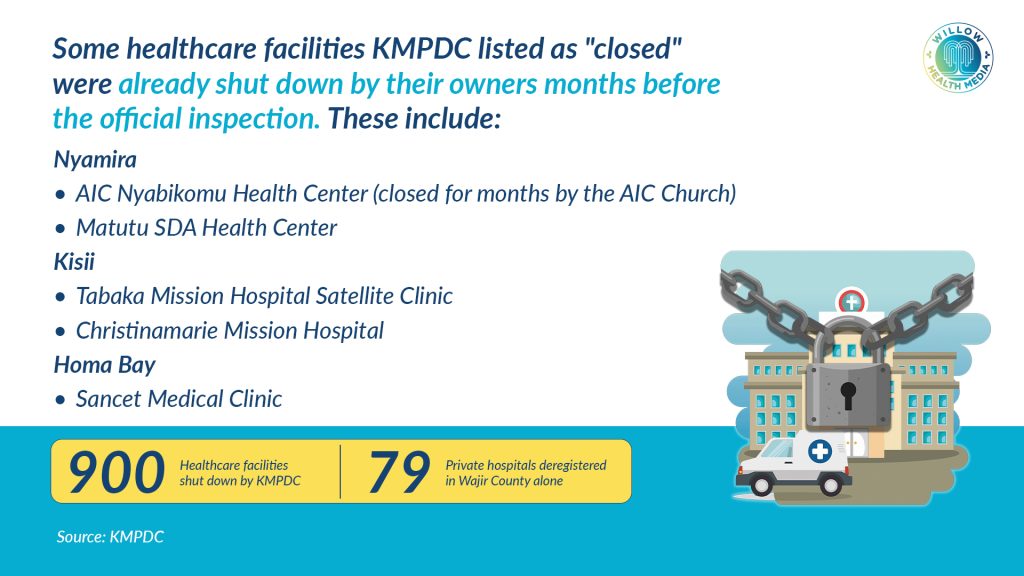
The Kenya Medical Practitioners and Dentists Council (KMPDC) published a list of 900 health facilities it had either closed or deregistered in August, a pointer to systemic regulatory failures.
Kenya has 14,883 facilities, according to a 2022 census by the Ministry of Health, and thus deregistered facilities represent a sizable portion of Kenya’s private healthcare sector.
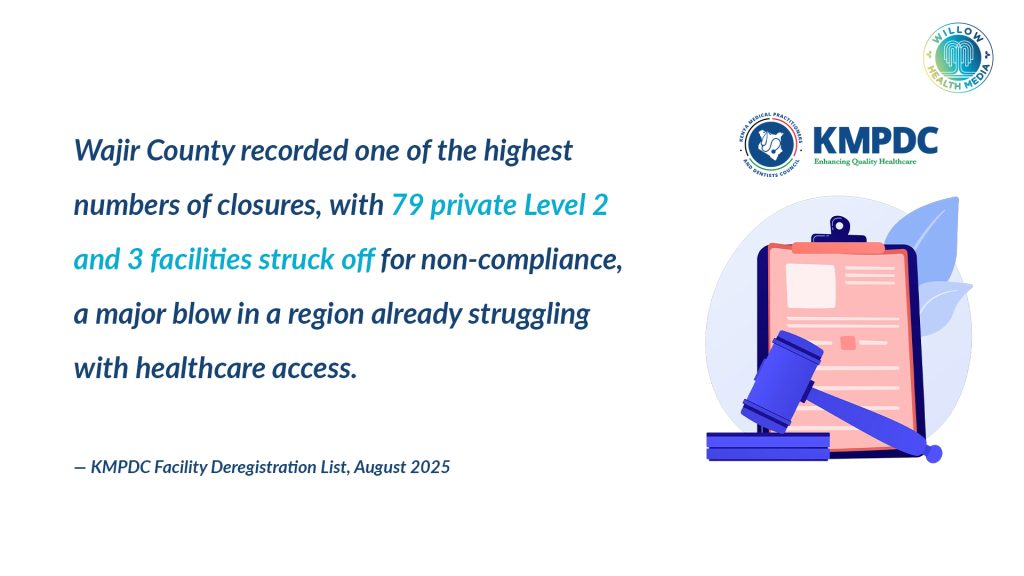
Wajir County in northern Kenya saw 79 private hospitals, mostly Level 2 and 3, deregistered by the KMPDC for non-compliance.
When Willow Health Media made a courtesy call, every whiff of breeze was a welcome relief from the punishing heat in searing Wajir town. While the livestock market and the bus stop were busy, the clinics have been facing a silent, cold collapse.
Along the streets of Barwaqo, Township, and South C, health clinics with the unmistakable logo of the Social Health Authority (SHA) are open but empty, receiving very few patients.
Switch from NHIF to SHA saw entrepreneurs investing to milk from health insurance
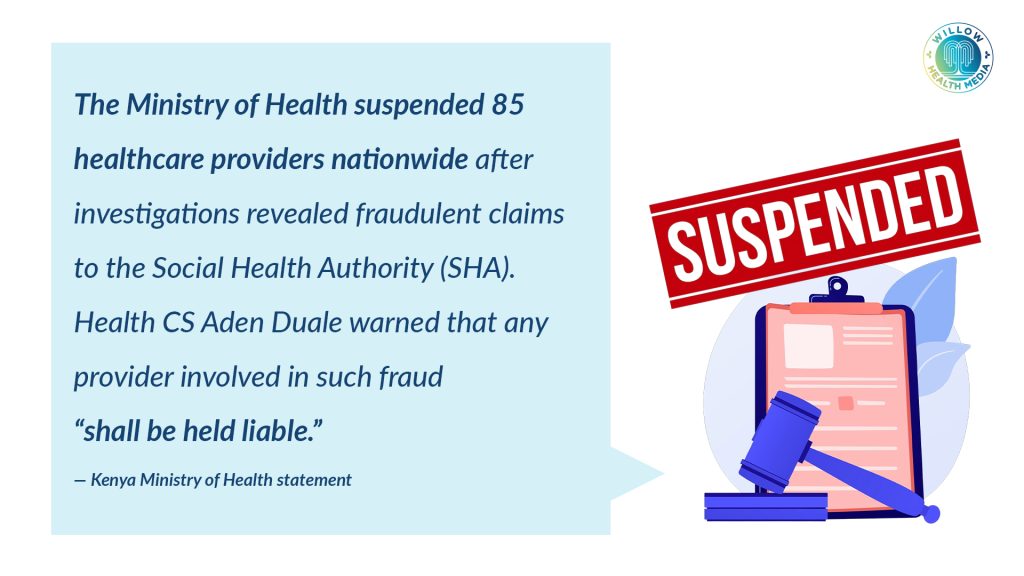
Most private hospitals are new, and residents whisper that they were opened just to profit from SHA claims. The government has since suspended 85 health facilities for fraudulent claims, and “Any healthcare provider whose information has been used to defraud SHA shall be held liable,” warned Health CS Aden Duale in August.
Some have been arraigned in court in connection with the fraud as investigations continue. In Wajir, however, some owners claim the inspections were marred with irregularities.
But besides Wajir, Willow Health Media also visited four other counties where health facilities were shut or deregistered and found some in operation, an indictment of the Council’s inability to enforce.
The KMPDC is the official body created by law to regulate Kenya’s medical and dental fields. It oversees the training, licensing, and practice of doctors, dentists, and various healthcare facilities, including nursing, maternity and standalone funeral homes.
KMPDC has the power to “cancel, withdraw or revoke” licenses of any health facility operating illegally. Still, it depends on the Directorate of Criminal Investigations (DCI) for actual enforcement, creating a critical gap between regulation and action.
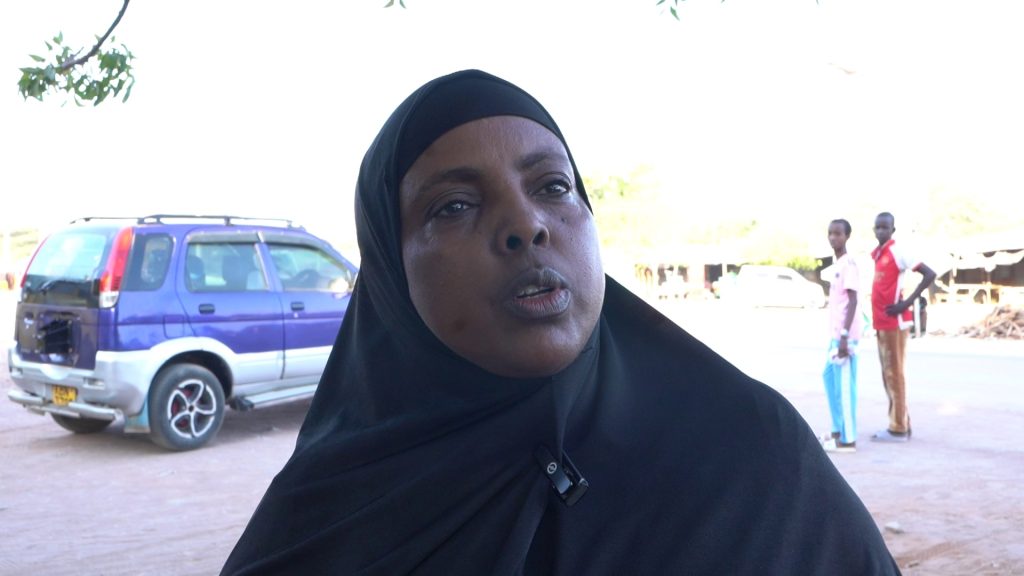
Fatuma Yusuf, the chairperson of Wajir Civil Society Consortium, reckons the switch last October from the National Hospital Insurance Fund (NHIF) to SHA, the country’s new health insurance system, fueled massive registration of citizens, which saw entrepreneurs investing in healthcare.
After the closures, enforcement has been weak, and many healthcare facilities remain open
“Some people opened these facilities to make an income out of SHA because even the Mama Mboga in the market is registered in SHA and has their premiums paid for them by the national, county government or NGO’s,” she said.
However, after the closures were announced, enforcement has been weak, and many facilities remain open. There are also concerns that the Council’s process for shutting them down may have been flawed.
In Barwaaqo alone, we visited five health facilities, including Al Baqra, Baltoon, Al Zawara, Imarat and Rasmaal hospitals, which were open but with no foot traffic, except Wajir Maternity Hospital, where a mother had taken her baby with a running stomach.
The owner of a deregistered hospital in Wajir, who requested anonymity, admitted, “It has been months since we received any payment from SHA.” Despite being open, his hospital hardly receives any patients since being locked out of SHA by the KMPDC in June.
Another hospital owner showed Willow Health Media wards, theatres, accident, and emergency units in his facility with a staff of five.
Some health officials pointed to potential conflicts of interest in inspection process
He argues that the deregistration stemmed from business rivalry, as among KMPDC officials who visited his facility included a Wajir County Referral Hospital employee who signed “The notice of closure of my facility”, yet he also “runs some hospitals in Wajir”, raising questions about potential conflicts of interest in the inspection process.
When we contacted the employee on the matter, he retorted: “I don’t know you, so I can’t disclose any information. If it is about the inspection, go talk to the board.”
KMPDC CEO Dr David Kariuki told Willow Health Media that the Council includes officials from other government agencies in its inspections, and it was thus possible an employee from Wajir County Referral Hospital was on the inspection team.
“We usually ensure that people on the team have no interest,” he explained. “We even have meetings before we start. In every county that we go to, we ask the county to give us people, and we expect that they have a background to ensure that they do not give us people who may have an interest.”
Dr Kariuki adds that they also involve officers from the Directorate of Criminal Investigations (DCI), who also become part of the inspection team.
Unlike other deregistered hospitals, Matata Maternity Hospital could log in to SHA portal
Then there were hospitals that were erroneously deregistered, like Matata Maternity Hospital, a Level 4 facility in Oyugis, Homa Bay County. Established in 1992, it is one of the biggest in town. Joseph Malago, the Director, estimates receiving about 200 patients daily. Malago learnt of its deregistration when claims and capitation disbursements from SHA failed.

Malago told Willow Health Media that the error was discovered only after “The SHA Director of benefits showed us a screenshot of hospitals that had been closed, including Matata Nursing and Maternity Company Limited, which is not our registration name.”
Malago explains that they had originally applied to change from a “partnership” to a “company,” but never completed the process. Instead of changing the status, KMPDC gave them a new registration number. Now, they are in a bureaucratic mess as the unused “company” registration is the one being officially closed. But the actual Matata Maternity Hospital is the one that has its medical claims blocked.
Unlike other deregistered hospitals, however, Matata Maternity Hospital could log in to the SHA portal. “We are logging in, sending pre-authorisations and sending claims,” said Malago, adding that erroneously revoking their license since September has hampered operations and “puts us in a very bad state” unless the error is reversed.
Malago decried the irregular and prolonged period between inspections by KMPDC for the confusion, but Dr Kariuki said two years is the longest they take, but Malago disagrees.
Jemo Medical Center is a humble entity of whitewashed walls, red corrugated iron sheets
Anita Musiega, a health economist, said that the regulator is under-resourced and sometimes, “They will depend on the county health management team to do the initial inspection and then the subsequent renewals are done online without subsequent inspections of the facility”, explaining how substandard facilities operated undetected for extended periods.
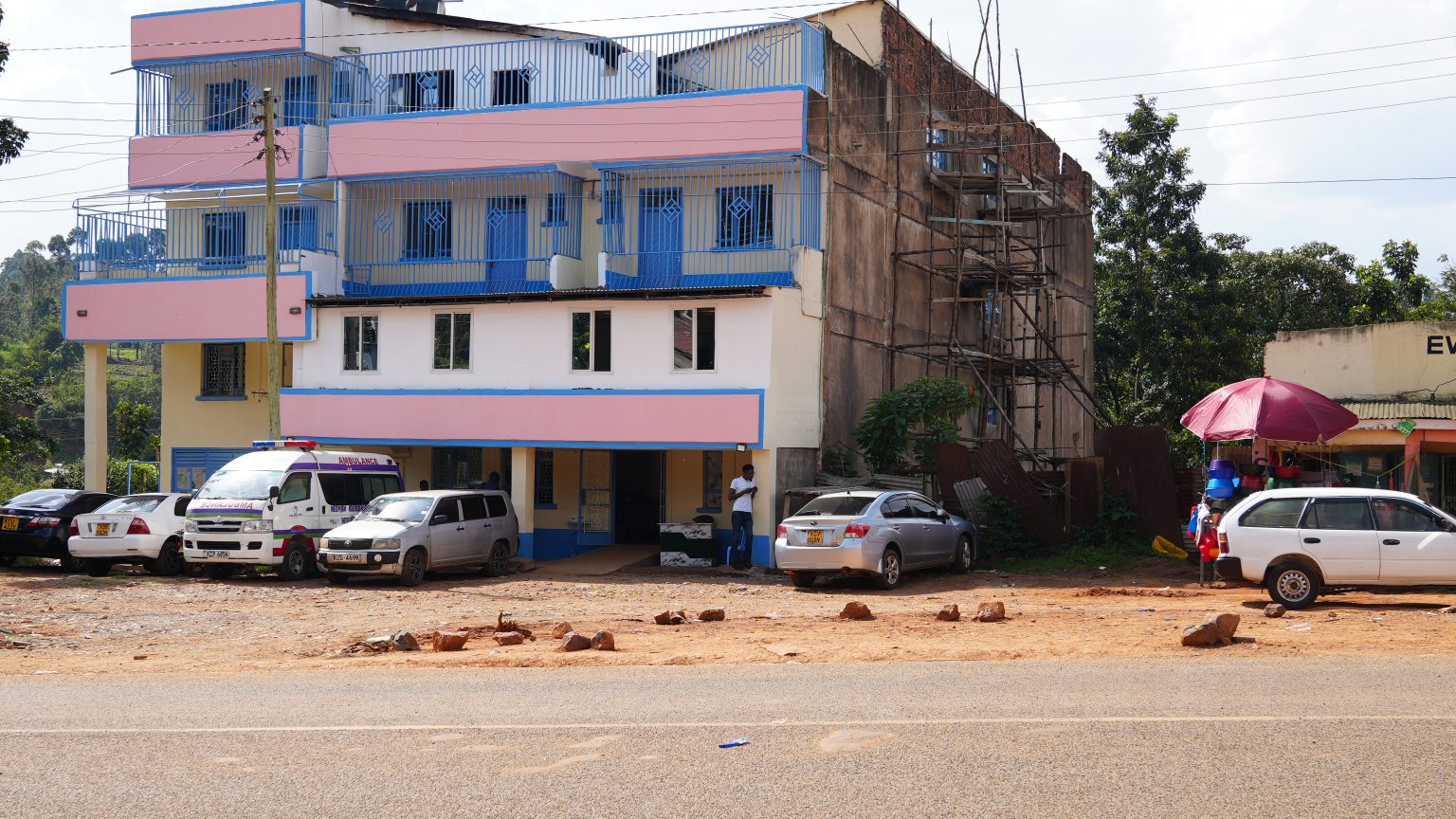
Off the highway to Kisii town from Sotik at Kijauri municipality is a slip road due west. Half a kilometre down, the slope gives way, and on the left is Jemo Medical Center, a humble establishment with whitewashed walls and red corrugated iron sheets.
On a late afternoon in mid-September, business was slow, and staff either out for lunch or in the inner rooms but within earshot in case a client walked in. Jemo Medical Center is a Level 3 privately owned health facility, one among dozens in Nyamira County.
It was among the 454 health facilities whose licenses were revoked. Some staffers who requested anonymity told Willow Health Media that Jemo’s status was ‘suspended’ due to ongoing construction when the Council was doing its inspection.
“It was nothing really,” said the staffer, adding that they were advised by inspection officials to reapply for inspection again once construction was completed.
A health official from Nyamira County gave them the green light to reopen even as he sent his official report to the Council in Nairobi. A request by Willow Health Media to have the healthcare official or the owner go on record was unsuccessful.
KMPDC depends on the DCI to enforce closures and license revocations, make arrests
Neocare Specialist Hospital in Ogembo town in neighbouring Kisii County was also deregistered but is now operational. A matron explains its shortcomings were needing a fresh coat of paint and repairs on tap faucets, and were ‘allowed’ to resume operations soon after repainting.

Dr Kariuki says Neocare and Jemo should not be in operation. The Council, he adds, “Depends on the Directorate of Criminal Investigations (DCI) to enforce closures and license revocations.”
It is thus up to the DCI to arrest those operating unregistered facilities or unlicensed persons, as “Those are people who get arrested for providing services without a technical background and without authorisation.”
As for the reopening of deregistered facilities, Dr Kariuki explains that “If a facility is able to comply within 90 days, they write to us, we share with them a self-assessment checklist before we can organise a physical inspection. For those that take longer than 90 days, we go and find out how far they are.” He added that no facility was yet to be cleared by the Council to reopen.
Law enforcement officers have thus not enforced the closure and license revocation by KMPDC. Some health facilities listed as closed and deregistered had already been shut down by the owners before the Council’s inspection.
With a sick family member, Hassan Shurie, struggles to find clinics that accept his insurance
In Nyamira County, the closure of Matutu SDA Health Center followed the theft of “X-ray machine and lab equipment were stolen,” said Ken Mochama, an SDA elder from Nyaronde, and it will be reopened “once we replace the equipment.”
The mass closure of hospitals has left many people without access to care, creating a healthcare access crisis for insured patients.
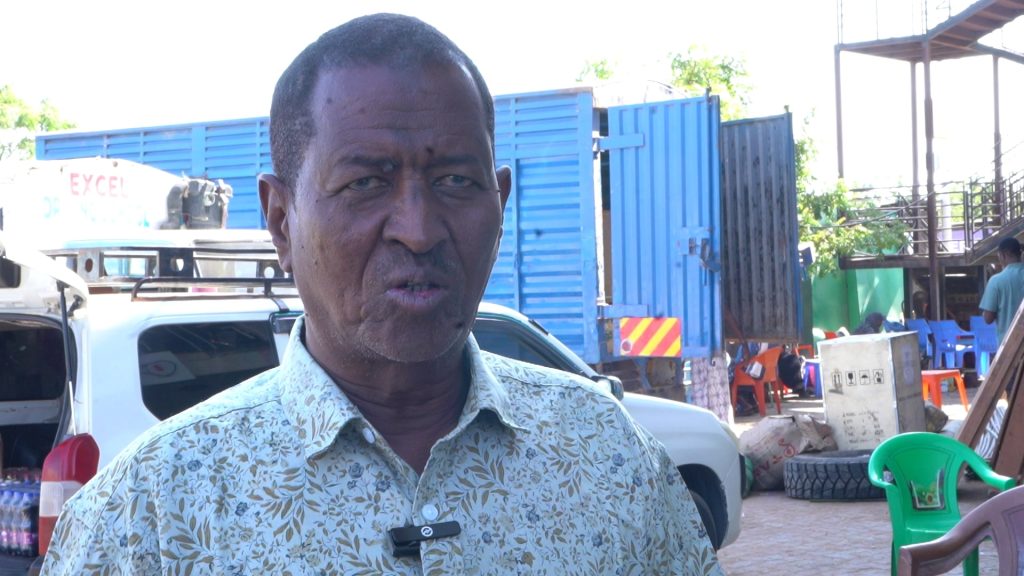
Hassan Shurie, a resident of Wajir, paid for his health insurance, but now most local clinics have been shut down. With a sick family member, he struggles to find a facility that accepts his insurance, as others demand cash.
Shurie agrees that substandard hospitals should be closed, but feels some should have remained open to serve the public. The main public hospital is also not a suitable alternative, as it requires cash up front, putting care out of reach for the poor.
Musiega echoes Shurie’s concerns that the Council should show leniency on some minor infractions while being strict on serious ones, considering “If the mistakes that the facilities did were around malpractice, negligence, or you don’t have the right health workers, or you have hired quacks, then that is no and a revocation of license is warranted.”