



Systemic dysfunction is a core driver of the problem, as 40 per cent of health spending vanishes into inefficiency, corruption, procurement scandals, overlapping plans, and absent digital tools
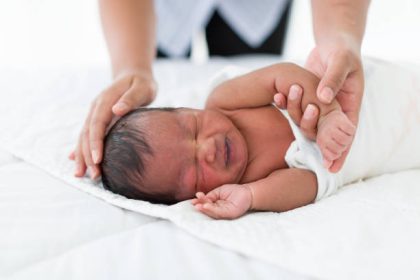
Every hour, 20 mothers and 300 children under five worldwide lose their lives to preventable causes, a relentless toll that in 2024 alone saw 4.9 million young children die before their fifth birthday, including 2.3 million newborns.
The scale of the crisis is staggering, and while global progress in reducing these deaths has slowed by over 60 per cent since 2000, sub-Saharan Africa continues to register 58 per cent of newborn deaths, where children in fragile or conflict-affected settings face survival odds three times lower than elsewhere.
These troubling statistics were shared Monday as global health leaders, stakeholders and more than 1,800 delegates from over 100 countries gathered in Nairobi for the 2026 International Maternal and Newborn Health Conference (IMNHC).
“No woman should die while giving life,” said Health Cabinet Secretary Aden Duale while opening the conference. “Every newborn must have the chance not only to survive, but also to thrive.”
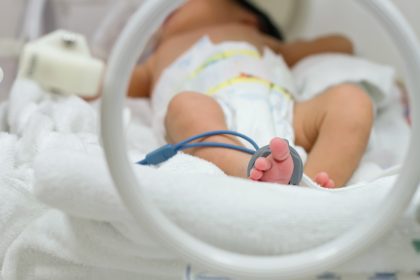
The leading killers of newborns have been identified as preterm complications (36 per cent), birth asphyxia (21 per cent), and infections, including neonatal sepsis, while severe acute malnutrition directly claimed over 100,000 lives among children aged one to 59 months in the same period, with indirect effects far deadlier by eroding immunity against common diseases.
Kenya is not insulated from this emergency. The country’s maternal mortality ratio stands at 355 deaths per 100,000 live births, equivalent to roughly 5,000 to 6,000 women dying annually, or 15 mothers every day. Neonatal mortality sits at 21 deaths per 1,000 live births, accounting for 51 per cent of all under-five deaths, with prematurity, birth asphyxia, and sepsis as the primary causes. Each month, approximately 2,500 newborns, about 92 daily, do not survive their first 30 days.
Women are reaching hospitals, but hospitals are not always ready for them
Duale acknowledged these figures plainly: “Maternal mortality remains unacceptably high. Newborn deaths and stillbirths have persisted. Behind every statistic is a name, a face, a family, and a future lost.”
Despite a decade of progress in facility-based deliveries, where nearly nine in ten births in Kenya are now attended by skilled personnel, maternal deaths have not declined at the expected rate. The problem, health officials say, has shifted from access to quality. Women are reaching hospitals, but hospitals are not always ready for them.
Across maternity wards, a repeating pattern has emerged: a woman in labour arrives, complications arise, and the facility lacks blood, oxygen, or critical supplies. What could have been a manageable emergency becomes fatal within minutes.
According to Ministry of Health data, approximately 5,000 women and 30,000 newborns die each year from largely preventable causes. Post-partum haemorrhage (PPH) remains the leading killer of mothers, accounting for 37 per cent of deaths, followed by eclampsia and infections. Only 37 per cent of health facilities in Kenya currently meet the full criteria for Basic Emergency Obstetric and Newborn Care (BEmONC).
Dr Edward Serem, head of the Division of Reproductive, Maternal, Newborn, Child and Adolescent Health at the Ministry of Health, was direct in his diagnosis.

“We are no longer dealing with a knowledge gap,” he said in an interview on the sidelines of the conference. “We know what causes these deaths, and we know how to prevent them. The problem is inconsistency in ensuring that every woman, in every facility, receives the same standard of care.”
That inconsistency, Serem argued, is the defining fault line in Kenya’s maternal health system. While some facilities are well-equipped and adequately staffed, others operate under-resourced and overstretched, unable to respond to emergencies. The result is a system where a woman’s survival often depends less on her condition than on which facility she reaches.
Serem also called for a fundamental shift in how the system measures success. “We must move from counting services to measuring outcomes. It is not enough to say a woman delivered in a facility. We must ask: did she survive? Did the baby survive? That is the true measure of our system.”
A continent that cannot protect its mothers and children cannot claim full sovereignty over its future
The urgency was echoed by Dr Jean Kaseya, Director General of the Africa Centres for Disease Control and Prevention, who described the situation as a continent-wide failure of political and systemic will.
“We are confronted with unacceptable maternal and neonatal mortality rates. Every hour, we are losing women, newborns, and children under five from preventable causes. This is not acceptable in an age of high technological advancement,” he said.
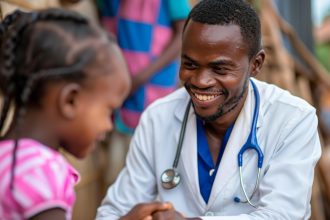
For Kaseya, the crisis is not merely medical, but rather a justice, development, and sovereignty issue, as “A continent that cannot protect its mothers and children cannot claim full sovereignty over its future.”
Dr Kaseya pointed to systemic dysfunction as a core driver of the problem: “40 per cent of health spending vanishes into inefficiency, corruption, procurement scandals, overlapping plans, and absent digital tools.” Africa, he argued, already has the solutions, but what is betraying it is fragmented implementation.
The Kenyan government’s response centres on converting policy commitments into measurable, time-bound results. At the heart of this is the Every Woman Every Newborn Everywhere (EWENE) Acceleration Plan 2026-2028, a globally led framework developed with the World Health Organization (WHO), the United Nations Children’s Fund (UNICEF), and the United Nations Population Fund (UNFPA) that Kenya has adapted for county-level implementation.
Unlike previous national strategies, EWENE is being driven at the point of delivery. Each of Kenya’s 47 counties is expected to tailor the plan to its specific challenges, whether staffing shortages, infrastructure gaps, or cultural barriers to seeking care.
“This is how global commitments translate into local impact,” Duale said. “Through ownership, adaptation, and accountability.”
Alongside EWENE, the government is rolling out a Rapid Results Initiative (RRI) focused on high-impact interventions: controlling post-partum haemorrhage, strengthening neonatal care protocols, and improving emergency obstetric response times at the county level.
Duale outlined six priorities anchoring this work: sustainable financing through the Social Health Authority’s Primary Health Care Fund; strong domestic and international partnerships; emergency obstetric and newborn care, including postpartum haemorrhage management and kangaroo mother care; workforce training and retention; reliable commodity supply chains; and digital health infrastructure to enable data-driven decision-making.
Infrastructure improvements including roads and telemedicine systems will connect remote facilities with specialist support
A critical enabler of these interventions is Kenya’s expanding universal health coverage framework. The Social Health Authority (SHA) has registered over 30 million Kenyans, eliminating financial barriers that previously prevented many women, particularly adolescents and those in low-income households, from accessing antenatal care and skilled deliveries.
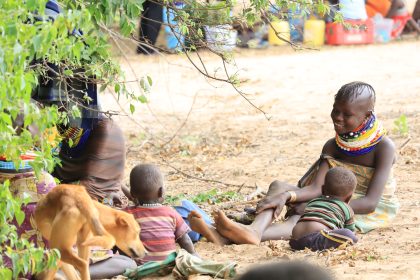
The government is also investing in expanded community health services, improved referral pathways, and infrastructure improvements, including roads and telemedicine systems to connect remote facilities with specialist support.
Kenya’s National RMNCAH+N Investment Case estimates that Ksh460 billion will be required over the next five years to transform maternal and newborn health outcomes. However, securing and efficiently distributing that funding under the devolved governance structure remains a central challenge.
Officials were candid that health system improvements alone will not resolve the crisis. Deep structural and social factors continue to shape outcomes before women ever reach a facility.
“Reproductive health is the foundation of everything we seek to achieve,” Duale said. “Adolescent health, access to family planning, and the elimination of harmful practices are central to reducing maternal and newborn mortality.”
Teenage pregnancies, limited contraceptive access, and harmful cultural practices expose many women to elevated risk long before they enter a delivery room. These realities demand interventions that go beyond clinical settings.

Health workers, meanwhile, continue to carry disproportionate pressure. In many facilities, a single nurse may simultaneously manage multiple labouring mothers, making life-and-death decisions in real time with limited resources and without adequate backup.
“To our health workers, you are the face of our health system,” Duale said. “Every mother who survives, every newborn who thrives, is because of your skill, your commitment, and your sacrifice.”
The government has committed to investing in digital health systems to strengthen coordination, supply chain management, and real-time performance tracking across facilities.
The conference brings together health ministers, technical experts, and global partners in a shared commitment to enforceable targets, funded implementation plans, and transparent progress reporting. Delegates are expected to commit to concrete actions, funded plans, enforceable targets, and transparent progress tracking.
“We believe that our nation’s greatness is measured by whether a mother in the most rural part of Kenya has the same chance of surviving childbirth as one here in Nairobi,” Duale said.
“I envision a Kenya and a world where no mother dies from preventable causes. But that future will only be realised if we act with urgency, invest with purpose, and hold ourselves accountable.”