

At the HPA Global Forum in Moshi, innovators showed how digital records, AI-assisted microscopy and diaspora payment tools can close diagnostic gaps and speed treatment, while warning that skills gaps, poor co-founder choices and missing structures still hold startups back.
Reagan Rowland nearly lost his wife and first child to missing medical records.
The couple were financially prepared for the birth. But when his wife was referred for an emergency caesarean section, a lack of patient history and clinic records “delayed interventions by the medics at the facility we were referred to,” the Nigerian tech entrepreneur said. It “nearly cost my wife and child their lives”.
His response, a health records platform called OneClickMed, was one of many innovations born of personal loss at the Hospital Partnerships Alliance (HPA) Global Forum in Moshi, Tanzania.
Innovators from across the globe showcased locally driven and cross-border solutions spanning health financing, clinical practice, patient care, artificial intelligence (AI), training and research. Their case was that technology, telemedicine and AI can improve diagnosis, care and treatment, if the hurdles to scaling are cleared.
Agnes Mwagiru, Head of Enterprise Services, Middle East and Southern Africa at Siemens Healthineers, called for timely innovation.
“We need technology and innovations to fill diagnostic gaps and improve treatment pathways, health financing, clinical services and patient care,” she said.
OneClickMed creates, links and stores health records, giving patients and medics instant access. A One-Time Registration approach reduces duplication and loss of records, and individuals can track and manage their own health.
Laboratory scientists who interpret numerous microscopic images wear out, slowing service delivery and creating room for errors
Well-trained AI tools remind patients of their prescriptions, help them find hospitals promptly, help providers schedule appointments and facilitate remote consultations with credible medics. “The solutions reduce repeated registrations, minimise delays and support continuity across healthcare and referral systems,” Rowland said.
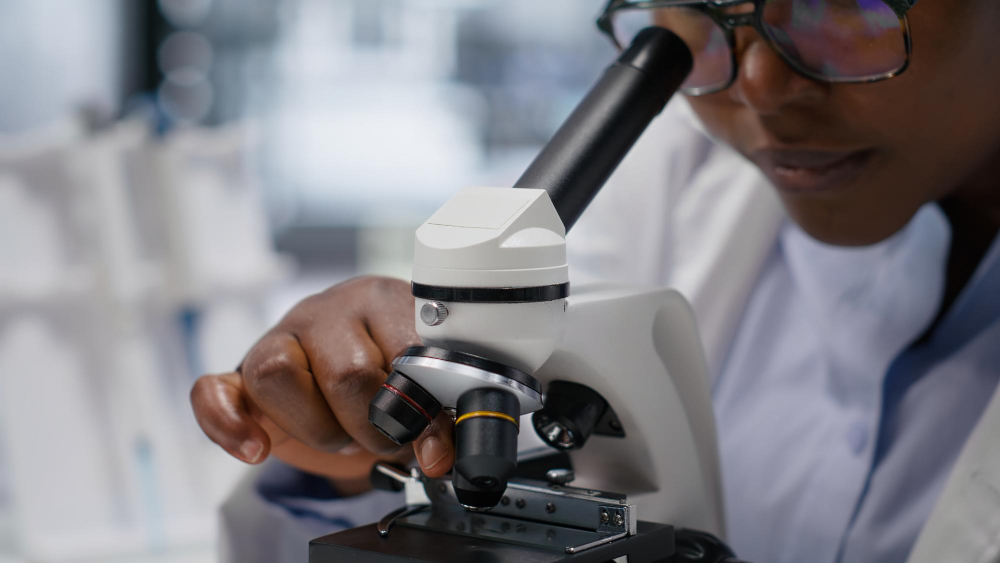
Alex Rweyemanu, a researcher at Kilimanjaro Christian Medical Centre (KCMC), showcased LENZAI, an AI-supported system that helps clinicians interpret microscopic images quickly and cuts patient turnaround time. Laboratory scientists who interpret numerous microscopic images wear out, he said, slowing service delivery and creating room for errors.

“Our AI-assisted clinical microscopy can interpret the images within a few seconds, and lab scientists can then review the interpretation for accuracy before documenting the results.”
The machine reads, and the scientist confirms, a model for bringing AI into care. Pitching LENZAI at the HPA Global Innovation Challenge during the forum, the Tanzanian scientist sought support from parasitologists, lab scientists, public health officers and clinicians to train the model comprehensively.
Before HPA Council Chairperson Professor Diavolana Andrianarimanana officially opened the challenge on November 10, the Alliance showcased some of the nine flagship innovations it supports.
Ghana’s Dr John Adabie Appiah is pioneering a tool to streamline and generate protocols for treating critical illness in children. His compatriot Delali Fiagbe, a senior lecturer and neuropsychiatrist at the University of Ghana Medical School, is building Connect Mental Health, a tool to enhance mental health and suicide awareness, classification and treatment.
Open until January 17, 2027, the challenge invites solutions on modelling the future doctor, staying human in the age of AI and a changing climate
Dr Barsha Thapa, Chief Consultant Dental Surgeon at Nepal’s Ministry of Health, and her team are scaling up a stroke-ready hospital model across Nepal and into Madagascar.
Iryna Tsurkan, a programme adviser for an educational leadership programme for medical professionals in Ukraine, is closing a diagnostic gap with a context-based breast cancer early detection and training model, built with partner hospitals in Germany, Ukraine, Georgia and Armenia. Germany’s Dr Jakob von Herder, who will be stationed at KCMC, is using his Integrated Multidisciplinary Platform for Advanced Cancer Training (IMPACT) to transform cancer treatment.
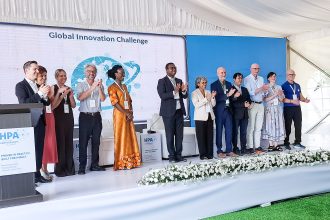
Open until January 17, 2027, the challenge invites solutions on modelling the future doctor, staying human in the age of AI and a changing climate, and harnessing diaspora finance and expertise to improve healthcare access back home. It offers up to €1.5 million (Ksh217 million) in catalytic seed funding administered by GIZ, Germany’s agency for international cooperation.
Gloria Niquuaye, a Ghanaian-born German innovator, knows that diaspora theme personally. After her family moved to Germany, a beloved aunt fell seriously ill back home. Her mother sent money through remittance services, “but she couldn’t ensure the money she sent was actually spent on healthcare purposes,” Niquuaye said.
“We lost our aunt because insufficient funds arrived to pay for her healthcare services.” Many in the diaspora, she noticed, faced the same problem, and no solution existed.
With partners, she co-founded a fintech startup behind Commitment to a Medical Solution (COMESO), a cross-border platform that links recipients of diaspora remittances with health facilities.
“Senders purchase purpose-bound vouchers linked to a recipient’s phone number for use at vetted healthcare facilities,” she explained, instead of sending cash that might be diverted to other household needs.
Knowledge gaps and the choice of dormant co-founders hold back most startups at the incubation stage
Established in 2021, when she was still in college, COMESO has been live in Ghana since 2025, with controlled testing underway for transactions between Ghana and Nigeria. Setting up the infrastructure was complex, but the brightness in the eyes of the first clients after successful transactions keeps her going, she said.
“My dream is to see COMESO become the leading healthcare payment mode, like VISA cards are for money transactions.”

At the forum, an innovator in Syria expressed interest in developing or expanding the technology there. Dr Nellie Bell from Sierra Leone, who has studied and worked in Germany for decades, called diaspora-focused innovation critical to African healthcare.
“Almost everyone in the diaspora has a nagging longing to give back to their country, but there is no structure to consolidate their power,” she said. Africa loses many doctors and nurses to developed nations, she noted, and while they cannot be brought back, “we can bank on their expertise as consultants and ambassadors with two perspectives key to improving healthcare back home.”
“We need to move from the notion of brain drain to brain circulation and finally brain gain by setting up structures to support specialists to offer services back home when they travel or consult through telemedicine channels,” she said.
Winnie Wangari Kibiru, Medical Technology Head at Villgro Africa, a Kenya-based incubation centre for startups and innovators, said catalytic funding through HPA was key to igniting innovation. Yet knowledge gaps and the choice of dormant co-founders hold back most startups at the incubation stage.
Out-of-hospital innovations are critical now and in future, as the determinants of human health are disrupted
“Many young innovators lack entrepreneurial skills and are unable to scale and compete with other products on the market,” she said. “We need to improve the curriculum in higher learning institutions to empower young innovators to set up profitable and sustainable products.”
Mwagiru added that equipment counts only when it transforms patients’ lives, and urged technological interventions to optimise expensive equipment across facilities.

Dr Anselm Schneider, an HPA Executive Board member and Director of Institutional Relations and Development, said out-of-hospital innovations are critical now and in future, as the determinants of human health are disrupted.
“We have taken humans out of nature, we are eating more industrialised food, people are lonely in many places, and AI is arriving, challenging the monopoly of humans on having relationships,” he said. “All of this is asking one question,” he added, and that question is “how to stay human”.
The forum’s recommendations were practical, including building health records that follow patients through referrals, using AI to conduct initial assessments while scientists provide confirmation, connecting diaspora funding and expertise to healthcare through vouchers and telemedicine, and supporting early-stage ideas with catalytic funding alongside business skills training for innovators.
Amid loud calls to integrate technology and AI into healthcare, it was clear that nature conservation and the compassionate doctor remain indispensable.
We believe in the free flow of information
Republish our articles for free, online or in print, under Creative Commons licence.