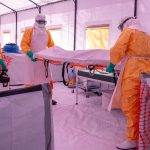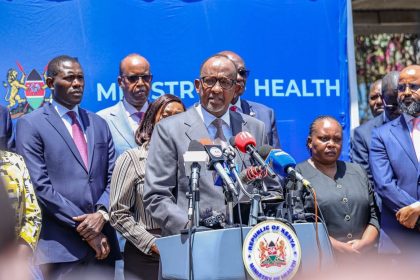



A first dose in Bunia has launched Tumaini, a trial testing three vaccine candidates against the Bundibugyo virus. The study aims to generate critical evidence on their potential to protect against a strain of Ebola that has spread to Kenya.
No vaccine has ever been approved against Bundibugyo virus, the Ebola species behind an outbreak that had caused 4,687 confirmed deaths in the Democratic Republic of Congo (DRC) by October 20 according to the World Health Organization (WHO).
In a new development, on Monday, October 26, researchers in the eastern city of Bunia launched a trial designed to find out whether three candidates can change that.
The first participant was vaccinated on October 26, opening the pivotal Phase 2/3 stage of trials for the three vaccine candidates. The trial is dubbed Tumaini, Kiswahili for hope, and it will support the government-led response to an outbreak that has also reached Uganda, Kenya and Nigeria. Kenya has recorded nine cases with two deaths and Nigeria one case.
Declared on May 15, 2026, the Bundibugyo outbreak is the largest on record and the second-largest Ebola outbreak of any kind, after the West Africa epidemic that began in 2014. By October 21, the DRC alone had confirmed 9,552 cases.
Within days of the declaration, the World Health Organization (WHO) designated it a Public Health Emergency of International Concern and Africa CDC a Public Health Emergency of Continental Security.
Tumaini will measure the safety, immunogenicity and efficacy of each candidate, and its design is built for speed. As an adaptive platform trial, it evaluates several candidates in parallel within a single framework, saving valuable time during an outbreak.
Participants are reached through ring vaccination, which focuses on contacts at high risk of infection in the DRC’s affected health zones. The method takes the trial to where transmission is happening.
Tumaini will work closely with communities, health authorities and response partners to build strong evidence on vaccine performance
Prof Steve Ahuka-Mundeke, Incident Manager of the Ebola Response in the DRC, called the trial’s arrival a key step in meeting the urgent needs of affected communities. “Our priority is to stop transmission and save lives, while ensuring that research is closely coordinated with frontline response activities,” he said.
Researchers and government officials say Tumaini will work closely with communities, health authorities and response partners to build strong evidence on vaccine performance, in a bid to curtail the epidemic, save lives and strengthen preparedness for future Bundibugyo outbreaks.
The Institut National de Recherche Biomédicale (INRB) and the University of Antwerp’s Global Health Institute co-lead and co-sponsor the trial, while the DRC Ministry of Health provides national leadership and oversight.
Prof Hugo Kavunga, Tumaini Co-Sponsor and Principal Investigator at INRB, credited Congolese researchers, health workers and partners for the milestone. “With affected communities at the heart of this effort, we are placing national scientific leadership at the service of the outbreak response. Our priority is to establish which vaccines can safely and effectively protect those at risk,” he said.
His University of Antwerp counterpart, Co-Sponsor and Co-Principal Investigator Prof. Jean-Pierre Van geertruyden, stressed balance. “During an outbreak, speed and scientific rigour must go hand in hand. Tumaini brings together Congolese and international expertise to generate reliable evidence on vaccines against Bundibugyo virus.”
The first candidate to enter the trial is Ervebo, already licensed to prevent Ebola virus disease caused by the Zaire strain. Two Bundibugyo-specific candidates funded by the Coalition for Epidemic Preparedness Innovations (CEPI) are being prepared to join shortly. Moderna is developing one, and the University of Oxford the other, in collaboration with the Serum Institute of India.
Gavi has committed up to US$40 million to manufacturing readiness so that vaccines are available at scale once approved
An independent prioritisation process led by the WHO Technical Advisory Group on Candidate Vaccine Prioritisation (TAG-CVP) selects the candidates. ACOREP, the DRC’s national regulatory authority, approves the corresponding protocol changes.
The platform also guards against a familiar risk, that a promising vaccine arrives too late to be tested. Prof Wim Adriaensen, Head of the Clinical Immunology Unit at the Institute of Tropical Medicine Antwerp (ITM), said laboratory work would identify the immune responses linked to protection.
“We can then compare vaccines that arrive late in, or even after, the outbreak with those protective immune responses, so promising candidates aren’t overlooked simply because they become available at a later stage,” he said.
CEPI’s Bundibugyo virus vaccine development programme funds the trial, backed by the European Commission, the US Department of State, the Fund for Science and Technology, the Republic of Korea and CEPI’s core funding. Gavi, the Vaccine Alliance, has committed up to US$40 million (Ksh5.2 billion) to manufacturing readiness so that vaccines are available at scale once approved.
Africa CDC is advancing African-led clinical research, strengthening regional coordination, ensuring emerging evidence informs public health decisions and supporting equitable access to successful candidates. Epicentre, Médecins Sans Frontières (MSF), ITM and WHO support implementation.
Bern-Thomas Nyang’wa, Medical Director at MSF, called the trial a critical step for the people most affected. “Working in partnership with communities is essential for building trust and ensuring meaningful participation in the development of vaccines that are effective, adapted, and accessible to those who need them most.”
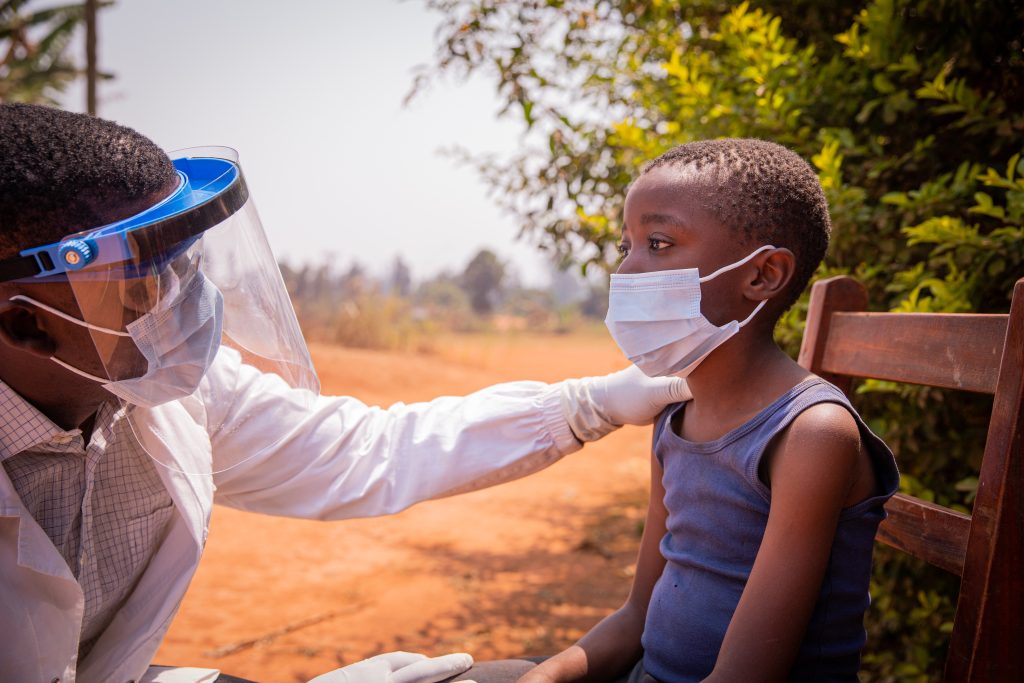
Children are among the hardest hit by the Ebola outbreak in certain regions, yet they have historically been under-represented in clinical research
The trial also includes groups often left out of research. Pregnant women and children aged 12 and above are eligible, as are children from one year of age for Ervebo. “Children are among those hardest hit by the Ebola outbreak in certain regions, yet they have historically been under-represented in clinical research,” said Valérie Briand, Head of the Research Department at Epicentre.
Tumaini’s launch follows a joint move by regulators in Europe and Africa. On October 23, the European Medicines Agency (EMA) and the African Medicines Agency (AMA) published a position paper backing the timely start of clinical trials for Bundibugyo vaccines.
The paper grew out of a scientific consultation that AMA, EMA and WHO hosted on 24 August 2026, and sets out minimum requirements for starting trials alongside advice on design. Because the outbreak has crossed borders, the agencies argue, candidates should move through each phase without unnecessary delay while remaining under rigorous scientific evaluation, with sufficient safeguards for participants, including the vulnerable.
The agencies urge African National Regulatory Authorities (NRAs) to approve trials promptly. They also ease one bottleneck. Product-specific repeat-dose toxicity studies are not necessarily needed before Phase I or II trials of vaccines built on well-characterised platforms, such as mRNA and certain viral vectors.
“Repeat-dose toxicity studies should be further postponed or waived where preclinical toxicity data from multiple vaccine candidates using the same platform technology demonstrate that different antigens do not adversely affect the overall safety profile,” the agencies said. Safety data from other same-platform vaccines against similar pathogens would further support such waivers.
The regulators prefer a single-dose vaccine, which would be easier to deploy rapidly in an outbreak
The guidance also favours Africa as the testing ground. “Ideally, early trials should be conducted in the African region to make the transition to larger efficacy trials in affected populations as efficient as possible,” the agencies said, adding that non-human challenge studies should confirm a vaccine has a chance of working before it progresses to Phase II/III.
The regulators prefer a single-dose vaccine, which would be easier to deploy rapidly in an outbreak. To prove efficacy, they endorse a pivotal Phase III platform study that enrols and randomises close contacts of confirmed cases, with several candidates potentially evaluated in the same trial. Tumaini follows that model.
Because the disease does not spare children and pregnant women, the paper calls for studies in both groups as soon as sufficient initial safety data from adults is available. Developers are urged to seek early scientific and regulatory advice from AMA and African NRAs, enabling coordinated trial assessments and evidence-generation plans that meet the requirements for later regulatory decisions.
Cases in Kenya, alongside the DRC, Uganda and Nigeria, underline why the guidance was written with the African region in mind.
Kenya’s nine confirmed cases form a single cluster. According to the European Centre for Disease Prevention and Control (ECDC), the first person developed symptoms in the DRC and travelled to Kenya via Uganda on 3 October. The eight infections that followed were among four relatives and four health workers, all linked to that first case and all already in quarantine when symptoms began. By 22 October, 135 contacts were under follow-up.
If successful, this would be the first time we have clear evidence of vaccine efficacy against Bundibugyo virus
Health workers and close family are precisely the people ring vaccination is designed to reach. Dr Richard Hatchett, Chief Executive Officer of CEPI, said the cost of having no licensed vaccine “is being counted in the DRC every day, in lives lost and in health workers who go to work without protection.” Kenya’s cluster shows the same gap.
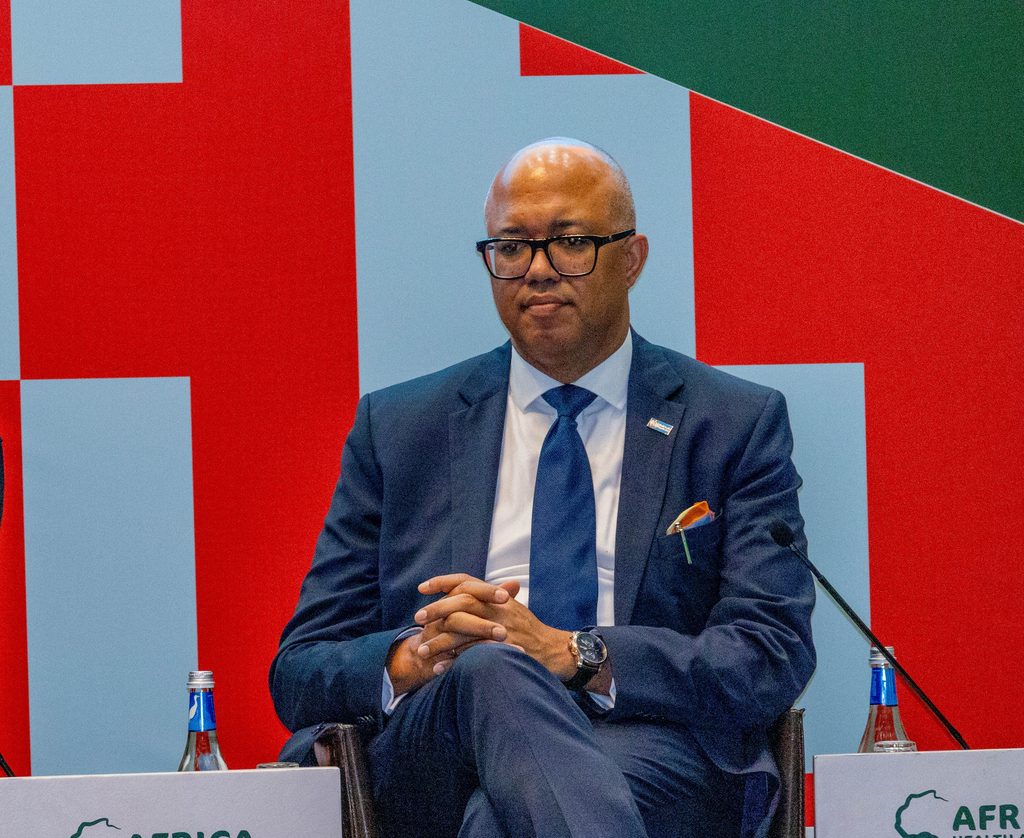
Bunia remains the only trial site named so far. Yet the evidence Tumaini produces could shape which vaccines reach the region, and how quickly.
The method has a track record. Dr Chikwe Ihekweazu, Executive Director of WHO’s Health Emergencies Programme, noted that ring vaccination within a single adaptive platform “is an approach WHO and countries have used in previous outbreaks to test vaccines, including the one that is effective against Ebola virus (previously known as Zaire ebolavirus).”
“If successful, this would be the first time we have clear evidence of vaccine efficacy against Bundibugyo virus, a major advance that could transform how we respond to this outbreak and prepare for future outbreaks and help save lives,” he said.
The regulators’ paper anticipates that moment. Should a vaccine such as Ervebo prove effective against Bundibugyo, the trial may switch to using it as the comparator, raising the bar for every candidate that follows.
For Prof. Placide Mbala, Director of Research, Clinical Trials and Innovation at Africa CDC, Monday’s first dose carried meaning beyond science. “Tumaini means hope, and today that hope is being translated into action.”
We believe in the free flow of information
Republish our articles for free, online or in print, under Creative Commons licence.