
While health workers trace the contacts of Kenya’s Ebola patients, doubt and fear are moving through social media. Kenya’s experience with COVID-19 shows why the response must go beyond correcting false claims to rebuilding trust.
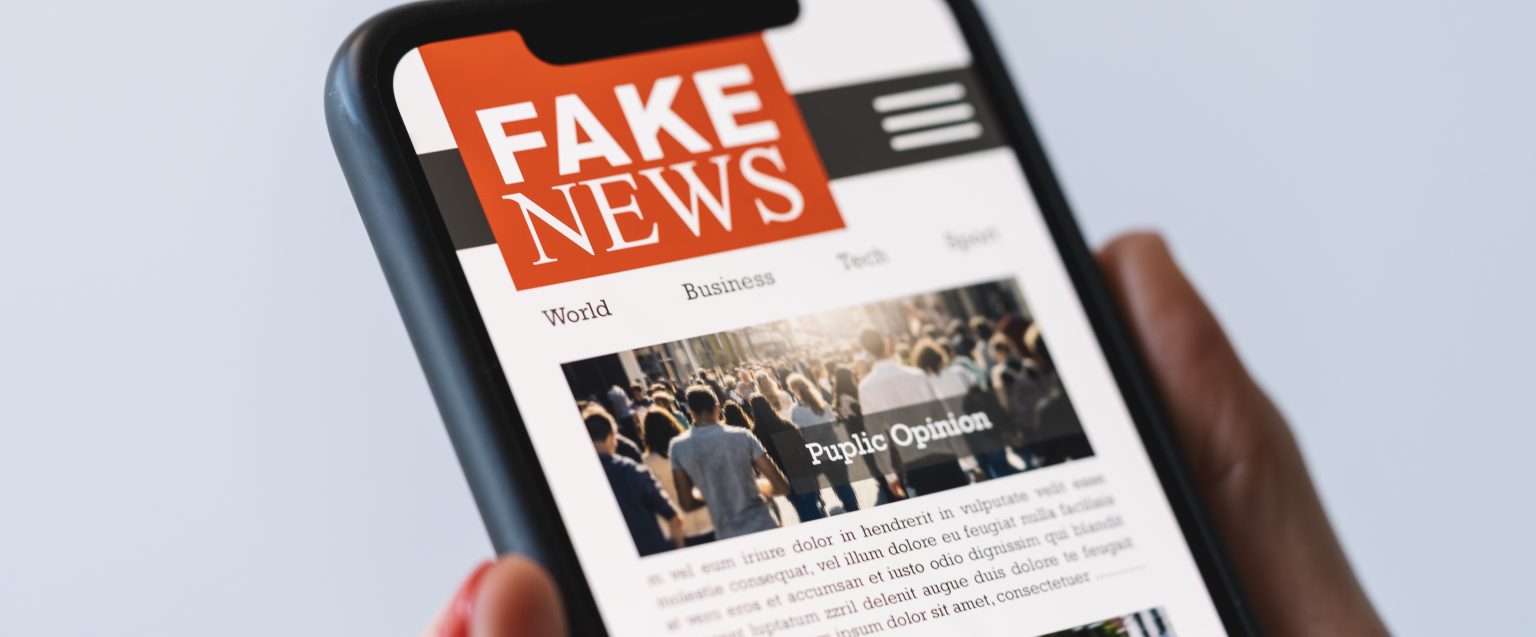
Anyone with a smartphone in Kenya has probably seen the video by now. A man allegedly collapses on a pavement in Nairobi Central Business District (CBD) and the caption claims he has Ebola. By the time it reaches your family’s WhatsApp group, someone has added a second caption. A few forwards later, a third arrives, each more certain than the last.
None of the people sharing it knew what happened to the man. Yet the clip points to a second outbreak running alongside the first. While health workers trace the contacts of Kenya’s Ebola patients, doubt and fear are moving through social media faster than the virus, and so far they have proved much harder to trace.
The confirmed picture is narrower than the rumours suggest. By October 23, the Ministry of Health had confirmed nine cases, including two deaths, all linked to the first imported case, and reported no evidence of spread in the wider community.
Online, thousands of posts have dismissed the outbreak as a hoax or a scheme to attract donor funding, while others predict a lockdown nobody has announced. A rapid GeoPoll survey found that more than 1 in 2 adults had come across Ebola information they believed was false or misleading, and about 1 in 7 thought the outbreak was probably or definitely not real.
The survey reached 1,349 adults across 46 counties on October 6 and 7. Its mobile sample skewed younger, male and more educated, making it an early snapshot rather than a nationally representative verdict.
A collapse on a busy street can come from heat, hunger or a heart problem, and a person’s appearance cannot confirm Ebola
Some of the doubt is dangerous, but some of it is a fair question that still has no answer. A World Health Organization (WHO) specialist says both are best met with more information, not less.
The first person with Bundibugyo virus disease was a Kenyan who had been living in the Democratic Republic of Congo. He travelled to Nairobi through Uganda and died on October 5. The next day, Kenya confirmed its first imported case of Bundibugyo Ebola after two laboratories, the National Virology Reference Laboratory and the Kenya Medical Research Institute (KEMRI), confirmed the virus.
The Nairobi video shows none of this. A collapse on a busy street can come from heat, hunger or a heart problem, and a person’s appearance, even reported bleeding, cannot confirm Ebola. Its early signs of fever, headache and weakness look much like malaria and other everyday illnesses, so only a clinician and a laboratory test can confirm the virus.
Yet once a claim is attached to a frightening disease, it can spread before anyone establishes what happened. Plenty of Kenyans online are not convinced.
“There is no Ebola in Kenya,” one user wrote, in a line short enough to paint on the back of a matatu. Another put it more sharply: “Ebola cases are rising on paper, and we’re seeing it in the news like everyone else around the globe. Lakini kwa ground, there are no Ebola patients. Are the donors blind or stupid? Or just playing dumb?”
Meltwater, a media monitoring firm, found 4,879 posts and articles matching a targeted search for Ebola-related terms such as “hoax”, “scam”, “fabricated case” and “bioweapon” between May 14 and October 12. Of these, 4,670 were on social media, with X accounting for 4,586.
“There’ll always be that person who plants the seed of doubt and as long as the seed of doubt has been planted it takes a life of its own”
Dr Loice Achieng Ombajo, an infectious disease specialist, senior lecturer at the University of Nairobi and head of the Infectious Diseases Unit at Kenyatta National Hospital, says suspicion can take hold quickly.
“There’ll always be that person who plants the seed of doubt and as long as the seed of doubt has been planted it takes a life of its own,” she told Willow Health Media.
Her recommendation is for the government to communicate openly about what is happening, where the response stands, and what people should do. “It’s to be as open as possible so that people don’t feel like there’s something being hidden,” she said.
That openness matters most when people ask how airport screening works or why case and contact figures change. Such questions should not automatically be labelled misinformation. They need clear explanations of what has been established, what remains under investigation and when more information will come.
The Ministry has been fighting this fight since before the first case. In a national address on Friday May 22, 2026, Health Cabinet Secretary Aden Duale cautioned the public against spreading fake news, after a forged letter claimed Uasin Gishu County had recorded Ebola.
At a media breakfast on Ebola preparedness in Nairobi, he warned that inaccurate reporting could create fear, stigma and confusion. Principal Secretary for Public Health Mary Muthoni was blunter at the same briefing: “Misinformation spreads faster than any virus and creates fear that undermines public health efforts.”
A WHO case study described how claims circulated in Dadaab that international aid agencies had created Covid-19 to make money
Kenya has faced this before. During the Covid-19 pandemic, rumours circulated that vaccines caused infertility, caused death, or were a form of family planning. Some people also believed the disease was a scam.
A 2024 qualitative study of community health volunteers in Kenya described how misinformation, fear of side effects and mistrust hindered vaccine education and acceptance. Some community members reportedly avoided testing because they did not believe Covid-19 was real. A separate study of volunteers in four counties linked belief in Covid-19 conspiracy theories to lower general trust in government.
A WHO case study described how claims circulated in Dadaab that international aid agencies had created Covid-19 to make money. A local radio host used broadcasts and community discussions to challenge the rumours, bringing information into a space where people could ask questions.
These examples show that corrections need more than an official statement. They need investigation, credible local voices, and explanations that address the concern behind the rumour.
It remains unclear from the public information reviewed whether the Ministry’s rumour management structures are being used in the same way for Ebola. The Ministry should clarify what claims are being monitored, how they are verified, and how quickly corrections reach communities.
Ombajo says lessons from Covid-19 have also improved life in quarantine: individual rooms where possible, access to phones and laptops, contact with loved ones, clinical monitoring and psychosocial support. “We have done better than Covid-19,” she said.
But fear can discourage people from disclosing travel or contact histories. She said the first patient’s travel history was not available from the outset, which affected contact tracing. Her appeal is for people not to hide information because they fear quarantine or stigma.
People cleared after quarantine should be welcomed back into their communities. Those who have completed monitoring pose no risk simply because they were contacts and treating them as dangerous extends the harm long after the public-health measures have ended.
Trust can decide whether people seek care, disclose possible exposure, and follow public health advice
Nancy Okwengu, WHO’s Infodemics Management Officer, distinguishes misinformation, which may be shared without intent to deceive, from disinformation, which is deliberately created or shared to mislead.
At a media workshop on Ebola reporting in Nairobi, she described claims that ginger, garlic or lemons could cure Ebola. People may share such advice in good faith, but it is not supported by scientific evidence. Claims that the outbreak was deliberately created for political or financial gain allege something different and require evidence of motive.
Her approach starts with understanding the concern rather than simply arguing with the person sharing it. “Listen, understand what the questions are, what the concerns are, then analyse,” she told participants, before outlining the need to verify, respond and monitor.
That includes checking when and where viral footage was filmed. For Ebola, it means explaining how airport screening works, distinguishing individual quarantine from a national lockdown, publishing dated updates when figures change, and saying so when something remains under investigation.
The GeoPoll survey found that about 6 in 10 respondents trusted the Ministry of Health for Ebola information, followed by WHO at nearly 1 in 2 and doctors or health workers at about 4 in 10. Yet only about 1 in 3 said they were very confident they would know what to do if symptoms appeared.
Television was the most reported source of information respondents considered false or misleading, followed by Facebook, TikTok and X. That reinforces the need to reach people through broadcast media, Community Health Promoters and health workers, not only official websites and social accounts.
Okwengu advises the public to verify information through the Ministry of Health, the Kenya National Public Health Institute, Africa CDC, WHO and UNICEF, and to call the 719 line, rather than rely on forwarded voice notes.
Ombajo’s appeal is to focus on protecting oneself and loved ones. Okwengu’s is to listen, verify, and respond instead of letting false claims circulate unanswered. Kenya’s Covid-19 experience shows that trust is not an optional extra to the clinical response. It can decide whether people seek care, disclose possible exposure, and follow public health advice.
We believe in the free flow of information
Republish our articles for free, online or in print, under Creative Commons licence.