



It is now an offence to fail, without reasonable excuse, to comply with lawful requirements on screening, reporting, investigations, contact follow-up, isolation, quarantine, decontamination or safe burial, with offenders facing a fine of up to Ksh50,000, up to six months in jail, or both.
On October 3, 2026, a Kenyan citizen who had been living in the Democratic Republic of the Congo (DRC) landed in Nairobi. According to the World Health Organization (WHO), the traveller had come by road through Beni to Kampala the day before.
Two days after landing, he was dead. On October 6, he was buried under Kenya’s Ebola burial protocol. It was Kenya’s first Bundibugyo virus disease case. There are now nine confirmed cases and one death. Three of the newer cases are health workers who treated the first patient. Of the 128 contacts listed from the first two reported cases, authorities have traced 127 and placed them under monitored quarantine.

On October 12, 2026, those measures gained the force of law when the Kenya Gazette carried two notices signed by Health Cabinet Secretary Aden Duale.
Legal Notice No. 203 declares The Ebola (Bundibugyo Virus) Disease a “formidable epidemic disease” under the Public Health Act. That declaration unlocks the Cabinet Secretary’s power to make special rules, and Legal Notice No. 204 uses it to introduce the Public Health (Ebola Disease) Rules, 2026.
Together, they define what authorities may do, what the public must do and the price of defiance, with the Kenya National Public Health Institute (KNPHI) leading the technical response.
Anyone entering or leaving Kenya may be screened and asked for contact details, travel history, symptoms and possible exposure, and travellers must answer truthfully.
A port health officer may refer anyone who refuses screening or withholds information to an immigration officer or, where there is evidence of a public health risk, separate them for assessment, isolation or quarantine. Suspected cases found at points of entry must be promptly separated, assessed, tested where necessary and referred for care.
But there are limits. Arriving from a country with an outbreak is not grounds for quarantine without an assessment of exposure. Nor can immigration officers use the cited provision to turn Kenyan citizens away.
Anyone in quarantine who develops symptoms is assessed and moved to isolation
“Quarantine is for contacts who are well,” said Dr Irungu Kamau, Acting Head of Infection Prevention and Control at KNPHI, during a media engagement on Ebola preparedness.

Contacts who may have been exposed but show no symptoms are quarantined for 21 days from their last relevant exposure and checked daily.
A contact identified at a point of entry who tests negative twice may leave earlier. Isolation is for suspected or confirmed cases. Anyone in quarantine who develops symptoms is assessed and moved to isolation when required.
Being monitored does not mean someone has Ebola. The aim is to catch illness early and stop it spreading. Medical officers may investigate suspected cases, gather information, arrange assessments and specimens, and examine premises or records where lawful.
After assessing exposure, they may order isolation for a suspected or confirmed case, or quarantine or movement restrictions for a contact. Every order must state its reasons, requirements, place and duration, and emergency verbal orders must be confirmed promptly in writing.
People under compulsory measures must receive care, food, water and essential assistance. The government pays for placements in its own facilities. A person in a private facility generally pays, unless a medical officer of health directed the placement in writing.

The Cabinet Secretary designates isolation, treatment and quarantine facilities by Gazette notice. They must protect and train staff, handle specimens and infectious waste safely and report occupational exposure promptly. With health workers among Kenya’s cases, that duty is no formality.
Community health personnel may help with follow-up but cannot independently order compulsory examination, isolation or quarantine.
Anyone who knows of, or reasonably suspects, an Ebola case or Ebola-related death must immediately notify a medical officer of health, the nearest health facility or a national government administrative officer, orally, electronically or in writing through the toll-free hotline 719.
Health professionals and facility managers carry the same immediate duty, as do managers of schools, workplaces and residential institutions for people in their care. Nobody has to transport a suspected patient, only call the authorities and follow instructions.
“Early symptoms of Ebola can resemble illnesses such as malaria or typhoid,” said Dr Kamau, urging people not to wait for severe symptoms before seeking help, especially after a possible link to an infected person or relevant exposure.
“Without an effective surveillance system, then the rest of the response steps might not be very effective,” said Dr Ahmed Fidhow, Head of the Division of Disease Surveillance and Response at the Ministry of Health.
That system draws on health facilities, laboratories, Community Health Promoters, points of entry and, under the One Health approach, the animal and environmental sectors, to turn signals into timely action. Only the national reference laboratory or another designated laboratory may test for Ebola, so other facilities must refer specimens.
Penalties for breaking the rules
It is now an offence to fail, without reasonable excuse, to comply with lawful requirements on screening, reporting, investigations, contact follow-up, isolation, quarantine, decontamination or safe burial. So is knowingly giving false or misleading information, or knowingly helping someone leave, or try to leave, isolation or quarantine.
Offenders face a fine of up to Ksh50,000, up to six months in jail, or both, plus up to Ksh1,000 for each day a continuing offence, such as staying out of quarantine, goes on.
The National Police Service must help enforce lawful isolation and quarantine orders. Yet these powers are no licence for arbitrary restrictions. Enforcement must be legally justified and proportionate to the risk.
Even in death, the rules weigh safety against dignity. Only trained personnel in protective gear may handle the body of anyone who died of suspected or confirmed Ebola.
Washing and embalming are banned, and the body must be placed in a sealed, leak-resistant body bag. Officials must consult families and accommodate cultural and religious practices that can be observed safely. Burial should happen without undue delay, and such bodies may not be transferred or repatriated outside Kenya.
“Families can still pray, witness and mourn without touching the body,” said Dr Kamau.
The rules lapse 12 months after taking effect unless revoked sooner
The Cabinet Secretary for Health leads policy communication, while the Director-General for Health provides technical guidance. Media houses are expected to help deliver accurate, accessible information and counter stigma.
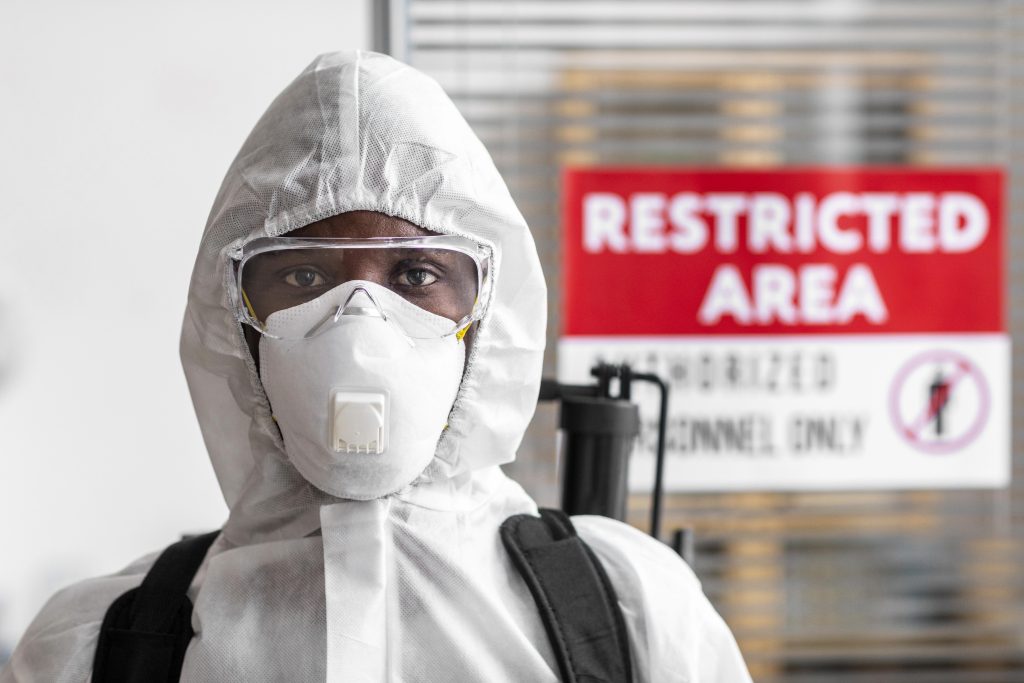
Dr Kamau cautioned against stigmatizing people under screening or quarantine. “Ebola is primarily spread through direct contact with the blood or other body fluids of an infected person, a person who has died from the disease or contaminated materials,” he said.
The groundwork came first. By early October, WHO reported, Kenya had screened more than 652,000 travellers, tested 267 suspected samples, trained around 5,000 health workers and assessed isolation units in 27 high-risk counties.
Its preparedness score rose from 66 per cent in May to 82 per cent in July 2026. The outbreak is still growing, but the rules can flex with it. The Cabinet Secretary must review them at least every three months and lift restrictions the risk no longer justifies. They lapse 12 months after taking effect unless revoked sooner.
The law gives authorities the tools. Its success will depend on timely reporting, clear communication and respect for the rights and dignity of every person assessed or monitored.
We believe in the free flow of information
Republish our articles for free, online or in print, under Creative Commons licence.