

Mothers can now flag danger signs by SMS, and health promoters are getting smartphones. The next step is making sure every warning reaches a facility ready to act.
Somewhere in the continent, a woman is dying from a complication of pregnancy or childbirth. And while her struggle unfolds, the clock is already moving towards the next woman whose life could be at risk.
In Kenya, roughly one in every 260 births ends in a mother’s death. The real question is what happens in the space between a woman noticing something is wrong and the moment she actually reaches care. Increasingly, the answer being tested across Africa involves digital technologies.

On September 22, the Gates Foundation and MTN Group Foundation announced a $25 million (Ksh3.2 billion) maternal health initiative in Nigeria that links phone-based support powered by artificial intelligence (AI) with stronger primary healthcare facilities. Its central idea is that a digital warning is only as useful as the health worker who can respond to it and the facility that can treat what she finds.
Kenya already has more than 107,000 Community Health Promoters (CHPs) who are due to receive smartphones for an AI-powered SMS service that helps mothers spot danger signs. The challenge is whether they can be connected into a single care pathway, rather than continuing to operate as separate digital interventions.
In 2023, about 260,000 women died from maternal causes worldwide, according to estimates from the World Health Organization (WHO) and other UN agencies. More than 700 women died each day, many from causes that could have been prevented or treated with timely, quality care. Sub-Saharan Africa carried the heaviest burden, accounting for about 182,000 deaths, roughly seven in every 10 maternal deaths globally.
The initiative combines AI-enabled, affordable smartphones for mothers and health workers with mobile data
Though smaller, Kenya’s numbers still expose a significant gap. The country’s maternal mortality ratio was estimated at 378.8 deaths for every 100,000 live births in 2023. That is still far off the Sustainable Development Goal target of fewer than one death for every 1,400 births by 2030.
The Nigeria Maternal Health Multiplier is designed around three parts of the care system: the mother, the frontline health worker, and the primary healthcare facility. By 2030, it aims to help 500,000 women access higher quality maternal care, equip 5,000 frontline health workers with tools to identify pregnancy and childbirth complications earlier, and support 500 health facilities to provide more consistent care.

The initiative combines AI-enabled, phone-based decision support for mothers and health workers with affordable smartphones and mobile data, while improving connectivity at primary healthcare facilities. It is being built around Nigeria’s existing maternal health reforms rather than as a standalone technology project. The partnership was announced at Semafor’s Next 3 Billion event in New York, on the sidelines of the United Nations General Assembly, with an initial investment of about $25 million between 2026 and 2030.
Nigeria is not simply handing out another app and hoping it sticks. Its communications and digital economy minister, Dr Bosun Tijani, said at the announcement that the country’s problem has rarely been a shortage of innovations, but a shortage of the basic systems needed to make those innovations usable at scale. Health minister Dr Muhammad Ali Pate echoed the point, framing the partnership as one meant to work through Nigeria’s existing health system, not around it.
Each partner brings something different. MTN brings connectivity, devices and distribution reach, while the Gates Foundation brings experience in digital, maternal health and responsible AI. Gates Foundation CEO Mark Suzman argued that philanthropy’s role should be catalytic, not a substitute for real investment. Technology left purely to market forces tends to reach people who can already afford it, not those who need it most.
The move is part of equipping frontline workforce with digital tools to strengthen primary healthcare
MTN Group CEO Ralph Mupita framed the project as a way to put locally relevant health guidance, in local languages, directly into the hands of mothers and health workers, with hopes of scaling the model elsewhere in Africa.
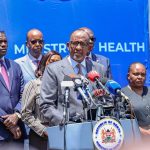
At the community level, Kenya has built a large network of CHPs who serve as a link between households and the formal health system. At the August 2026 Kenya Health Summit, President William Ruto announced that more than 107,000 CHPs would receive smartphones and modern health kits. The move is part of a broader effort to equip the frontline workforce with digital tools and strengthen its role in primary healthcare.

The importance of that investment goes beyond giving a health worker a better phone. A connected CHP can capture information at the household level, receive decision support prompts, follow up with a patient, and send information into the wider health system. The device becomes the first digital link between a woman at home and a facility several kilometres away.
Jacaranda Health’s PROMPTS (Promoting Mothers in Pregnancy and Postpartum Through SMS) shows technology entering the journey from the woman’s side. The service uses two-way SMS to give pregnant and postpartum women information relevant to their stage of pregnancy. It is a simple model: no internet, no complex application, just a text message powered by AI.
Its AI-enabled helpdesk can respond to questions, identify potential risks, and trigger a referral when a message suggests that a woman may need urgent care. The model targets one of the most persistent problems in maternal health: the delay between a woman experiencing a danger sign, recognising it and deciding to seek care.
Before SMS prompts, some mothers were oblivious of danger signs and complications went unmanaged
“Our mission is to reduce preventable maternal and newborn deaths by addressing two deadly delays: the delay mothers face in recognising danger signs and deciding to seek care, and the delay in receiving quality services once they are at the hospital,” says Dr Job Makoyo, Jacaranda Health Country Director.
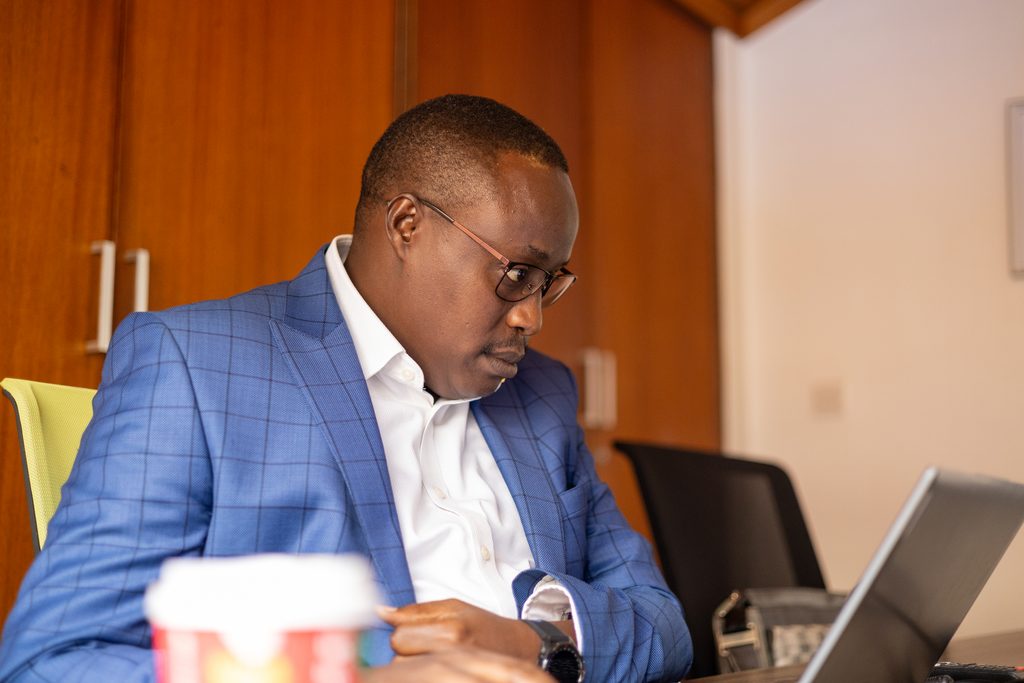
The difference is clearest from a health worker’s side. Speaking to Willow Health Media in an earlier interview, Jacqueline Mbithe Mutua, a maternal and child health nurse at Makueni County Referral Hospital, said that before PROMPTS, some mothers arrived with little understanding of danger signs, and complications could go unmanaged. With the system, she says, mothers arrive with more information and can use the platform to seek help when emergencies occur, including cases of bleeding.
Technology, in that sense, is not replacing the nurse. It is changing the point at which the nurse enters the problem.
That is also where the conversation about AI in healthcare needs to become more practical. The most useful application may not be an AI system that tries to become the doctor. It may be one that helps a mother recognise that something is wrong, helps a community health worker know what to ask next, helps a nurse prioritise a patient or helps a facility see that a referral is on its way.
Dr Hope Simiyu, a digital health communications adviser, argues that this frontline layer deserves as much attention as AI itself. She points to tools that put data capture and decision support directly into community health workers’ hands, since they reach people that facilities cannot. Equipment tracking, telemedicine and e-pharmacy networks could plug other gaps in underserved counties.
What’s missing is a system where a text message, smartphone log and hospital referral all speak together in real time
“But none of it moves past pilot stage,” she says, without real collaboration between government, healthcare providers, researchers, development partners and the private sector. Each, she adds, carries a distinct load: government sets policy and financing, the private sector builds and deploys, researchers generate evidence, and donors absorb early risk until solutions can stand on their own.
For Kenya, the question isn’t whether to import another platform. It’s whether the country can connect what it already has. PROMPTS shows a mother can become an active participant in her own care through a basic phone. The health promoter network offers a human and digital bridge into communities. What’s missing is the wiring between them: a system where a text message, a smartphone log, and a hospital referral all speak to each other in real time.
Technology cannot close a gap that lives outside the digital system. A phone needs a signal. A warning needs a worker who can act on it, and the woman receiving that warning still needs transport, medicine, skilled hands, and a working facility when she finally arrives.
That is why Nigeria’s announcement is worth watching from Nairobi, not for the $25 million or the AI, but for the design: a chain built to hold together at every link. Kenya already owns most of those links. Whether it can weld them into one system, so the next warning doesn’t just arrive faster but early enough to change what happens to a mother, remains the open question.
We believe in the free flow of information
Republish our articles for free, online or in print, under Creative Commons licence.