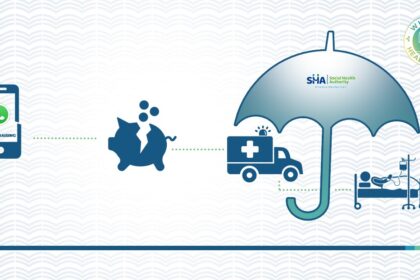




Kenya is wiring hospitals into a national health data network, but most facilities still can’t exchange records or identify patients consistently. Experts say true accessibility depends on interoperability and a simple experience for patients and health workers.
A patient moving through Kenya’s health system often has to start their story from scratch at every stop. One clinician holds a set of records, a laboratory holds another, and a separate system tracks claims or insurance details. By the time that patient reaches the next facility, the medical history that matters most may simply not be there.
That gap is what Eng. Anthony Lenaiyara, CEO of the Digital Health Agency, pointed to at the Kenya Health Summit on Tuesday, 18 August, 2026.
“The main problem we had with universal healthcare is accessibility. Our public hospitals did not have the digital systems and digital infrastructure to provide services,” he said.

Kenya has accelerated a national push to connect patients, health workers, facilities and health information systems. But wiring more facilities into that push does not automatically make healthcare connected.
A 2021 study of 213 facilities across 19 counties found that only 14.1 per cent could exchange health data with external systems, that just 18.1 per cent of staff with authorised access actively used KenyaEMR, an electronic medical records system, and that only 9.4 per cent of facilities had gone completely paperless. Behind those figures sits the exact problem this story opened with. Patients’ histories do not follow them, and clinicians work without the full picture.
The issue is not simply access to technology, according to information systems specialist Davis Oenga; it is whether the technology works for the people using it.
“You can have good systems, but if they are not responsive to the clients and the providers, utilisation becomes a challenge. But do these systems communicate to each other? So, if we have systems that are uniform, they can help the clinician. If a clinician can enter details, they can access the client history.”
The difference between simply digitising records and making them interoperable is central to Kenya’s challenge
That continuity matters most at the exact point where Kenya’s system breaks down: the referral. “They provide good referrals because they understand the history of this client. Also, they can really provide the best care,” Oenga noted. For patients, that means fewer repeated questions and more continuous care; for clinicians, it means having the relevant facts on hand when a decision has to be made fast.

That difference, between simply digitising records and making them interoperable, is central to Kenya’s challenge. Digitisation moves information from paper into a digital system. Interoperability goes further, letting different systems exchange and use that information so a clinician at a referral hospital can see what happened at the patient’s first stop.
Making that exchange work depends on shared standards and a reliable way to identify the same patient across systems. The 2021 study found that only 50.5 per cent of patient records carried the nationally endorsed patient identifier, meaning interoperability depends as much on how information is structured as on the technical wiring between systems.
A 2025 scoping review of health information systems interoperability in Kenya, which examined 138 records and drew 27 studies into its final analysis, reached a similar conclusion. It named inadequate technological infrastructure, a lack of standardised data formats, limited digital health readiness and fragmented governance as the main barriers, and strong leadership, collaboration, user-centred design and modular digital tools as the clearest way past them.
Kenya’s answer is built around more than individual hospital software. Its emerging digital health architecture includes shared infrastructure and a Health Information Exchange designed to let different systems share health information securely, making a patient’s information available across their whole journey rather than locked inside one platform. President William Ruto made a broader claim for what is at stake.
Many facilities have spent years and significant money on their existing health management information systems
“Digital health is the backbone that holds much of this architecture together. Digitisation is not simply replacing paper with screens; it is about making every patient visible, every treatment traceable, every payment accountable,” he said.
Building a national architecture raises a practical question too: What happens to the technology that facilities have already invested in? That was one of the issues addressed at a webinar hosted by Safaricom and Savannah Informatics on Thursday 30 July 2026.

Paul Mutinda, CEO of Savannah Informatics, a Kenyan health technology company that develops digital health and hospital management systems, said many facilities have spent years and significant money on their existing health management information systems, or HMIS, the software used for patient registration, clinical consultations, laboratory requests, pharmacy, billing and claims.
“We know that most of the facilities already have their health management information systems that they have invested in for a very long time. They have invested their money and time, and we don’t want to come and change how they are working.”
Savannah Informatics presented a model built around that constraint, connecting facilities’ existing software to the national infrastructure through application programming interfaces, or APIs, rather than replacing it. A health worker keeps using the system they already know, while information moves between platforms in the background.
Mutinda said, “Our aim is to plug you into the national digital superhighway. Your system just calls our APIs in the back, and what the user sees is only the HMIS.”
Done well, that could spare health workers repeated logins and spare patients from repeating their history at every stop. But integration is not automatic. Facilities still have to contend with connectivity, electricity, staff training, data standards, security and the real cost of changing workflows that already work.
The regulatory ground is shifting under all of this, according to Dr Job Nyangena, who leads Safaricom’s digital health team.
Strong leadership, collaboration, user-centred design and modular digital tools are the clearest way past Kenya’s interoperability barriers
“While in the past digital transformation was a preference for forward-looking hospital administrators, it’s now a regulatory compliance. This regulation now provides the governance needed to have a properly related digital health ecosystem.” For facilities, that turns digital transformation from an option into a requirement. “A facility without compliant digital infrastructure will struggle to fit into the ecosystem, and this will bring pain to the clients,” Nyangena said.
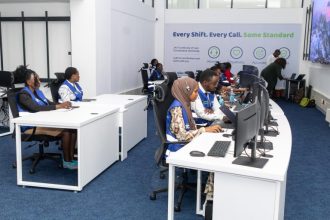
Compliance alone will not fix the patient’s journey. A hospital can hold a digital record and still leave a clinician blind to a result generated elsewhere. A laboratory can produce a digital result trapped in a system the receiving clinician cannot open, and a patient can still end up repeating their own history at the next stop.
The fixes researchers and practitioners point to are less about adding more technology than about making the technology already there behave like one system. The 2025 scoping review names strong leadership, collaboration, user-centred design and modular digital tools as the clearest way past Kenya’s interoperability barriers.
Savannah Informatics’s API-based approach puts that into practice, letting facilities keep the systems they have already paid for and trained on while the connections are built behind the screen. Oenga’s call for uniform systems and Nyangena’s compliance framework point the same way, toward standards a county hospital and a national referral centre can both meet, whatever their budget or location.
We believe in the free flow of information
Republish our articles for free, online or in print, under Creative Commons licence.