


Kenya’s 922 dispatch centre guarantees free ambulance evacuation and 24 hours of critical care to every citizen, no cash deposit, no SHA registration required.
On a wet Tuesday evening on the congested Nakuru-to-Nairobi highway, a long-distance matatu loses traction near Salgaa and collides with a heavy cargo truck. Inside the wreckage, 32-year-old Wanjiku, a secondary school teacher, suffers severe chest trauma, multiple femoral fractures and internal haemorrhaging. Her phone battery is fading, her blood pressure is plummeting, and shock is setting in.
Until recently, Wanjiku’s fate would have depended on a chaotic cascade of luck and solvency: bystanders bundling her into an unequipped pickup, an ambulance operator demanding an upfront fee of Ksh5,000 to Ksh15,000 before turning the ignition, or an admissions clerk asking for proof of insurance before wheeling her into theatre. For tens of thousands of Kenyans every year, that pre-hospital barrier has proved fatal.
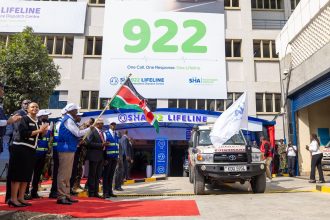
That is the crisis Kenya moved to dismantle on August 5, 2026, with the launch of the Social Health Authority (SHA) Emergency Medical Service and the National 922 Ambulance Dispatch Centre. Anchored on a single, toll-free hotline accessible across all networks even without airtime, and backed by the Emergency, Chronic and Critical Illness Fund (ECCIF), the reform guarantees ambulance evacuation and the first 24 hours of critical care to every citizen, regardless of financial or SHA registration status.
It is, in effect, a shift from emergency care as a fee-for-service commodity to an enforceable right under Article 43(2) of the Constitution of Kenya 2010.
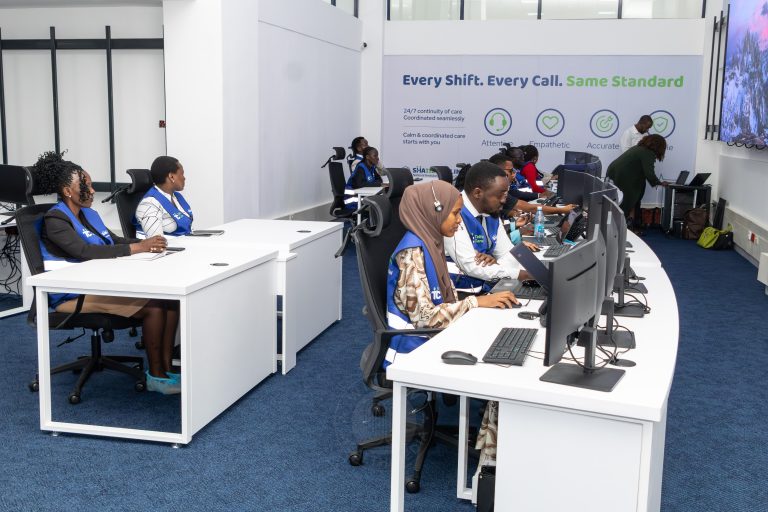
Under the new system, Wanjiku’s rescue looks entirely different. A bystander dials 922 free of charge. The dispatch centre, based at SHA headquarters in Nairobi and staffed around the clock by more than 40 trained dispatchers and clinical specialists, uses GPS triangulation to pinpoint her location and applies international Advanced Medical Priority Dispatch protocols to grade her case as Category Red.
The accident victim reaches hospital without a single cash demand at the door
The nearest of over 200 digitally tracked, accredited ambulances is deployed, guided while en route with pre-arrival instructions on bleeding control. Her vitals are transmitted digitally ahead of arrival so that a resuscitation bay is ready. She reaches the hospital without a single cash demand at the door.
Understanding why this shift matters requires grasping the scale of the problem it addresses. Emergency medical conditions drive more than 50 per cent of deaths and 45 per cent of disability-adjusted life years across low- and middle-income countries, according to Razzak et al. (2019). In Kenya, that burden has played out through a familiar cascade: road trauma, obstetric emergencies, strokes, heart attacks and life-threatening paediatric infections, most of them funnelled through a fragmented, under-resourced pre-hospital system.

Public health researchers Thaddeus and Maine mapped this failure through their Three Delays Model in 1994. Delay One is the decision to seek care, driven by fear of cost and confusion over which of more than a dozen emergency numbers, from 999 to 112 to private hospital lines, to call. Delay Two is reaching an appropriate facility, hampered by poor roads, no centralised dispatch and prohibitive ambulance fees. Delay Three is receiving adequate care on arrival, when hospitals demand cash deposits or insurance validation before treating a patient in crisis. Most trauma victims in Kenya have historically reached tertiary hospitals via commercial vehicles, boda bodas or private cars rather than formal EMS units, arriving without basic life support and at high risk of secondary spinal injury or unmanaged haemorrhagic shock.
The 922 system was built by a multi-sectoral partnership linking SHA, the Ministry of Health, the Communications Authority of Kenya, Safaricom, the Kenya Red Cross and accredited private ambulance operators, and rests on five pillars: a toll-free hotline prioritised even on zero airtime; intelligent call triage using AMPDS protocols; a digitally tracked fleet of over 200 accredited ambulances; smart referral routing that checks bed capacity and specialist availability in real time rather than sending patients to the nearest hospital regardless of its capability; and continuous clinical guidance from dispatcher to receiving emergency department.
None of this works without financing to match. The Social Health Insurance Act of 2023 restructured Kenya’s healthcare funding into three streams under SHA: the tax-financed Primary Healthcare Fund for dispensaries and health centres; the contributory Social Health Insurance Fund, drawing 2.75 per cent of household income for inpatient and outpatient care; and the state-funded ECCIF, which underwrites catastrophic expenditure, acute trauma and high-cost conditions such as dialysis and oncology.
The law prohibits hospitals from demanding cash deposits or pre-authorisation before treating an emergency case
Backed by an initial allocation of Ksh8 billion, the ECCIF covers both pre-hospital evacuation, reimbursing ambulance providers directly so patients pay nothing, and the first 24 hours of clinical stabilisation. Section 27 of the Social Health Insurance Act reinforces this by prohibiting hospitals from demanding cash deposits or pre-authorisation before treating an emergency, whatever the patient’s registration or payment status. Once stabilised, patients transition to standard SHIF benefits or public safety-net programmes.

The reform’s value becomes sharper still in a second scenario. In Eldoret, 58-year-old accountant John collapses at his desk with sudden right-sided paralysis and loss of speech. Under the old system, colleagues would have bundled him into a private car and driven to the nearest Level 4 clinic, only to discover it had no functioning CT scanner to distinguish an ischaemic from a haemorrhagic stroke. Transferred again in an unequipped vehicle, he would likely have missed the tight 4.5-hour window for clot-busting therapy and survived with permanent paralysis.
Under the 922 system, his colleagues call the hotline instead. The dispatcher recognises stroke symptoms using the FAST protocol and sends an Advanced Life Support ambulance. Crucially, the platform’s smart routing recognises that the nearest clinic lacks a working CT scanner and redirects the ambulance straight to Moi Teaching and Referral Hospital, where scanning and a stroke team are confirmed ready.
John reaches the emergency room within 50 minutes of symptom onset, receives thrombolytic therapy funded by the ECCIF, and makes a full neurological recovery. The difference between his two possible outcomes is not medicine. It is logistics and financing, precisely what the 922 reform was built to fix.
Kenya’s approach places it within a recognisable global pattern, adapted to its own fiscal realities. The United States runs a sophisticated 911 dispatch network, but fragmented financing leaves patients exposed to surprise ambulance bills running into thousands of dollars. The European Union instead relies on a single toll-free number, 112, integrated across medical, fire and police services and funded through general taxation, a centralised philosophy Kenya’s 922 system draws on directly.
Ghana’s unified 112 number, launched in 2019, measurably improved road traffic survival rates
Within the region, South Africa runs a two-tier system, a well-resourced private network alongside a stretched public service reachable via 10177, while Ghana’s unified 112 number, launched in 2019, measurably improved road traffic survival rates. Kenya’s model builds on these regional lessons by pairing digital dispatch with direct state financing through the ECCIF.

Sustaining the gains will require overcoming four bottlenecks. Devolution dynamics need managing carefully, since SHA must act as a single-payer commissioner while giving counties enough incentive, through prompt ECCIF reimbursement, to keep local ambulance fleets integrated rather than operating independently. Infrastructure and traffic remain a constraint, particularly dense urban congestion and unpaved rural terrain, requiring dedicated emergency lanes in cities and off-road or motorcycle-based first response in remote areas.
Provider reimbursement liquidity is equally critical: delayed payments risk pushing ambulance operators back towards demanding cash deposits, making automated claims processing within 14 to 21 days, alongside real-time fraud auditing, essential. Finally, workforce standardisation is needed, since inconsistent EMT skill levels call for uniform national certification by the Ministry of Health and the Kenya Medical Practitioners and Dentists Council, backed by mandatory ongoing training.
Equipping ambulances with high-speed telemetry would allow real-time physician consultation during transit
Looking ahead, several measures could secure the reform’s long-term sustainability. Public education campaigns are needed to build awareness of the service while deterring hoax or non-emergency calls. Equipping ambulances with high-speed telemetry would allow real-time physician consultation during transit. Partnerships with air ambulance providers such as Amref Flying Doctors could extend rapid evacuation to remote regions where ground transit exceeds three hours. And a national emergency registry tracking response times and 24-hour survival rates would allow continuous, evidence-based improvement of the system.
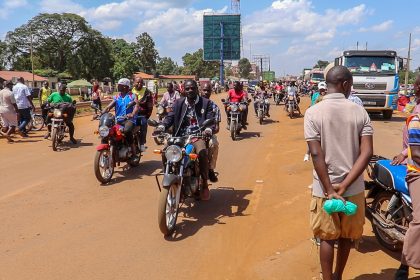
What the 922 Lifeline ultimately represents is a redefinition of who gets to survive a medical emergency in Kenya. For decades, that answer was shaped by geography, cash in hand and which hospital happened to be closest. Wanjiku’s crash and John’s collapse illustrate the same underlying truth from different angles: when a unified, state-funded system replaces fragmented, fee-gated response, survival stops being a matter of luck. Sustaining that shift across all 47 counties will demand political commitment, prompt provider payments, standardised training and consistent infrastructure investment. Done right, the reform replaces financial gatekeeping with life-saving care, ensuring the first priority in a crisis is survival, not solvency.
Dr Madeline Iseren is a pharmacist who comments on topical health and medical issues.