



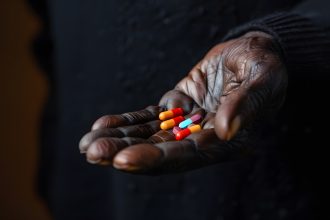
Experts say that patients can still access powerful antibiotics over the counter without prescriptions, while clinicians, often under pressure, prescribe antibiotics even when infections are viral.
Drug-resistant infections are now killing more people in Africa than HIV, tuberculosis and malaria combined, experts have warned, underscoring the growing threat of antimicrobial resistance (AMR) to human, animal and environmental health.
Speaking during the Kenya National AMR Conference 2026 in Mombasa, held under the theme Data that counts: Working together to tackle AMR in Kenya, Prof Sam Kariuki, Africa Continental Lead and Office Director at the Drugs for Neglected Diseases Initiative (DNDi), said AMR has quietly become one of the world’s deadliest health challenges.
During the Covid-19 pandemic, an estimated 3.6 million people died globally from the virus itself, while nearly five million deaths in the same period were linked to antimicrobial resistance.
“Out of every 1,000 deaths, about 27.5 will be caused by infections that are resistant to antibiotics,” Prof Kariuki said.
Over the years, several malaria medicines that were once effective have been withdrawn after the malaria parasite developed resistance, forcing doctors to rely on newer drug combinations. A similar trend is now emerging across bacterial infections.
Common pathogens responsible for respiratory infections, including Klebsiella pneumoniae and Staphylococcus species, are increasingly resistant to widely used antibiotics. Typhoid fever is also becoming harder to treat, while even cholera is showing rising resistance.
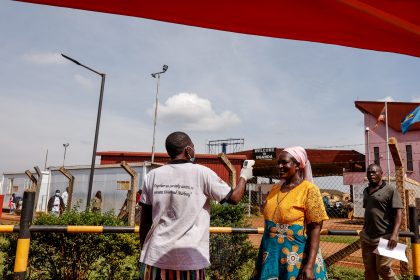
Preventing infections is the most effective way to fight antimicrobial resistance
In healthcare-associated environments, severe infections caused by bacteria such as Klebsiella, E. coli and Salmonella typhi are becoming extremely difficult to manage. In some cases, these organisms no longer respond to first-line, second-line or even last-resort antibiotics.

Experts say AMR is a systems problem that can be tackled through prevention, smarter use of medicines, stronger surveillance and increased public awareness. Prof Kariuki, who is also a lead researcher at the Kenya Medical Research Institute (KEMRI), stressed the need to urgently seek community-based solutions, including educating school-going children.
“Some of the biggest gains can come from low-hanging fruits that are not fully implemented,” he said.
Experts agree that preventing infections in the first place is the most effective way to fight antimicrobial resistance. Basic infection-prevention measures such as handwashing, sanitation, access to clean water, and improved hygiene can reduce infections in healthcare settings.
“We know if we can be able to introduce effective handwashing, effective sanitation, hygiene and effective infection prevention measures in our health settings, that can reduce our infections to nearly 50 per cent,” Prof Kariuki added.
Vaccination is another underused tool in Kenya’s AMR response. Vaccines against typhoid, cholera and common respiratory infections significantly reduce illness, hospital admissions and the need for antibiotics.
“When people don’t get infected, they don’t need antibiotics,” Prof Kariuki explained. “That alone slows resistance.”
However, these interventions are unevenly applied across counties, health facilities and schools. Experts argue that scaling up what already works could significantly reduce Kenya’s AMR burden within a few years.
Many people first seek antibiotics over the counter from nearby chemists when they fall ill
Another critical pillar in the fight against AMR is antimicrobial stewardship; ensuring the right drug is used, at the right dose, for the right duration. In Kenya, antibiotics are frequently overused or misused.

Patients can still access powerful antibiotics over the counter without prescriptions. Clinicians, often under pressure, may prescribe antibiotics even when infections are viral. In veterinary practice, antibiotics are routinely used in livestock.
“These practices expose bacteria to antimicrobials unnecessarily,” said Dr Irungu Kamau of the Kenya National Public Health Institute. “That is how resistance develops.”
Dr Saumu Wayuwa, a paediatrician from Mombasa County, highlighted one of the most persistent drivers of misuse: self-medication. She said many people first seek antibiotics from nearby chemists when they fall ill, even though some of the drugs should only be prescribed in hospital settings.
Over time, this leads to resistance and deaths from diseases that would otherwise be curable. Dr Wayuwa urged the public to seek care in hospitals and allow medical professionals to prescribe antibiotics only when necessary.
Prof Jay Berkley, a professor of paediatric infectious diseases who has worked in Kenya for 30 years, said understanding AMR begins with what happens daily in clinics.
“Between 90 and 95 per cent of children who come to clinics with fever, cough or diarrhoea do not need antibiotics,” she said. “These are viral infections. Antibiotics do not treat viruses.”
Strengthening stewardship, experts say, requires enforcing prescription regulations, improving clinician training and educating patients on the importance of completing doses and not sharing medicines. Addressing antibiotic use in animals, where resistance can spread from farms to humans through food and the environment, is also critical.
Some counties are already using surveillance data to guide antibiotic use in hospitals
“This is where Kenya’s One Health approach becomes critical, linking human health, animal health, agriculture and environmental protection in one coordinated response,” Dr Kamau noted.

One of Kenya’s biggest opportunities in tackling AMR lies in strengthening surveillance by systematically tracking which microbes are resistant, where they are found and which drugs they resist. Some counties are already using surveillance data to guide antibiotic use in hospitals.
In Meru County, data-driven surveillance is shaping improved prescribing practices. According to Dr Koome Muthuri, Chief Officer for Health Services in Meru County, a survey conducted at Meru Teaching and Referral Hospital in June last year found that 46.5 per cent of admitted patients were on antibiotics.
Although the survey captured data from a single day, Dr Muthuri said it provided critical insights now guiding changes in prescribing practices and strengthening infection-prevention measures at the facility.
Prof Berkley said researchers are already feeding surveillance data to the Ministry of Health, with plans underway to scale it up, as “Surveillance tells us which antibiotics still work and which no longer do.”

Researchers at KEMRI and partner institutions are tracking resistance patterns across hospitals and communities and sharing the findings with the Ministry of Health. However, experts say the system requires expansion through better-equipped laboratories, standardised diagnostics, trained personnel and sustained funding.
“Surveillance is not just about collecting data,” Dr Kamau emphasised. “It’s about generating evidence that changes practice.”
Emerging technologies are beginning to support Kenya’s AMR response. Advanced machine-learning and computational tools can analyse laboratory data and predict resistance patterns, helping clinicians select effective treatments more quickly. Globally, artificial intelligence (AI) is being explored as a clinical decision-support tool, not to replace doctors, but to guide better prescribing, Prof Berkley said.
“AI can be used as additional information, but ultimately it will be the clinician, the vets and the public health people who should be making those decisions,” he noted.
While research into new antibiotics continues, experts caution that drug discovery alone will not solve the problem if misuse persists. Surveillance data can also help identify older or underused antibiotics that may still be effective in specific settings. Treatment, they note, does not have to be uniform nationwide since what works in one county may fail in another.