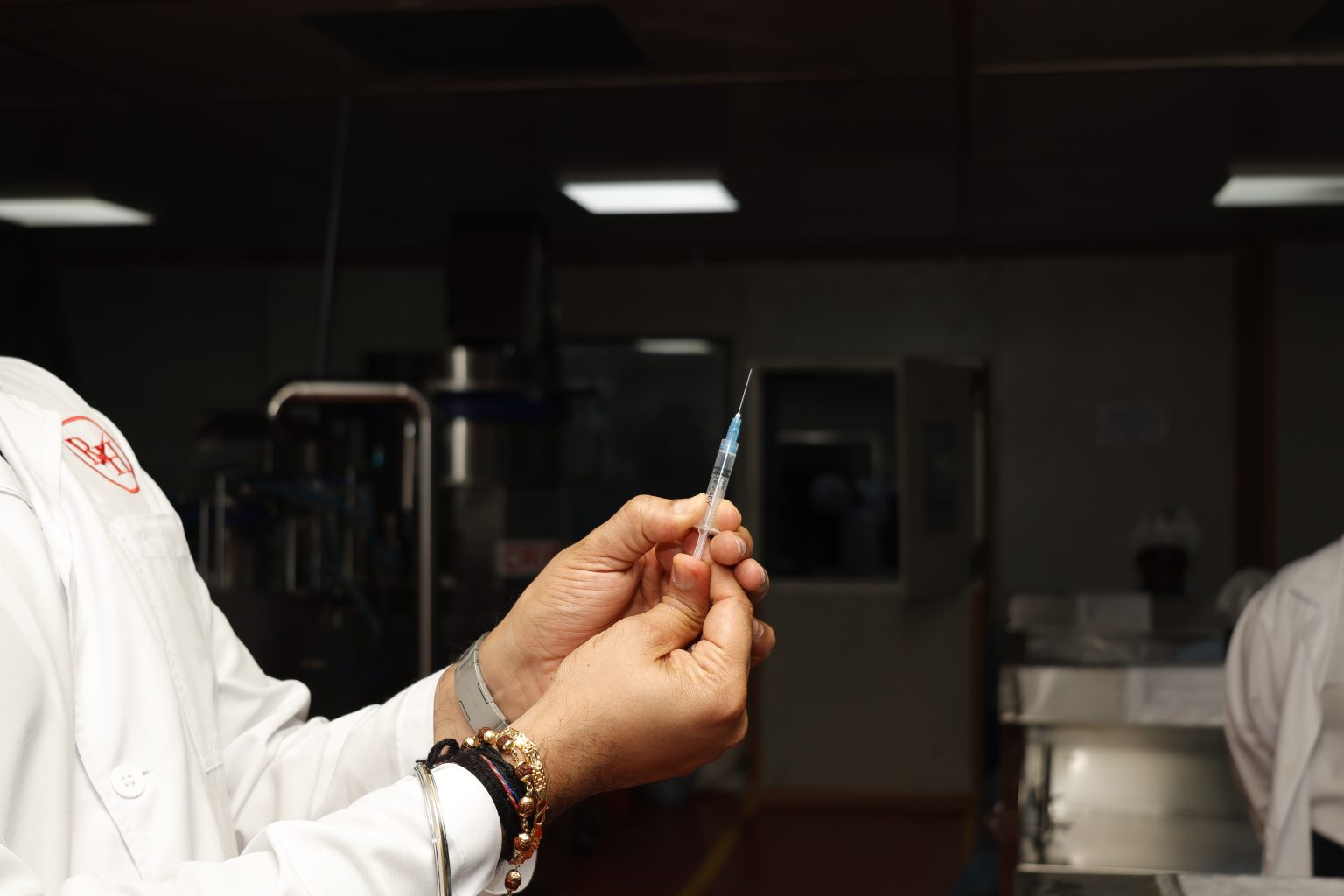

A tiny mechanical detail, invisible to most parents, is the reason a vaccine syringe can never be used twice.
The syringe that saves a child’s life is never meant to save a second one. That is its untold story: a device engineered not to endure, but to end, deliberately, after a single use, because in that single use lies its entire purpose.
Every day in Kenya, parents arrive at health facilities for vaccination. Most of the time, the syringe used is the 0.5ml, especially for newborns receiving their first vaccine. After the vaccination, the nurse throws it into a waste box, most of the time at the corner of that room. That syringe will never be used again.
But have you ever wondered why it can never be reused? Thanks to the tiny metallic clip in it, which you will probably not even notice, that syringe could mean the difference between preventing and spreading deadly infections.
“The problem we are trying to solve is the reuse of syringes,” explains Tabitha Musyoka, Revital Healthcare’s Regulatory Affairs Manager. “Some medical practitioners may use the same syringe on another patient. This can cause infections like HIV, Hepatitis B and Hepatitis C,” she adds.
After immunisation, single-use syringes lock or become unusable after just one injection
In 1999, global health agencies including the WHO, UNICEF and the United Nations Population Fund (UNPF) recommended that immunisation services use only auto-disable syringes (single-use syringes that lock or become unusable after one injection). Since then, they have become the global standard for childhood vaccination campaigns. “The plunger either breaks or locks automatically after use, so it definitely cannot be used again,” Musyoka says.
The little syringe travels a hundred or even thousands of kilometres, locally and internationally, to reach these babies. All its lifetime, it sits quietly inside a sterile packet, waiting for its turn. You only live once, and this syringe lives by this philosophy. As soon as it is removed for vaccination, it was here, it saw, it conquered, and probably prevented infections, because that is exactly how it was designed. It locks forever.
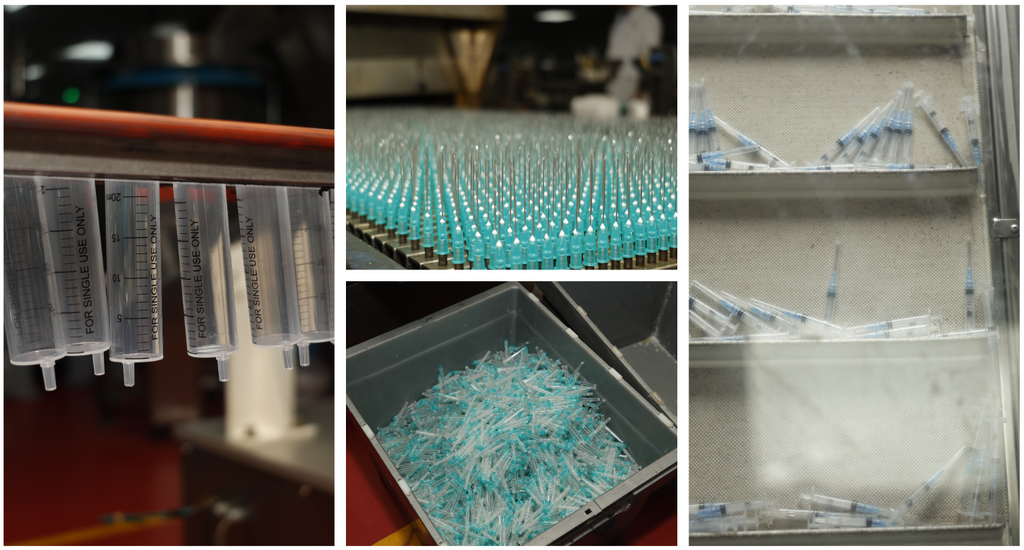
As a parent, you will probably never notice. However, that journey began long before the clinic visit. It began hundreds or even thousands of kilometres away, inside a factory in Kilifi County in Kenya. The syringe is not born all at once. It begins as separate pieces: the barrel, plunger, gasket and the stainless-steel safety clip. Each of these components is manufactured independently before coming together on the assembly line.
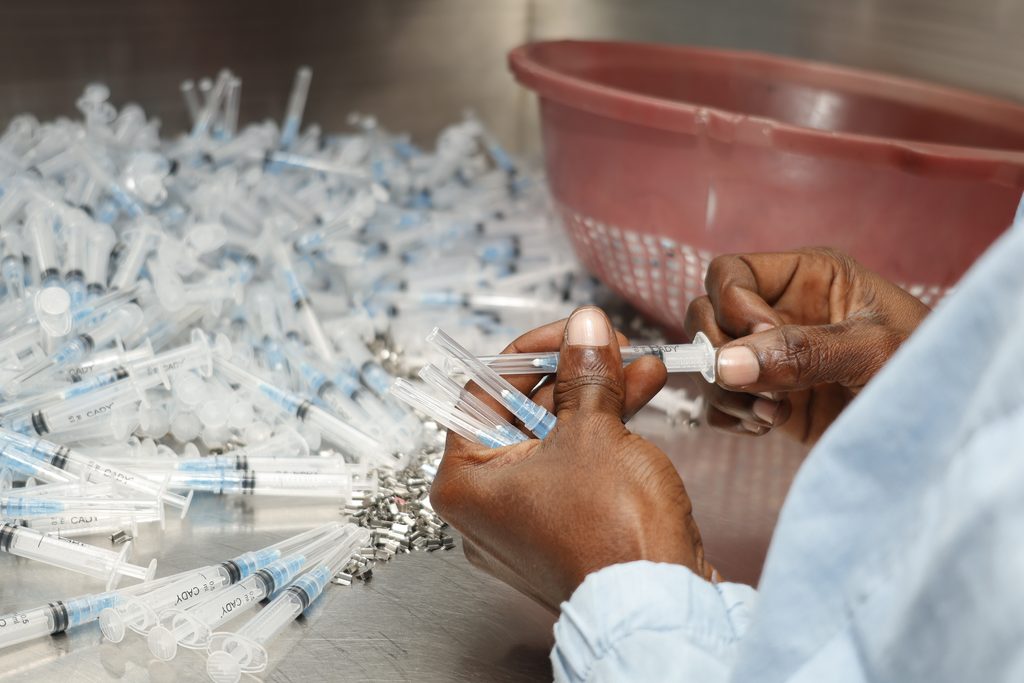
The barrel moves to the printing section, where its graduation markings are added. Elsewhere, the plastic hub is carefully joined to the metallic needle before undergoing a drying process. Only then do all the components meet. Some are assembled by machine, while others are assembled entirely by human hands, by women.
The manual syringe assembly section is staffed entirely by women with hearing impairments
The clip is barely noticeable, yet it is the most important part of the entire device. Without it, the syringe would lose its identity.
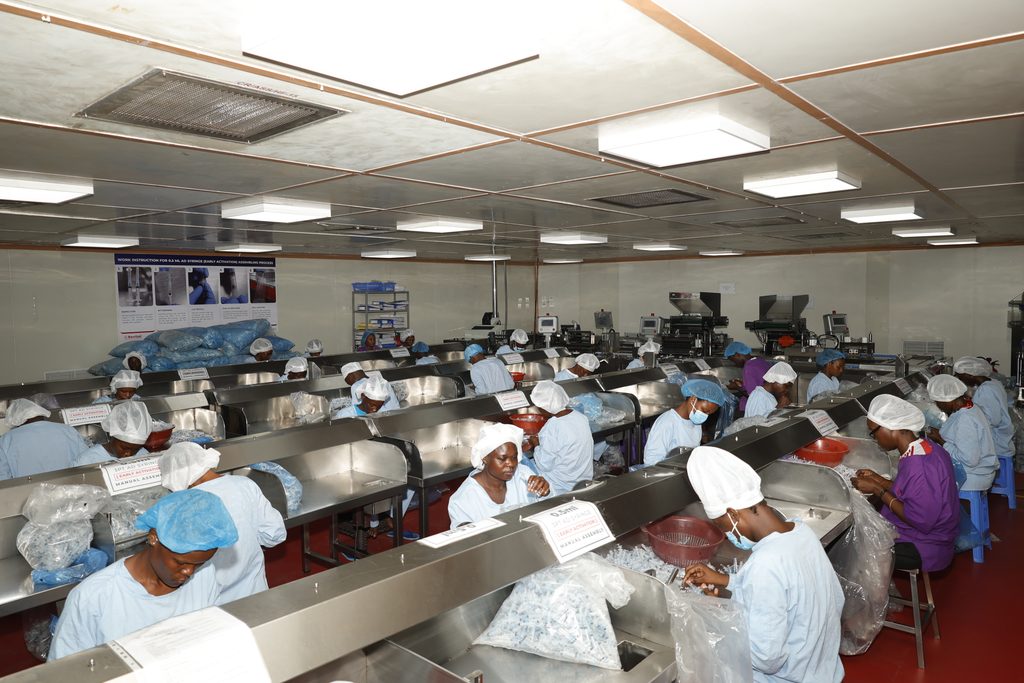
The manual assembly section is staffed entirely by women with hearing impairments. Many had struggled to find employment before joining the factory. Today, their hands complete one of the most critical stages in producing the auto-disable syringe. They assemble the syringe just like the machine does, and they have been trained repeatedly. “They have been trained over and over,” Tabitha says. Every tiny clip they insert is another barrier against infection, which means another child protected.
Once assembled, every syringe begins another journey. It is sealed inside blister packaging, packed into boxes of one hundred, sterilised, and then placed under quarantine for fourteen days. Samples from every batch are tested for sterility, quality, dimensions, and chemical safety. Only after passing every inspection is the batch approved for dispatch.
Local manufacturing has reduced the cost of syringes while maintaining international quality standards
For Roonek Vora, Sales and Marketing Director at Revital Healthcare, the journey of the syringe represents something much bigger than manufacturing. Revital became one of the first approved manufacturers of auto-disable syringes in Africa in 2012. The company now produces 0.5ml, 2ml, 5ml and 10ml auto-disable syringes.
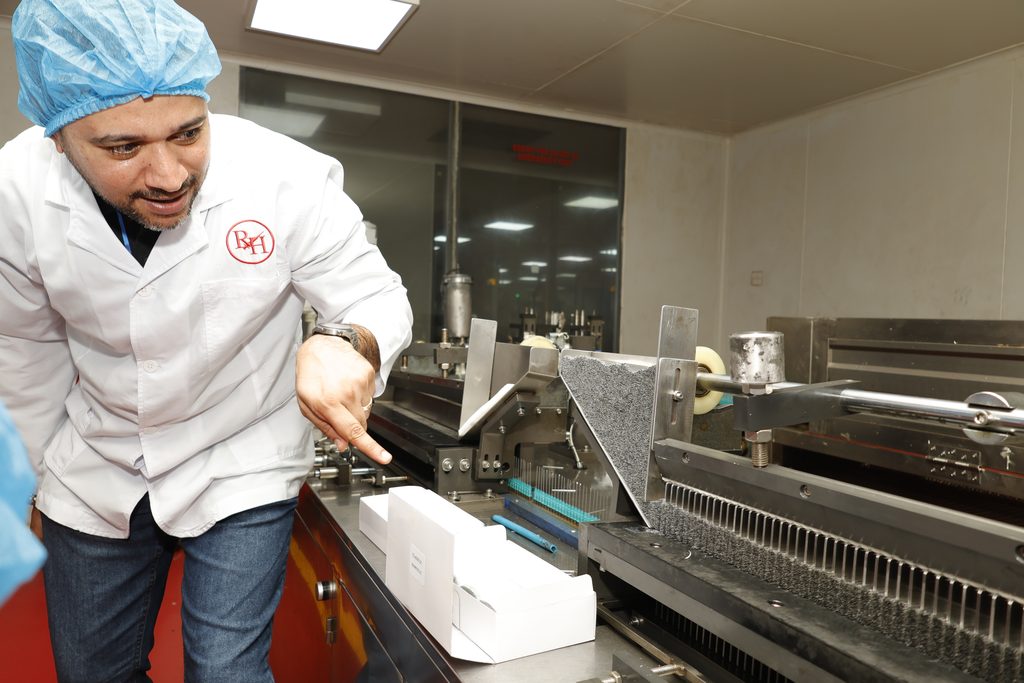
According to Vora, local manufacturing has reduced the cost of the product while maintaining international quality standards. But for him, the greatest achievement lies elsewhere. “It feels amazing that we became one of the first manufacturers in Africa to rewrite the history books by sending syringes to countries like India,” he says.
“We have always heard of Africa exporting flowers, mangoes and avocados. We had never heard of a company in Kilifi County exporting syringes to India, becoming the exclusive distributor to the Pakistan government, and supplying countries like Yemen, Afghanistan and countries across Europe.”
The syringes leave Kilifi for hospitals and clinics across Africa and beyond. Some travel thousands of kilometres before reaching the different shelves of hospitals or pharmacies. This is what it is: one injection, one patient, one chance.
Photos by Timon Abuna, taken at Revital Healthcare Factory in Kilifi, Kenya.