

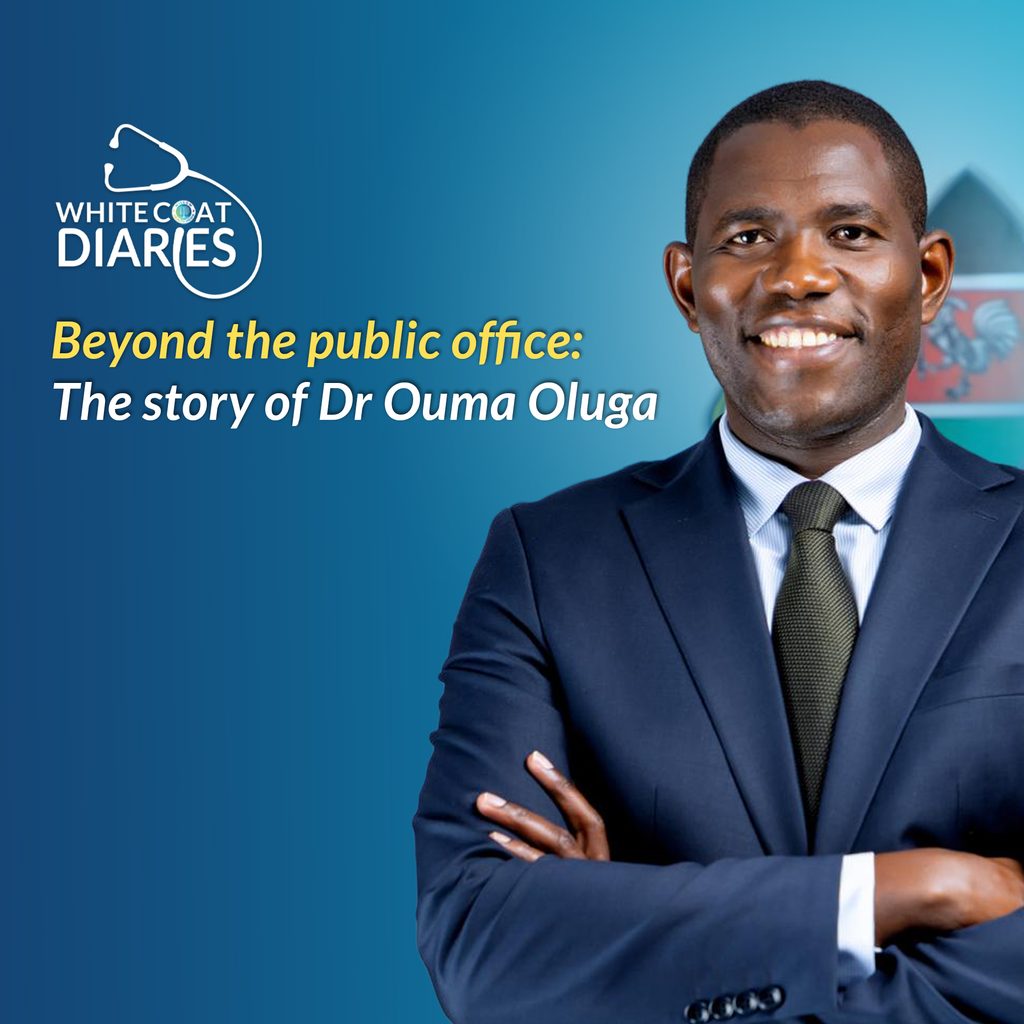
Jailed during Kenya’s 100-day doctors’ strike, Dr Ouma Oluga turned a Kamiti cell into a ward and refused to surrender the one thing he’d earned as a broke university student.
The 100-day doctors’ strike of ten years ago ended with Dr Ouma Oluga in jail, and he says the cell felt, at first, like relief. Weeks of overnight negotiations had drained him completely. But Kamiti Maximum Prison offered no gentleness. He hadn’t eaten properly; his blood sugar, he suspects, had crashed. By around 2am he was being admitted to the prison dispensary, his head splitting, after what he calls “a lot of mental torture.”
Before admission, a guard demanded his wristwatch he had saved years to buy as a broke medical student in 2009, the first watch he had ever owned in his life, the only one he had worn since. “I told him, ‘My friend, you will have to kill me. This one, you are not taking.'” The guard pushed. Oluga did not move. “I was like, I’m done. I’m done with you. There is going to be no surrender here. Whatever you want to do, it’s nonsense, but do whatever you want to do.” The watch stayed on his wrist.
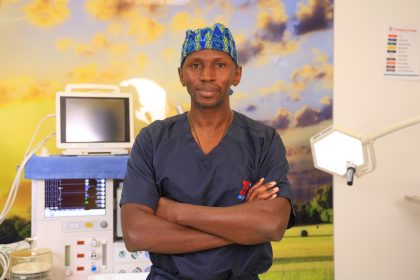
What followed was almost absurd. Waking in the prison dispensary, he found prisoners and wardens staring at him with something close to pity. His response was instinct, not strategy. He asked for a ward and began doing rounds. Within three days, the same officers who had jailed him were lining up to be examined by the highest-calibre physician most of them would ever have access to. “They have never seen such a high-level doctor. Because when they go to Kenyatta, they have to line up for so long. Sometimes they’re taken back without being seen.”
That jail term was the cost of a fight Dr Oluga had chosen years earlier. By 2016, he was Secretary-General of the Kenya Medical Practitioners, Pharmacists and Dentists Union (KMPDU), leading the 100-day strike, a standoff over pay, terms of service and a Collective Bargaining Agreement (CBA) that had languished since 2013. It was a role built on the same instinct his father’s death had triggered in him years earlier: report to duty, whatever it costs. “You’re negotiating the whole night,” he says. “I really engage. You look at the scenarios, and there was no fun in being on strike. I used to have a lot of burden every time there was a strike.”
When I became Secretary-General, almost no doctor left the public service. We had almost 4,500 doctors
That strike, he insists, achieved what the shorter, narrower 2011 walkout over salaries alone never could. The 2016 negotiations produced Kenya’s first comprehensive employment policy document for health workers, covering terms of service, training and CBA obligations, a document that has now outlived a decade without a single doctor complaining about pay again. It also, for the first time, kept nearly all of the country’s doctors inside the public service.
“When I became Secretary-General, almost no doctor left the public service. We had almost 4,500 doctors. And then it started to become a problem for the government to pay.” Still, he carries no illusions about the cost. “That strike was very unfortunate. Every strike is unfortunate. If people engage in good faith, you can solve a problem in two days.”
The union years taught him a philosophy of leadership he had already begun living years earlier at Vihiga County Referral Hospital, where he had proposed his own 8am work discipline to a struggling ward and watched colleagues follow, without ever waiting to be appointed to a position first. “Leadership is not a position,” he says. “Leadership is what you do before you are in a position. You have to do something, show up, and then you get a proof of concept.”
The leap from union leader to government insider invited the inevitable accusation that he had been bought. He rejects it flatly, pointing to what he built while running Nairobi’s health services at the Nairobi Metropolitan Services: 200 more doctors employed, 32 hospitals built, nurses growing from 500 to 1,300, community health promoters expanding from 3,300 to 7,000, and Nairobi’s public hospitals brought onto public insurance for the first time. “The only thing I wanted to do in Nairobi, being in charge of health, was to prove that public service can work.”
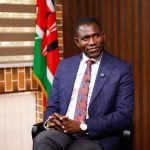
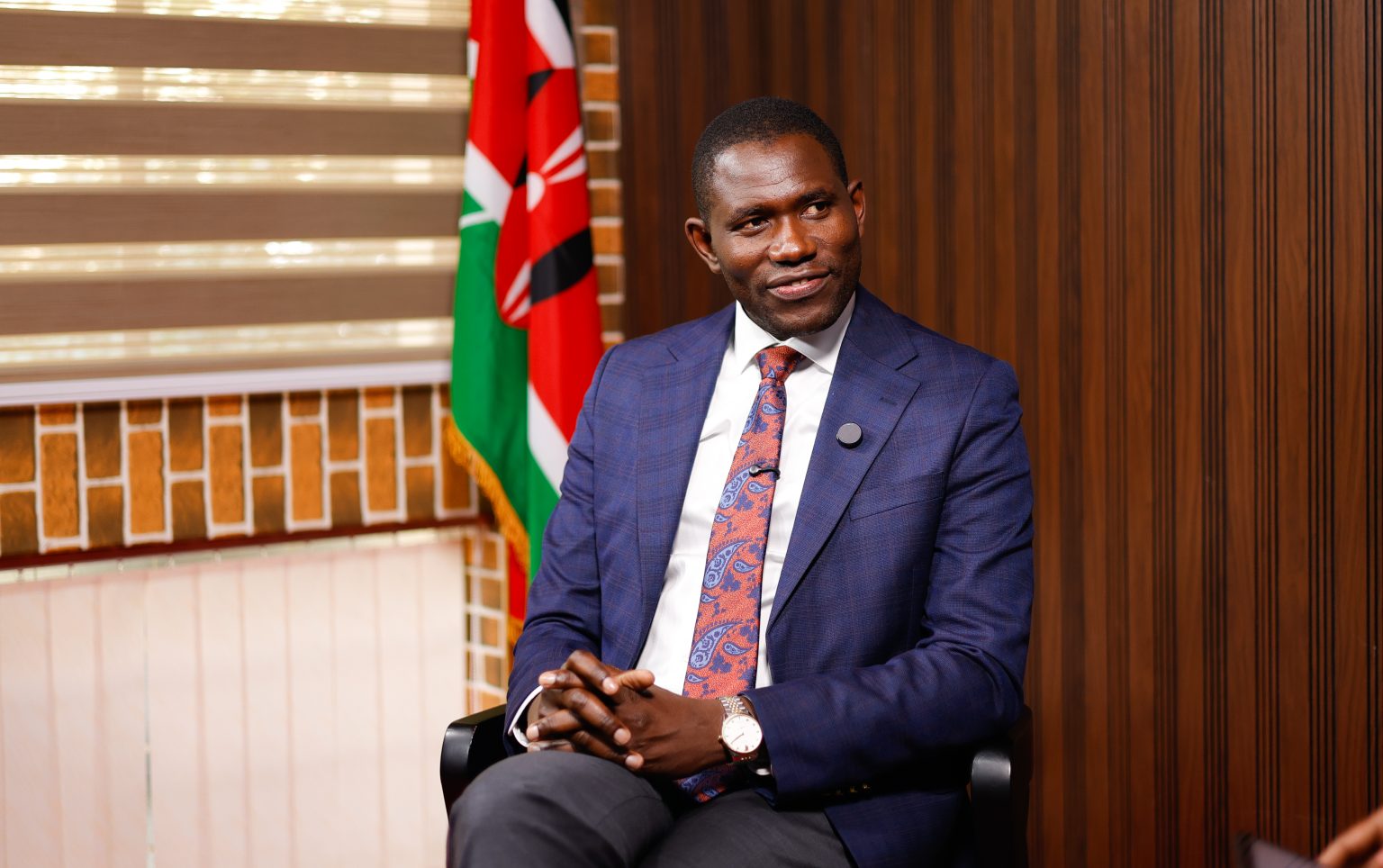
As Principal Secretary now, he draws a sharp distinction between his old role and his new one. “As a union leader, your tool is advocacy. In government, your tool is implementation.” Yet the underlying purpose, he insists, hasn’t shifted. “I’m very passionate about healthcare for people who would otherwise have no voice. I didn’t go to jail because I love doctors. I went to jail because there is fundamental stuff in the healthcare system that needed to be implemented.”
Even the recent nurses’ strike -now resolved- was technically outside his docket, but drew his quiet mediation
He is candid about what makes reform possible in government that was impossible from outside it: political will. “You can have all the ideas, all the knowledge of what the right thing to do is. But if the president does not say ‘proceed’, there’s nothing you’re doing.” He credits recent progress, resolved internship arrears, settled clinical officer CBAs, a nine-year-old UHC absorption dispute finally closed in September 2025, to that political backing. Even the nurses’ recent standoff (but which has since been resolved), technically outside his docket, has drawn his quiet mediation with the Salaries and Remuneration Commission and the Council of Governors. “It’s not my work. But because I am part of government, I report to duty.”
Ask him what success looks like at the end of his tenure, and two measures come back, unrehearsed: every Kenyan walking into a facility without fearing the bill, and no Kenyan dying from something a straightforward intervention could have fixed. On the second, he turns unsparing. “Right now we have only a 36 per cent match between correct diagnosis and correct intervention. That’s a problem.” The Social Health Authority (SHA), he says, is not the disease so much as a symptom: hospitals collecting SHA’s money without delivering the care it was meant to pay for.
He reaches for a metaphor blunt enough to sting. “It’s like you go to a hotel, you have the money, and on the menu they’ve written a beautiful picture of pork chops. Then they bring the pork chops, but they’re not well cooked. Or it’s half the pork chops. And the hotel is still forcing you to pay the full amount.” The consequence, in real hospitals, is what he calls revision surgery, harder, riskier operations to correct botched first procedures, for which SHA typically won’t pay twice. “The patient is suffering. This is not the work of the president. This is the work of doctors and nurses, people who went to school to solve that problem. And I am one of them.”
I am a father. I’m a husband. I am a son. I am a friend to people. I love God
Strip away the policy jargon and the union scars, and Dr Oluga describes himself simply: “I’m just a Kenyan. I’m a father. I’m a husband. I am a son. I am a friend to people. I love God.” He plays golf with his seven-year-old son most Saturdays, takes his daughter outdoors, and listens to Rhumba, Afro music, Benga and Ohangla.

“I’m more into the bush than the beach,” he says. “I’m more of a nature person.” His wife offers advice constantly and entirely unsolicited; his closest friends, “the Squad,” are kept deliberately outside public service, precisely so he can still be, in his words, “just me.”
Asked what he hopes a white coat represents, his voice slows, almost reverent. “There’s a lot of vulnerability in it. Health is one of those things everyone longs to have, but ill health comes when you don’t expect it, and it makes people very vulnerable. You have to put on your entire humanity at that time. Because without that, the entire system, the CT scans, the salaries, the medicines, all of it becomes useless.”
It is, in the end, the same instinct that made an 11-year-old boy carry his father’s death alone through a sleepless night. The same instinct that made a young doctor refuse to surrender a watch inside a prison cell. The same instinct that now sits, quietly, behind a Principal Secretary’s desk.
“There is nothing I have ever regretted in my entire journey in health,” Dr Oluga says. “I have to say I am not a changed man.”