

From Parklands to Lucky Summer to Pumwani, the story is the same: the clinic nearest to you is either unfinished, grabbed or gone. And no one in power seems to be in a hurry to fix it.
Public health facilities in Nairobi are being lost to land grabbers, left incomplete despite millions of shillings in public funds, or simply abandoned – depriving residents of care they were promised and, in some cases, have never received.
Across the county, at least five public health facilities are non-functional, according to Nairobi City County. The true picture, however, is worse. Land meant for hospitals has been grabbed by private developers. Projects financed by taxpayers remain half-built years later. And in at least one case, the same contractor who failed to complete stalled health facilities was awarded a new multimillion-shilling contract.
The pattern is visible across Nairobi’s wards and plays out in strikingly similar ways: funds are allocated, construction begins and then stalls. Or the land itself is taken.
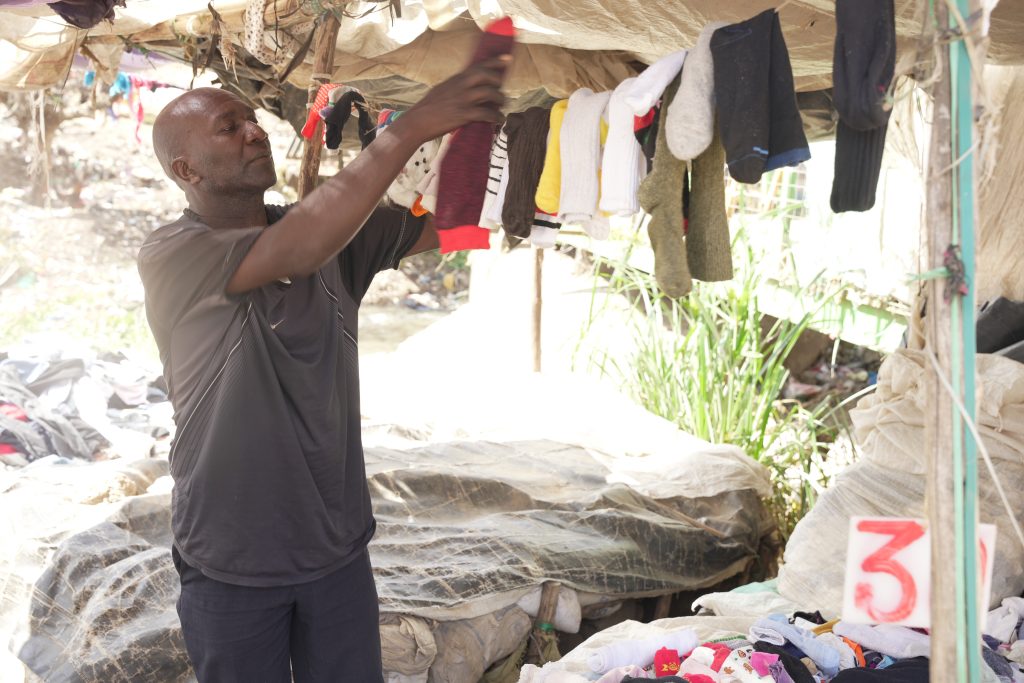
The story of Gumba/Mabatini Dispensary is typical. Residents of Gumba and Mabatini, two communities separated by a bridge near Nairobi River, never got to use the health centre that was built for them.
Patrick Mulwa, a second-hand clothes trader near the bridge, recalls an area MCA hiring young men to evict squatters from the site to make way for its construction. Even after the structure was completed, water seeped through the floor and work stopped. The building stood empty until it was demolished during the recent clearance of structures sitting on riparian land. Only boulders now remain.
Wall at Pumwani Majengo hadn’t been built, Lucky Summer dispensary had barely started
Gumba/Mabatini was one of three facilities, alongside Pumwani Majengo Health Centre and Lucky Summer Health Centre in Lucky Summer Ward, that shared a combined allocation of Ksh869.4 million in the Nairobi County government’s 2020/2021 financial year.
The funds were intended for construction and equipping of all three facilities. When the Auditor General’s office conducted a physical inspection in September 2023, none of the projects was complete. The perimeter wall at Pumwani Majengo had not been built, and Lucky Summer dispensary had barely started, with only dilapidated materials visible on site.
At Pumwani Majengo Health Centre, located in the busy Gikomba market area in Kamukunji Constituency, funds were meant to build a new block. An aerial view on Google Maps shows that the roof is only half done. The facility’s in-charge explained that only plumbing remained, an account that does not square with what is visible from above.
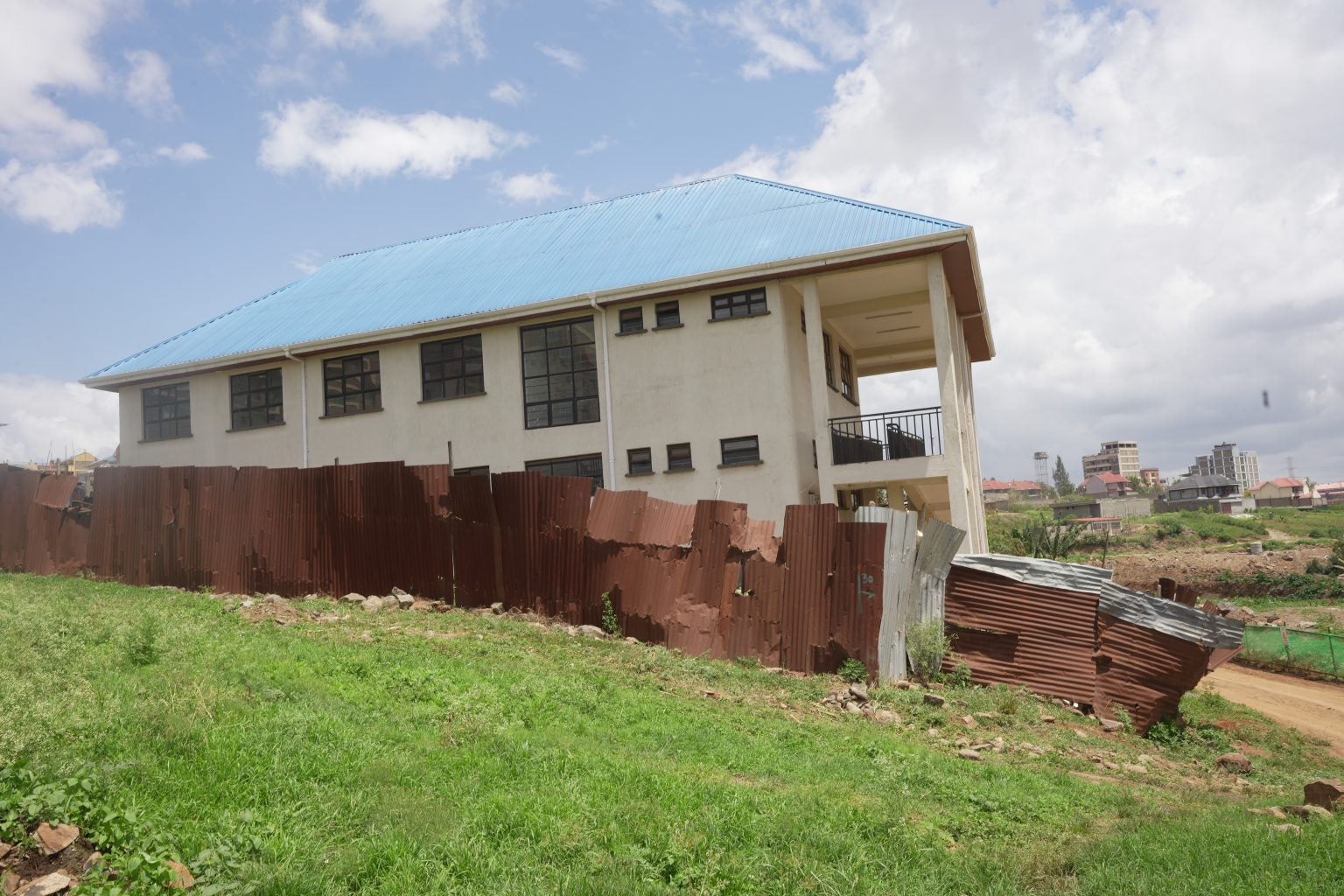
Lucky Summer’s situation is more conspicuous. An imposing two-storey, blue-roofed building overlooks Nairobi River and a nearby dumpsite.
The ward had, until recently, neither a public school nor a public health centre. A public school has since opened, but the health centre remains incomplete and largely unnoticed.
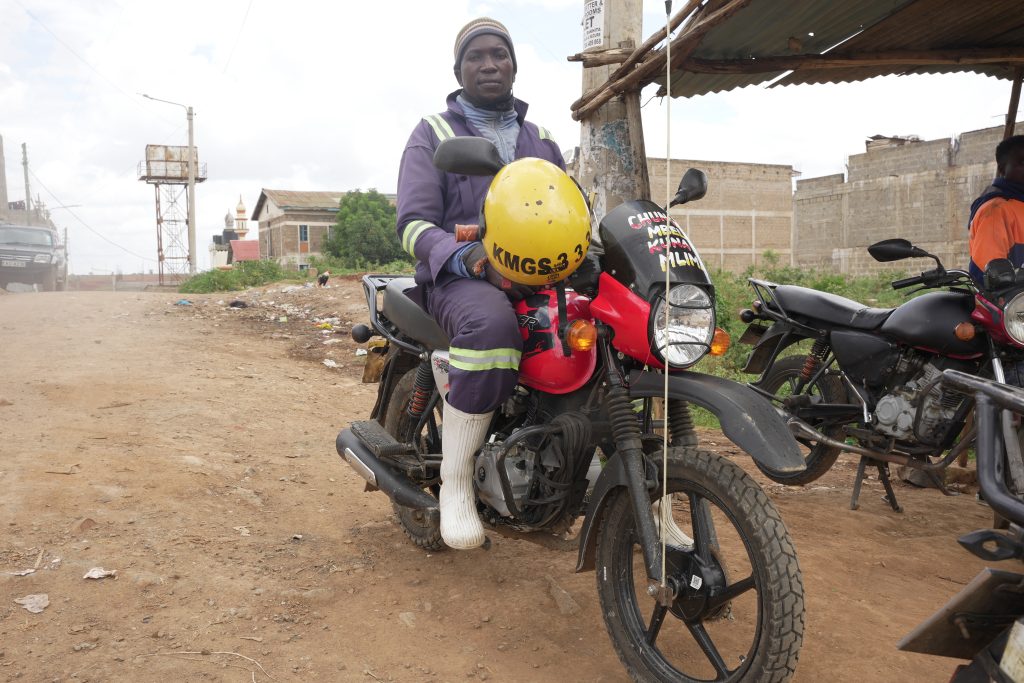
“The location is a bit hidden, so many do not know about it,” said Meshack Ogolla, a resident. “If completed, it can be of help to many people here in Lucky Summer because we go far to get a public hospital.”
Pumwani Maternity land for wards, ICU, operating theatre, a mortuary and staff quarters was grabbed
The Auditor General’s report also revealed that despite failing to complete any of the three projects, the same contractor was awarded a new contract for Phase II construction works at Mama Lucy Kibaki Hospital for Ksh344 million. That project too stalled after Ksh165 million had already been paid out.
Beyond stalled construction lies a more brazen problem: the outright grabbing of health facility land.
Across the road from Pumwani Maternity Hospital, the largest public maternity hospital in Kenya, was the Pumwani Nyayo Ward project, initiated during the presidency of Daniel arap Moi in the late 1980s but never completed.
The Nyayo Ward was to have wards, an ICU, an operating theatre, a mortuary and staff quarters. For ages, the project provided accommodation to street families and mechanics. Though the building has since been fenced, over time the land around it has been turned into residential and commercial properties by private developers.
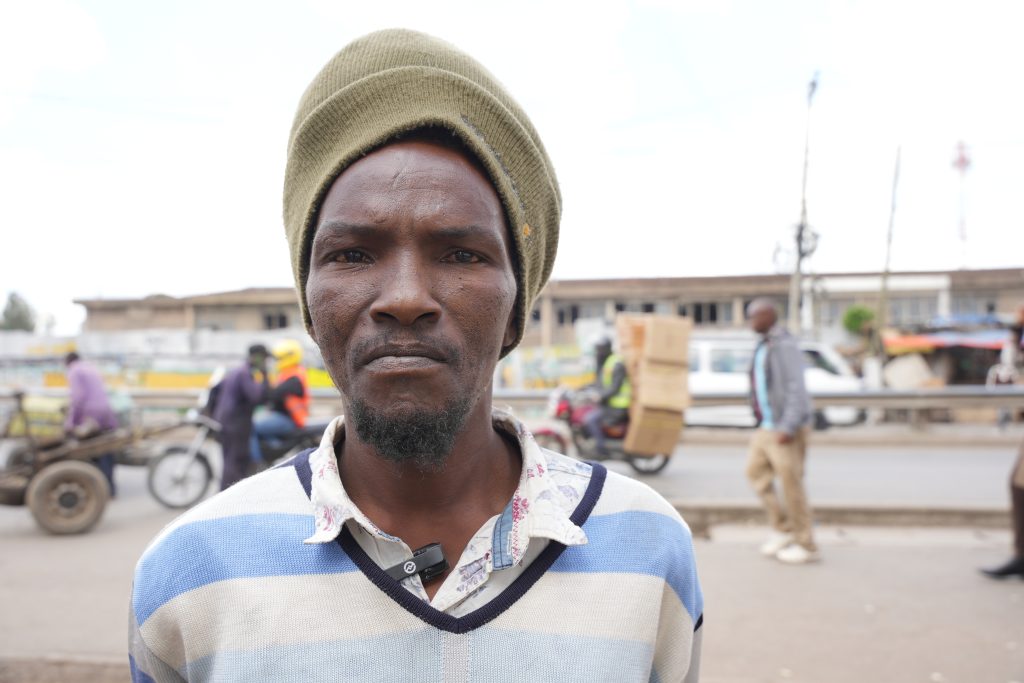
Samuel Ngaine, a Pumwani resident and vocal proponent of the project, said the original vision should be revived. “I don’t see why such a good idea by Moi could be left to die by subsequent governments.” Without it, residents of Pumwani, Majengo and neighbouring areas must travel all the way to Mama Lucy Kibaki or Mbagathi hospitals for care.
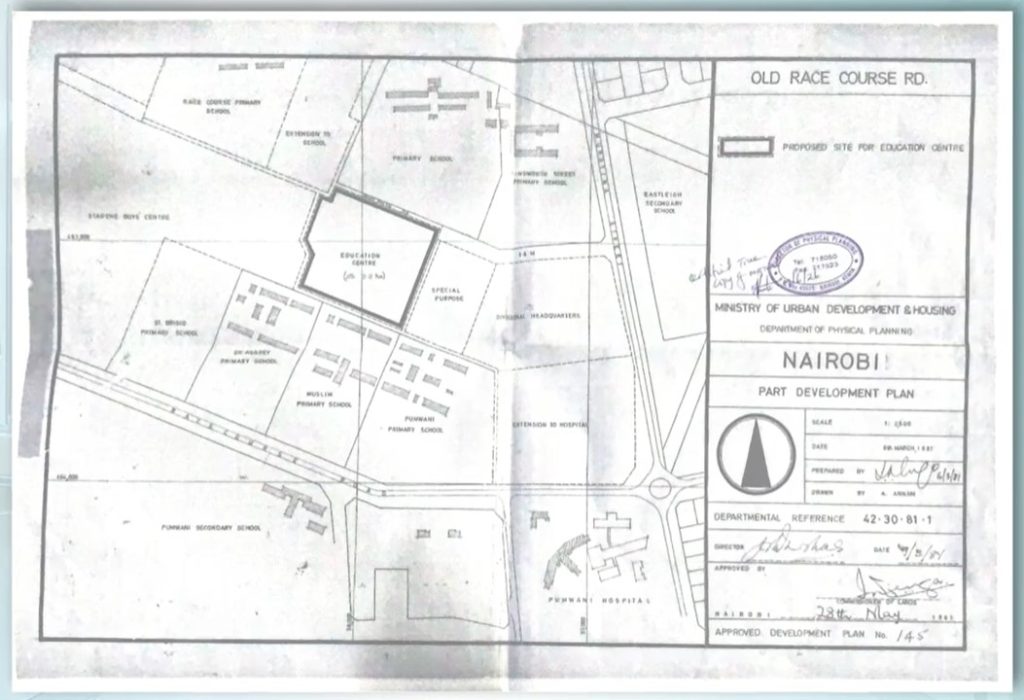
In Parklands, the story of Highridge Health Centre has a longer and more contested history. The facility was established in 1952 by the colonial government to serve the poor communities around the area, including Deep Sea, Mji wa Huruma, Githogoro and Gachie, with an estimated 100,000 residents depending on it.
The Eastleigh Health Centre, complete with a maternity ward and which had existed on 4th Street since the 1970s, was demolished and converted into private commercial use. In 2023, the Nairobi County government demolished a two-storey building erected where the health centre once stood, but ever since the demolition of the health centre, it has denied residents of the populous area access to healthcare.
It is quite difficult for us to access healthcare because other facilities are a bit far
It was transferred to Nairobi City County after independence. In February 2011, a private developer moved to demolish it but was stopped when then Lands Minister James Orengo revoked the title deed, declaring the land public property. Construction resumed in subsequent years nonetheless, prompting a protracted court battle by the Parklands Community Group, a Senate inquiry, and multiple failed attempts at repossession.
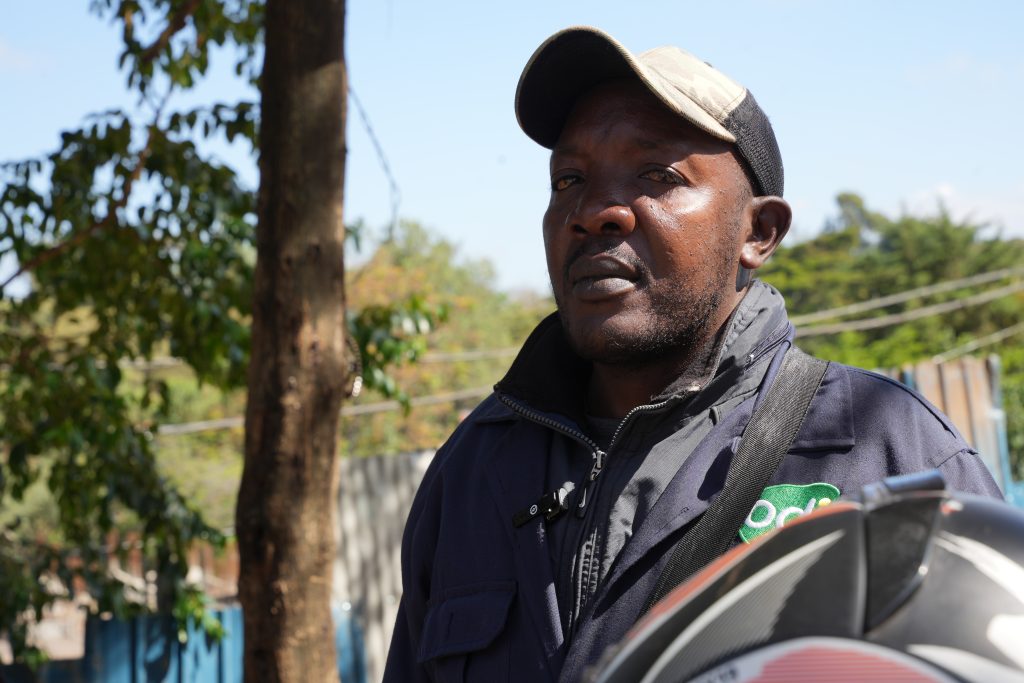
Today, construction is ongoing on the site where the health centre once stood, and residents like Patrick Muindi must travel as far as Kangemi for public healthcare. “It is quite difficult for us to access healthcare because other facilities are a bit far,” he said.
In Tassia Ward, Tassia Level 4 Hospital is fighting a court case against private developers who have encroached on its land. Several buildings, including a five-storey residential apartment block, have been erected within the hospital’s compound.
Nairobi City County acknowledges that five of its 124 health centres and dispensaries are non-functional: Lucky Summer, Kamulu Health Centre, Gumba/Mabatini, Highridge Cancer Centre and Shiranga in Njiru. This financial year, the county has allocated Ksh63 million to the 109 operational centres and dispensaries. Efforts by Willow Health Media to obtain comment from the Chief Officer for Health Facilities, including emailing and hand-delivering interview requests, were unsuccessful by the time of publishing this story.
Nairobi County is answerable both for public funds spent on projects that remain incomplete
Gladys Mongare, who leads the land and environment programme at the Kenya Human Rights Commission, said land grabbing remains a persistent and structural problem. “We all know that the majority of people who own land and particularly the elite, they all got those huge chunks of land because of how close they were to power,” she said. The ownership of land in Kenya, she added, is not premised on fairness or equity but on access and proximity to decision-makers. The consequence, she said, is that citizens are denied the right to health.
Inside the errors, scams and lapses in mass closure of health facilities
The loss of public health facilities is part of a broader pattern. In an earlier Willow Health Media investigation, we exposed how regulatory failures and flawed enforcement led to the closure of health facilities, disrupting care for thousands of Kenyans.
Part of the problem, Mongare said, is that the National Land Commission (NLC) – constitutionally mandated to manage public land – is chronically underfunded. “These constitutional offices are being given budgets that can only cater for their salaries and day-to-day running of their offices. So, when it comes to the real work that they are supposed to be doing, they do not have the budget for that,” she explained, placing the heaviest responsibility on the county government.
“At the county, we have the county land’s board, and if I want to grab land, I will definitely start there. There is a lot of laxity, and Nairobi being the capital city, there is a lot of demand for land. Whatever collusion happens isn’t only in the Ministry of Land, because the county governments are highly involved as well.”
Health is a devolved function. Nairobi City County is answerable – both for the public funds spent on projects that remain incomplete, and for the land taken from health facilities that residents were entitled to use.
We believe in the free flow of information
Republish our articles for free, online or in print, under Creative Commons licence.