

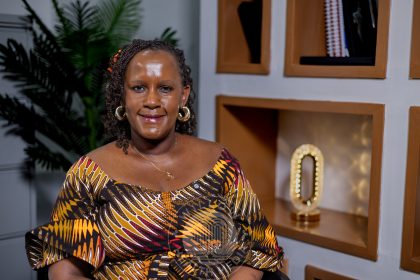
From public outrage and digital failures to fraud crackdowns and billion-shilling reforms, Social Health Authority CEO Dr Mercy Mwangangi opens up about the pressure, politics and personal toll of leading Kenya’s most ambitious healthcare overhaul in decades.
When Dr Mercy Mwangangi walked into the Social Health Authority (SHA) headquarters in June 2025 as its first Chief Executive Officer, she inherited more than a new institution. She inherited public anger, political pressure, collapsing trust in healthcare financing, and the enormous burden of convincing millions of Kenyans that the country’s most controversial health reform could actually work.
SHA had officially replaced the National Health Insurance Fund (NHIF) just months earlier, ending nearly six decades of a system many Kenyans had grown up with, despite years of criticism over inefficiency, corruption allegations and unequal access to care. But the transition immediately triggered confusion, resistance and anxiety across the country.
Hospitals complained about delayed payments; patients struggled with registration and digital verification, healthcare workers questioned implementation gaps, while citizens feared losing access to treatment altogether.
At the centre of that storm stood Mwangangi.
One year later, speaking to Willow Health Media on June 3, 2026, she describes the experience as one of the most difficult periods of her professional life; not simply because of the scale of the reforms, but because healthcare financing touches the deepest fears of ordinary citizens.
“It was very clear what the board wanted. They wanted somebody who could operationalise a new institution while winding down the NHIF. But implementation is always different from theory. Every day has brought new lessons and new challenges,” she says.
Behind the calm public appearances and technical briefings, the pressure has been relentless.
Mwangangi jokes that the job has cost her 12 kilograms in one year, but the humour barely conceals the weight of leading one of Kenya’s most sensitive public institutions, where every failed claim, delayed treatment or rejected registration can quickly become a national crisis.
“Healthcare reform is not a one-day event; it is a process that requires constant adjustment and improvement”
Unlike most government reforms, healthcare financing reforms unfold in real time against illness, emergencies and death. There is little room for gradual adjustment when citizens need dialysis, surgery, maternal care or emergency treatment immediately.
That reality shaped much of Mwangangi’s first year in office. Rather than focusing only on boardroom reforms, she says she spent much of her first months travelling across counties, meeting patients, county officials, healthcare workers and providers to understand where the system was breaking down.
What emerged, she says, was a stark gap between policy design and practical implementation.
“The blueprint itself is nearly perfect. The challenge has always been implementation. Healthcare reform is not a one-day event. It is a process that requires constant adjustment and improvement,” she explains.
That implementation challenge remains the defining test of SHA. The authority was created as the backbone of Kenya’s push toward Universal Health Coverage (UHC), with the government arguing that the previous NHIF structure could no longer sustain the country’s growing healthcare demands. Under SHA, Kenya adopted a more segmented financing system intended to spread risk, strengthen preventive care and reduce catastrophic out-of-pocket spending.
At the core of the reforms is SHA’s three-fund structure: the Primary Health Care Fund (PHC), the Social Health Insurance Fund (SHIF), and the Emergency, Chronic and Critical Illness Fund (ECCIF).
Mwangangi considers operationalising those three funds one of the institution’s biggest achievements during its first year. Under NHIF, healthcare financing largely functioned as a single insurance mechanism. SHA, however, separates financing streams based on healthcare needs, an approach the government says allows for more targeted investment in prevention, emergency response and specialised treatment.
“What is important is that we now have structures that allow us to invest in prevention, primary care, emergency services and specialised treatment in a much more deliberate way than before.”
Government allocated Ksh19 billion to the Primary Health Care Fund in 2026/27, up from Ksh13.1 billion in 2025/26
For Mwangangi, one of the most important shifts has been the increased investment in primary healthcare, an area she argues Kenya neglected for years despite evidence showing that most citizens access care at lower-level facilities.
According to SHA data, nearly 70 per cent of Kenyans seek treatment at dispensaries, health centres and community-level facilities. Yet historically, much of the country’s healthcare financing concentrated on hospitals and curative care.

Under the 2026/2027 Finance Bill, the government allocated Ksh19 billion to the Primary Health Care Fund, up from Ksh13.1 billion allocated in the previous financial year for similar services.
“This is probably one of the most significant shifts we have made,” she says. “Globally, the evidence is very clear that primary healthcare provides the highest return on investment. If you strengthen prevention and early treatment, you reduce the need for expensive interventions later.”
The fund now supports consultations, treatment for common illnesses, maternal and child health services, immunisation and health promotion activities. But even as SHA pushes preventive care, the authority continues grappling with one of the most misunderstood components of the reforms: the Emergency, Chronic and Critical Illness Fund.
The ECCIF currently holds approximately Ksh8 billion intended to support emergency and specialised care. Crucially, the fund covers emergency treatment regardless of whether a patient is registered under SHA or has made contributions.

That means victims of road traffic accidents, stroke patients, individuals suffering heart attacks, severe asthma attacks, poisoning or traumatic injuries are entitled to emergency treatment without first proving insurance status.
“You do not have to be registered with SHA to receive emergency care. The law is very clear. If you have an emergency, the first 24 hours of care are covered,” Mwangangi explains.
Yet despite the potentially life-saving provision, utilisation remains significantly lower than expected. SHA currently receives approximately Ksh500 million in emergency claims monthly, far below the Ksh1 billion to Ksh1.2 billion Mwangangi believes healthcare facilities should be claiming.
The discrepancy, she says, reflects a major awareness gap among both providers and the public.
Globally, health insurance systems lose billions to fraudulent claims every year, and Kenya has not escaped the problem
It is one of several reminders that healthcare reform is not only about legislation or financing models, but also about changing public understanding, provider behaviour and institutional culture. That challenge has become particularly evident in rural counties and among vulnerable populations.
Mwangangi recalls an encounter in Kakamega County where SHA officials met expectant mothers seeking maternal healthcare services. Most had registered successfully, but one woman could not complete verification because she shared a phone with her husband and could not access the one-time password needed for registration.
The incident exposed the unintended consequences of digitising healthcare access in a country where phone ownership, internet access and digital literacy remain uneven. Rather than dismissing the complaint, Mwangangi says the authority treated it as a warning sign.
“When somebody says SHA is not working, my first instinct is not to become defensive. I want to understand what exactly happened and how we can fix it.”
The same approach shaped SHA’s response to teenage maternal healthcare. Many adolescent mothers lack national identification cards, effectively locking them out of traditional insurance registration systems and delaying access to care. Recognising the risk, SHA introduced alternative identification mechanisms to allow teenage mothers to access maternal health services without unnecessary barriers.
The policy adjustment was informed by national data showing Kenya records approximately 300,000 teenage pregnancies annually. According to Mwangangi, the initiative has already supported nearly 98,000 teenage mothers.
“We realised that some of our requirements were unintentionally locking out vulnerable young mothers. Once we identified the problem, we moved quickly to address it,” she says.
Global estimates suggest that up to 40 per cent of healthcare expenditure may be lost through fraud
Still, no issue appears to trouble SHA more than healthcare fraud. Globally, health insurance systems lose billions to fraudulent claims every year, and Kenya has not escaped the problem.
Mwangangi says global estimates suggest up to 40 per cent of healthcare expenditure may be lost through fraud. SHA estimates its own exposure at between 20 and 30 per cent. The figures underscore why fraud control has become one of the authority’s top priorities.

Unlike NHIF, SHA has invested heavily in digital oversight systems designed to monitor claims in real time, verify healthcare providers and flag suspicious billing patterns before payments are approved.
The authority now subjects expensive procedures to additional scrutiny, including peer-review systems for surgeries such as knee replacements, where multiple specialists must confirm medical necessity before authorisation.
“We now have much greater visibility into how resources are being used. The technology allows us to identify issues that would previously have gone unnoticed,” she says.
For years, fraud allegations haunted NHIF and weakened public confidence in Kenya’s healthcare financing systems. Mwangangi knows SHA’s credibility may ultimately depend on whether citizens believe the authority can protect public resources while still delivering timely care.
That balancing act, however, has exposed the institution to intense scrutiny.

Public criticism has followed SHA almost from the day it launched. Social media complaints, hospital frustrations and political attacks have frequently dominated national conversations around the reforms.
But Mwangangi insists criticism itself is not the problem.
In fact, she says some of SHA’s most important reforms have emerged directly from public complaints. Similar encounters in counties, including Bomet, reinforced the need to rely less on administrative reports and more on direct citizen experiences.
That feedback loop, she argues, is critical because healthcare financing reforms cannot succeed through policy documents alone. Citizens must feel the system works for them in moments of vulnerability. Yet even as SHA addresses immediate operational challenges, deeper questions continue looming over Kenya’s healthcare future. The biggest, Mwangangi admits, is sustainability.
SHA’s benefits package only covers about 60 per cent of what would be needed to provide comprehensive coverage for all Kenyans
Healthcare costs are rising globally as populations age, chronic diseases increase and medical technologies become more expensive. Kenya faces those same pressures while also attempting to expand healthcare access to millions of citizens who previously lacked meaningful financial protection.
“There is no free healthcare. Somebody must pay for healthcare services. The question is how we create a system that is equitable, sustainable and capable of protecting families from catastrophic medical costs.”
She acknowledges that SHA’s current benefits package only covers about 60 per cent of what would ideally be needed to provide comprehensive healthcare coverage for all Kenyans. That reality means difficult decisions still lie ahead over funding levels, contribution models and long-term expansion of services.

It also means the political and public pressure surrounding SHA is unlikely to disappear anytime soon. For Mwangangi, however, the stakes extend beyond policy debates or institutional targets.
She is the first woman to lead Kenya’s national health insurance institution in nearly six decades, a milestone she acknowledges carries symbolic weight even as she tries to focus on the daily realities of fixing the system.
“It is an honour, but it is also a responsibility. You know that many people are watching, and you want to ensure that your leadership creates opportunities for those who come after you.”
One year into the job, the verdict on SHA remains deeply contested. Critics argue that the transition from NHIF was rushed and poorly communicated. Supporters insist the reforms were necessary to rescue Kenya’s collapsing healthcare financing system and move the country closer to Universal Health Coverage.
Mwangangi does not deny the frustrations, the mistakes or the operational gaps. But she remains convinced the reforms are moving in the right direction. For her, success will not be measured by government statements, political endorsements or digital dashboards.
It will be measured by whether ordinary Kenyans can walk into a health facility during their most vulnerable moments and receive quality care without being pushed into poverty. That, she says, remains the real promise, and the real test, of SHA.