


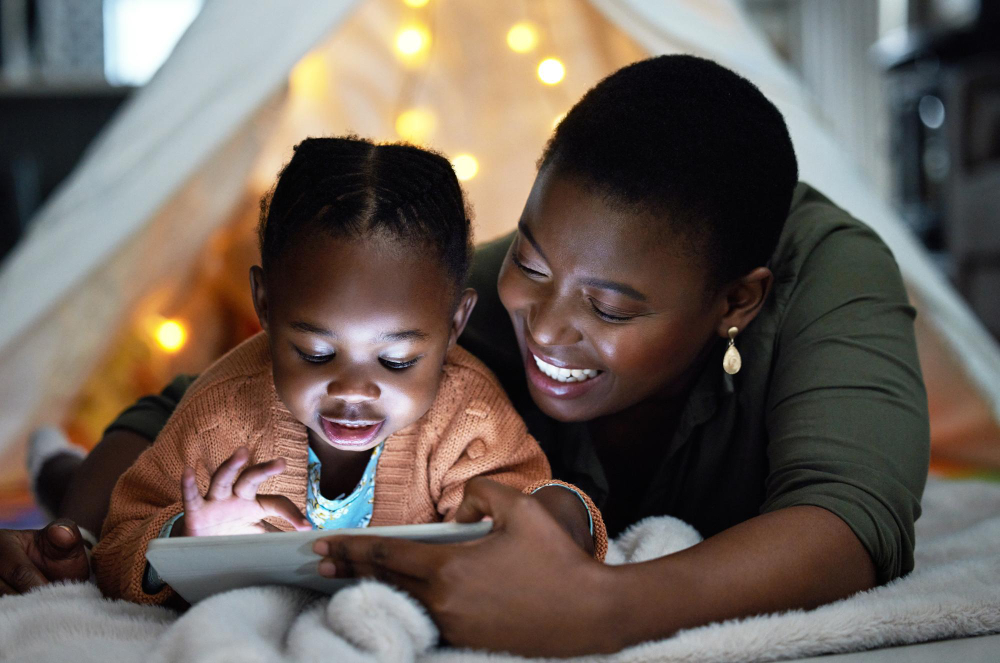

Africa’s children are entering digital spaces earlier than ever, yet the systems shaping their online experiences are largely being built without them and, in many cases, without adequate safeguards.
Before the speeches began at State House, Nairobi, a group of children stepped to the microphone and asked the questions adults in power have been struggling to answer.
“Will artificial intelligence protect us, or replace us? Who decides what children see online? Why do platforms know more about us than our parents do? And if technology is shaping our future, why are children not helping build it?”
The room fell quiet.
These were not questions from policymakers, regulators, or technology executives. They came from children growing up in a world where smartphones often arrive before adolescence, and where algorithms can influence identity, self-worth, and social behaviour long before parents, teachers, or faith leaders fully understand what is happening.

Their words immediately transformed what could have been another policy gathering into something far more personal and difficult to ignore.
Across the room sat African first ladies, diplomats, representatives from Meta Platforms, TikTok, Google, Microsoft, mobile operators, child rights groups, and digital policy leaders. But for that moment, the conversation belonged entirely to the children.
“What if AI meant Afrocentric intelligence? Technology designed with African children… not copied solutions,” pleaded 13-year-old Tamara Nilrama.
The exchange unfolded on the sidelines of the Africa Forward Summit on May 12, 2026, where Kenya’s First Lady, Rachel Ruto, convened a high-level dialogue on “Building Safer Digital Spaces for Children in Africa in an AI-Driven World.”
Organised in partnership with the Office of the Special Envoy on Technology and World Vision International, the summit brought together African leaders, global technology firms, and child rights advocates to confront a reality increasingly shaping childhood across the continent.
Roughly one in every ten children reports some form of online abuse
Africa’s children are entering digital spaces earlier than ever, yet the systems shaping their online experiences are largely being built without them and, in many cases, without adequate safeguards.
“Technology is transforming childhood itself,” said Mary Moinde, Chief of Staff to First Lady Ruto. “Children are entering digital spaces earlier, faster.”

Mrs Ruto framed the conversation as a question of responsibility, not innovation. “The world has truly become a global village,” she said. “But with that transformation comes a new responsibility. The same digital world that can unlock a child’s future can also place it at risk. Progress must never outpace protection.”
The urgency is backed by numbers. Kenya now ranks among Africa’s most connected youth populations. According to the Digital 2024 Kenya report, the country has 22.7 million internet users, 13.05 million social media users, and more than 66 million mobile connections, equivalent to 118 per cent of the population.
Internet use among young people aged 15 to 24 stands at 46.6 per cent, one of the highest rates across any age bracket, according to a 2023-2024 national survey by the Kenya National Bureau of Statistics and the Communications Authority. Even among children aged 3 to 9, early digital exposure is emerging, with usage estimated between 6 and 11 per cent depending on location and device access. Average social media use exceeds four hours daily.
Kenya’s Special Envoy on Technology, Ambassador Philip Thigo, acknowledged the paradox this creates. “Our children already have access to these technologies. In many cases, they know more than us.” But he did not stop there. “Roughly one in every ten children reports some form of online abuse. For a continent whose median age is around 18 to 19, that should concern all of us.”
Pauline Okumu, National Director of World Vision Rwanda, widened the frame. “One in every three internet users globally is a child,” she said. “Yet most digital systems were not designed with children’s realities in mind. The risks are escalating rapidly, from cyberbullying and exploitation to AI-generated abuse.” She warned that commitments without financing would remain hollow. “Protection without resources does not protect.”
Some content creators disguise violent or harmful material behind cartoons and child-friendly visuals
The risks delegates described were not abstract. Jennifer Kaberi, founder and CEO of Mtoto News, described how her daughter came home one day wanting to change her hair and appearance to look like characters she had been watching online. “That was the moment I realised technology is shaping our children long before we understand how.”
Her concern, she said, ran deeper than exposure: “Why are systems shaping African children being built in places that do not understand our languages, our families, or our values?”
Fifteen-year-old Tai Murithi raised a different kind of concern: the emotional dependence children are developing on artificial intelligence. “Sometimes in school, you find someone asking ChatGPT how to make another person their friend,” he said. “That’s concerning. You do not need artificial intelligence to be your companion.”
He then turned directly to TikTok’s representative with a pointed question: What was the platform doing about content creators who disguise violent or harmful material behind cartoons and child-friendly visuals?
TikTok’s Head of Government Relations and Public Policy for sub-Saharan Africa, Tokunbo Ibrahim, reminded delegates that the platform officially prohibits users under 13 and outlined parental controls, family pairing systems, youth advisory councils, and a US$2 million (Ksh258 million) education fund supporting AI literacy.
Meta’s Public Policy Director for East and the Horn of Africa, Mercy Ndegwa, said the company was “investing billions of dollars globally in systems designed to identify predators, suspicious behaviour, and harmful interactions before children encounter them.”
Many experts, however, challenged whether those safeguards are keeping pace with the scale and speed of the problem.
The average age of social media account creation in France is now eight years old
Africa is not alone in grappling with these questions, but it may have the most to lose given its demographics. France’s Ambassador for Digital Affairs and Artificial Intelligence, Clara Chappaz, offered a sobering data point: the average age of social media account creation in France is now eight years old.
“This is not a bug,” she said. “This is a feature configured by tech companies.” She described families whose children had died by suicide following online abuse and algorithmic exploitation. “Children, parents, and teachers cannot bear this responsibility alone.”
France has responded with a policy of no social media for children under 15. “If it is technically possible for companies to capture children’s attention,” Chappaz said, “then it must also be technically possible to protect them.” She invited African governments to build on that position at the G7, calling child online safety “a global common ground.”
Australia has moved to block children under 16 from social media entirely. Eswatini’s representative at the summit, Honourable Felipe Nyamane, called on African countries to follow. “We must also learn from countries that have taken bold steps to restrict access to social media for children below the age of 16. Self-guiding childhood must take precedence over commercial interest.”
Former Liberian President Ellen Johnson Sirleaf echoed the call, drawing on the continent’s record of innovation. “If Africa can lead in financial innovation,” she said, “then Africa can lead in protecting its children too.” She urged continental age gates financed by technology levies: “No child should fall prey to algorithms profiting from vulnerability.”
Solutions include child-sensitive budgeting, African-language artificial intelligence, and stronger reporting systems
The gap between policy and practice was raised repeatedly. Faith Jenge of Plan International was direct: “Kenya has policies. Africa has frameworks. The question is implementation. Where are the budgets? Where are the trained responders? Where are the safe reporting systems?”
Kenya’s Cabinet Secretary for Gender, Culture, and Children Services, Hanna Wendo Cheptumo, responded with a pledge: “Policy alone is not enough. We shall ensure budgets which are sensitive to safeguarding the children.” Neema Ngure Nchemba, spouse to Tanzania’s Prime Minister, urged governments not to demonise technology but to regulate it wisely. “Technology itself is not the problem. But alongside these opportunities are growing risks.”

The path forward sketched by delegates went beyond platform bans and screen-time limits. It pointed toward child-sensitive budgeting, African-language artificial intelligence, age-appropriate digital ecosystems, digital literacy in schools, stronger reporting systems, and critically, the inclusion of young people in designing the technologies that shape their lives.
That last point was made most powerfully by the children themselves. As one young delegate told the assembled leaders, speaking with a quiet confidence that no policy document could replicate: “Children are not just users of technology. We are creators. We are dreamers. We are builders. We are innovators.”
As First Lady Ruto closed the summit, her challenge to those in the room was unambiguous. “Let us leave here with commitments that will echo in parliaments, boardrooms, and homes. This summit must forge a child-safe digital Africa.”














good insight there
Thank you. It is important to watch and protect children from what they are exposed to in the digital space.
Good and educative piece here👏🏾
But our leaders are not helping in protecting the child in the community