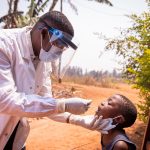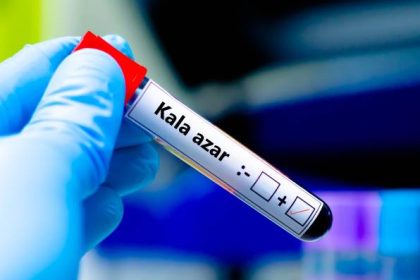




AMR occurs when bacteria, viruses, fungi, or parasites stop responding to medicines designed to kill them. Infections that were once easily treatable become harder, and sometimes impossible, to cure.
Elizabeth Ngare still remembers walking into her husband’s hospital room and finding every nurse dressed head-to-toe in protective gear: gloves, gowns, and masks. No one had warned or prepared her for what was coming.
Ngare’s husband had gone in for routine monitoring after his second surgery. He walked into the hospital stable and hopeful, but never walked out alive.
“He struggled to breathe,” Ngare recalled. “After two days, he passed away. I later learnt that he was suffering from MRSA.”

Methicillin-Resistant Staphylococcus Aureus (MRSA) is a strain of bacteria that has evolved to survive antibiotics commonly used to treat staph infections. It spreads through skin contact or sharing items, often beginning as painful boils, infected wounds, or surgical site infections. In severe cases, it enters the bloodstream. Treating MRSA requires stronger, carefully selected antibiotics guided by laboratory tests, options that are becoming increasingly scarce.
Ngare’s story is no longer an isolated tragedy. Across Kenya, similar cases are becoming more frequent, exposing a growing public health crisis that experts warn could reverse decades of medical progress.
That crisis is antimicrobial resistance (AMR), which occurs when bacteria, viruses, fungi, or parasites stop responding to medicines designed to kill them. Infections that were once easily treatable become harder, and sometimes impossible, to cure.
More than one million deaths every year are directly attributable to antimicrobial resistance
During the launch of World AMR Awareness Week last year, Dr Emmanuel Tanui, Assistant Chief Pharmacist at the National Quality Control Laboratory and Kenya’s National AMR Focal Point, said AMR is not a future threat but a present reality.

“More than one million deaths every year are directly attributable to AMR,” Dr Tanui said. “Low- and middle-income countries carry the greatest burden due to weak health systems, limited diagnostics, and poor access to effective antimicrobials.”
The projections are even more alarming. “If we do not increase efforts, AMR will become one of the leading causes of mortality by 2050,” Dr Tanui warned. “Africa will bear the biggest burden, up to five million deaths each year.”
Dr John Kariuki, a veterinary surgeon, experienced firsthand how devastating resistant infections can be. After a fall in his bathroom, he underwent hip surgery, but the surgical wound never healed. Weeks turned into months as pain worsened and the wound continued to leak. He was admitted repeatedly, placed on different antibiotics, and subjected to multiple procedures, none of which worked.

Eventually, a laboratory culture test revealed the truth: out of 18 antibiotics tested, only one could treat the bacteria infecting him. Dr Kariuki survived, but the consequences were life-altering. The delayed diagnosis, prolonged hospital stays, heavy exposure to antibiotics, and permanent disability changed his life permanently.
“Cases like these were once rare,” said Dr Loice Ombajo, an infectious disease specialist at the University of Nairobi. “Now, they are becoming routine.”
Data from Kenya’s AMR surveillance system paints a troubling picture.
“Ceftriaxone resistance is above 60 to 70 per cent,” Dr Ombajo said. Ceftriaxone is one of the most widely used antibiotics in Kenyan hospitals. When it fails, treatment options narrow rapidly. Escherichia coli (E. coli), a leading cause of bloodstream and urinary tract infections, is now resistant to ceftriaxone in most public hospitals.
“If you are admitted today and placed on ceftriaxone, insist on a review,” she warned.
If someone has drug-resistant bacteria in the blood, six out of ten will die
Newborn units face an even deadlier threat. Klebsiella pneumoniae, a bacterium common in neonatal wards, is often resistant to multiple drugs.
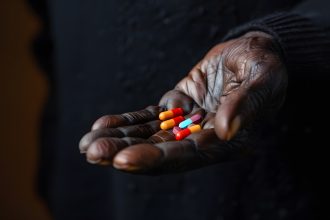
“Sometimes almost all the babies in a newborn unit die from a drug-resistant Klebsiella infection,” Dr Ombajo said.
The mortality rates are devastating. “If someone has drug-resistant bacteria in the blood, six out of ten will die.”
Resistance is also rising against carbapenems, antibiotics reserved as a last line of defence. Once resistance reaches 30 per cent, treatment options collapse. Many Kenyan hospitals are already approaching that threshold. MRSA, once uncommon in Kenya, is now widespread.
“Five years ago, we did not see much,” Dr Ombajo said. “Now rates are up to 50 per cent.”
Dr Ombajo was part of the team that developed a policy brief launched during a recent two-day national conference on AMR. The document describes a severe and urgent public health crisis. Key pathogens such as E. coli, Klebsiella pneumoniae, and Staphylococcus aureus show resistance rates between 50 and 80 per cent, particularly in bloodstream infections where mortality reaches 60 per cent.
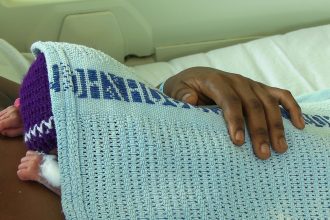
The brief highlights Kenya’s heavy reliance on broad-spectrum antibiotics like ceftriaxone despite resistance levels exceeding 70 per cent, and warns of emerging resistance to last-resort drugs such as meropenem.
Experts say the crisis is being driven by widespread misuse of and unregulated access to antibiotics.
“The main drivers include misuse and overuse of antimicrobials in humans and animals, poor infection prevention and control, limited diagnostics, substandard medicines, and weak biosafety practices in animal health,” Dr Tanui explained.
38 per cent of children who died at home or in the community had bacteria in their blood, and most of those bacteria were resistant
Inside hospitals, the trend continues. Surveys show that 44 per cent of inpatients are on at least one antibiotic at any given time, including many who do not need one.

Kenya’s antibiotic use also deviates sharply from global recommendations. The World Health Organization (WHO) advises that 70 per cent of antibiotic consumption should come from the “Access” category; drugs with lower resistance potential. In Kenya, access to antibiotics accounts for only 40 per cent of use.
“The more Watch antibiotics we use, the more we select for resistance,” Dr Ombajo said.
Watch antibiotics are medicines that the WHO classifies as higher risk for driving antimicrobial resistance, so clinicians should prescribe them only for specific infections and monitor use closely. Their misuse or overuse speeds resistance and weakens future treatment options, which makes stewardship and regulation critical.
Even surgical practices are affected. Despite national guidelines recommending first- or second-generation cephalosporins for surgical prophylaxis, third-generation and reserve antibiotics are frequently used.
A Kenyan study found that patients with resistant infections had a 44 per cent higher risk of death compared to those with susceptible infections. Children under five face the greatest risk. Data from the Child Health and Mortality Prevention Surveillance (CHAMPS) study showed that 38 per cent of children who died at home or in the community had bacteria in their blood, and most of those bacteria were resistant.
Among E. coli and Klebsiella isolates, 73 per cent were resistant to ceftriaxone. Beyond mortality, AMR significantly increases costs. Treatment expenses rise by 33 per cent, particularly for hospital-acquired infections that require expensive third- or fourth-generation antibiotics and prolonged hospital stays.
Despite the grim outlook, Kenya has made notable progress. The country launched formal AMR efforts in 2017 with the adoption of the National Action Plan on AMR, aligned with recommendations from WHO, the Food and Agriculture Organization (FAO), the World Organisation for Animal Health (WOAH), and the United Nations Environment Programme (UNEP).
“We have clear structures that support coordinated implementation,” Dr Tanui said.
The National Antimicrobial Stewardship and Intelligence Committee oversees national efforts, while 22 counties have established County AMR Committees. County One Health Units have integrated AMR into their work plans, and surveillance has expanded from just two sentinel sites in 2018 to multiple sites nationwide. By October 2024, Kenya had generated 24,000 AMR records.
Hand hygiene compliance has dropped from 61 per cent in 2023 to just over 40 per cent in 2025
“We were among six countries that submitted fully integrated AMR data to the Global Antimicrobial Resistance and Use Surveillance System,” Dr Tanui noted.

Laboratory capacity has also improved with support from the Fleming Fund. According to Professor Eric Fevre of the International Livestock Research Institute (ILRI), 12 human health laboratories, seven animal health laboratories, and one environmental laboratory have been upgraded. More than 100,000 human health samples have been processed, and external quality assurance scores have improved in 93 per cent of reporting sites.
Kenya’s AMR strategy follows a One Health approach, recognising the link between human health, animal health, and the environment.
“For us to address AMR well, we need collaboration,” Dr Tanui said.
The animal health sector has strengthened medicine surveillance and developed an essential veterinary medicines list. Environmental surveillance has begun, with Kenya launching its first environmental AMR surveillance framework. Globally, FAO supports these efforts through the InFARM system, which allows food and agriculture sectors to upload AMR data.

“The InFARM system gives our sectors a simple way to share reliable AMR data,” said FAO’s Tabitha Kimani. “This evidence will guide stronger national action and contribute to a clear global picture next year.”
Despite progress, sustainability is now the biggest concern. The Fleming Fund, which has supported much of Kenya’s AMR work, is closing due to reduced UK aid funding.
“With the reduction in UK aid funding, the Fleming Fund will close at the end of current agreements,” said Holly Rana-Jones, the Fund’s Head of Programme. Some agreements closed in December 2025, while others will end in March 2026, creating a major funding gap.
“We need new ways to finance ongoing work,” Professor Fevre said. “We must sustain the gains.”

Dr Tanui agreed. Forty per cent of Kenya’s AMR implementation plan still requires domestic funding. Other gaps remain, including food safety, fisheries, crop sectors, and limited diagnostic capacity outside major hospitals.
Alarmingly, hand hygiene compliance has dropped from 61 per cent in 2023 to just over 40 per cent in 2025. Dr Charles Kandie from the Ministry of Health said Kenya has identified three priorities: strengthening regulation and accountability, integrating AMR into national programs such as universal health coverage, and sustaining multisectoral coordination and investment.
Dr Ombajo emphasised urgent actions including increasing public awareness, regulating antibiotic sales, strengthening laboratories, aligning drug procurement with AMR data, and updating and enforcing treatment guidelines. Counties, she noted, play a critical role by managing hospitals, regulating pharmacies, and running community health programmes.
We believe in the free flow of information
Republish our articles for free, online or in print, under Creative Commons licence.