

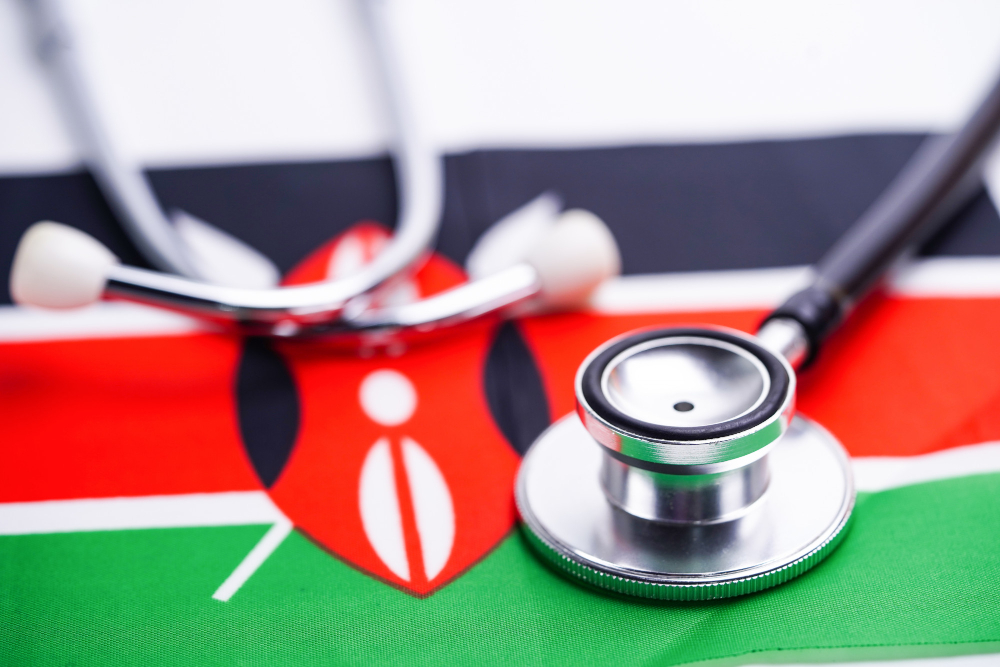

Healthcare competes against many urgent national demands within constrained budgets; debt obligations further complicate the situation, while in some counties, funds earmarked for healthcare have been redirected to other priorities.
Unless Kenya and other African countries urgently rethink how they finance healthcare, years of progress against HIV, Tuberculosis, malaria, maternal deaths and vaccine-preventable diseases could begin to unravel.
That warning has echoed across the continent following sweeping reductions in foreign health assistance triggered by policy shifts in the United States in early 2025. For Kenya, where donor support has long underpinned critical health programs, the funding shock has exposed not only immediate financial gaps, but also deep structural weaknesses that experts say can no longer be ignored.

At the centre of the crisis is a difficult question: can Kenya sustain its health system without relying heavily on external aid?
The debate took centre stage during the World Health Summit Regional Meeting at the United Nations Office in Nairobi, where policymakers, financiers and global health leaders warned that Africa’s health systems remain dangerously vulnerable because too many essential programs are funded from outside national budgets.
“Nobody in this room needs to be reminded of what happened last February 2025 with the big change in Official Development Assistance,” said Dr Andrea Luciani, team lead for external relations and partnerships at the World Health Organization (WHO). “This decline exposed mainly one type of program, the vertical programs.”
These disease-specific programs, particularly for HIV, Tuberculosis, malaria and immunisation, have saved millions of lives across Africa over the past two decades. But many were designed and financed externally, often operating separately from national systems. That structure, experts warned, has left countries exposed.
Reduced funding could lead to more than 15 million additional AIDS-related deaths globally by 2030
“There were some low-income countries where 70 per cent of funding for these programs was coming from external sources,” Luciani said. “If you remove one piece of the chessboard, the whole board falls.”

The consequences are already emerging. WHO projections presented at the summit estimate that reduced funding could lead to more than 15 million additional AIDS-related deaths globally by 2030, with 60 per cent occurring in Africa. The agency also projects an additional 69 million Tuberculosis infections and two million deaths if financing gaps persist.
Behind those statistics are fragile clinics, interrupted medicine supplies, unpaid health workers and vulnerable patients at risk of losing treatment. The crisis has also exposed how fragmented many African health systems have become.
In several countries, donor-funded programs evolved into parallel structures with separate procurement chains, reporting systems and workforce arrangements that bypassed national frameworks. While the model delivered rapid disease-specific gains, it weakened system-wide resilience.
Luciani recalled one ministry of health managing 37 separate donor-funded grants simultaneously. “Instead of doing public health, what they were doing was managing these grants,” he said.
Each grant came with its own reporting requirements, timelines and accountability structures, creating administrative overload while limiting governments’ ability to plan coherently. Experts said this fragmentation has made it difficult for countries to forecast budgets, retain health workers or sustain long-term programs.
“The uncertainty means planning is not possible,” Luciani added.
For Kenya, the donor funding shock comes at a time when domestic fiscal pressures are already intense. Debt servicing now consumes about 20 per cent of the national budget before other sectors are funded, sharply limiting fiscal space. Meanwhile, health spending remains far below the Abuja Declaration target, where African Union member states committed to allocating at least 15 per cent of national budgets to health.
The pressure is visible across the system. Kenya continues to struggle with maternal mortality, medicine shortages, staffing gaps and unequal access to care between urban and rural populations.
Dr Daniel Mwai, Kenya’s Presidential Advisor on Health, described the moment as a necessary wake-up call.
Kenya could domestically finance essential medicines and supplies if health is prioritised politically
“The reduction in external resources is a wake-up call for African states to rethink and reengineer how they fund their programs,” he said. “Sometimes as Africans, we start dreaming and hallucinating. We must ask, what can we fit within the exchequer?”
According to Mwai, the withdrawal of US support quickly exposed weaknesses in four key areas: commodity security, human resources, digital systems and financing. “After the withdrawal of the US government support, we had quite some challenges,” he said.
Yet he argued that Kenya has more capacity than it often acknowledges.
“A country like ours is able to fund commodities,” Mwai said, suggesting that Kenya could domestically finance essential medicines and supplies if health is prioritised politically.
The challenge, experts noted, is that healthcare competes against many urgent national demands within constrained budgets. Debt obligations further complicate the situation.
“When your salary comes, the first thing you pay is your debt,” Mwai said. “The same happens to countries.”
Devolution has added another layer of strain. According to Mwai, county allocations intended for health have fallen to about 27 to 28 per cent, below the recommended 35 per cent threshold. In some counties, funds earmarked for healthcare have been redirected to other priorities.
Inefficiencies include ghost workers, governance challenges even commodities disappearing from facilities
Even where money exists, experts said inefficiencies continue draining scarce resources. Some countries return unspent health funds to Treasury because of weak absorptive capacity, while corruption and governance failures persist across procurement and payroll systems.
“We know where the inefficiencies are,” said Dr Amit Thakker, Executive Chairman of Africa Health Business. “Ghost workers, governance challenges and even commodities disappearing.”

He argued that addressing entrenched self-interest groups and systemic leakages could generate major gains. “We can have 40 per cent gains in healthcare,” he said.
Thakker also urged governments to rethink how they engage the private sector, which already provides roughly half of healthcare services across Africa. He stressed that the private sector includes not only commercial hospitals, but also faith-based organisations, NGOs and non-state providers that often fill gaps left by public systems.
The financing gap itself remains staggering. Low- and middle-income countries spend between US$100 – 200 (Ksh12,900 – 25,800) per person annually on health, compared to roughly US$4,000 (Ksh516,000) in Europe and about US$10,000 (Ksh1.29 million) in the United States.
“We need to add a zero,” Thakker said, underscoring how severely underfunded African health systems remain.
For African development institutions, the conversation is no longer simply about aid, but about economic survival.
Dr Babatunde Omilola, Head of the Public Health Security and Social Protection Division at the African Development Bank (AfDB), said Africa loses approximately US$2.4 trillion (Ksh309.6 quadrillion) annually because of underinvestment in health.
“Health is an economic imperative,” Omilola said, arguing that stronger health systems improve productivity, create jobs and drive economic growth.
Local manufacturing is part of the long-term solution, particularly after the Covid-19 pandemic exposed global supply vulnerabilities
The AfDB has committed about US$6 billion (Ksh774 billion) toward health infrastructure and US$3 billion (Ksh387 billion) by 2030 for pharmaceutical manufacturing across Africa. The push comes as the continent continues importing up to 90 per cent of medicines and producing only about one per cent of its vaccines.
For Kenya, local manufacturing is increasingly viewed as part of the long-term solution, particularly after the Covid-19 pandemic exposed global supply vulnerabilities.

President William Ruto said Africa must move from consuming innovation to producing it.
“Africa must position itself at the forefront of biotechnology and advanced research, thereby transitioning from a consumer of innovation to a producer of globally relevant solutions,” he said during the summit.
Beyond manufacturing, experts repeatedly returned to one central theme: integration.
“We should avoid simply shifting dependency from one donor to another,” Luciani warned. “It may ease the pain, but it is not the cure.” Instead, he called for countries to build unified systems anchored on national priorities.
“One plan, one budget, one report,” Luciani said, urging governments and donors to end fragmented financing structures.
Richard Matikanya, Deputy Executive Director for Africa at the Children’s Investment Fund Foundation, argued that resilience should be measured practically.
“When a shock hits, the clinic stays open, health workers are paid, patients continue receiving care, and households are not pushed into poverty,” he said.

Achieving that resilience, he added, requires governments to strengthen “boring but critical” systems such as payroll management, public financial management and accountability structures rather than focusing only on high-visibility projects.
Across the discussions, a common consensus emerged: Kenya and Africa cannot cut their way out of the crisis. They must reform their way out.
That means confronting inefficiencies, expanding domestic financing, improving accountability, strengthening county-level spending, integrating fragmented systems, and building local manufacturing capacity. It also means treating healthcare not as a donor-driven social program, but as a core pillar of economic stability and national security.
“A crisis is a terrible thing to waste,” Luciani said.
The road ahead will demand difficult political choices, especially as governments balance debt obligations against rising public health needs. But experts argued that the current disruption may also present a rare opportunity to redesign systems that have long depended on unstable external support.
We believe in the free flow of information
Republish our articles for free, online or in print, under Creative Commons licence.