

Kenya’s adolescents are navigating sex, power, and violence with almost no honest guidance… and the numbers prove it: Over 17,000 adolescents and young people are newly infected with HIV annually.
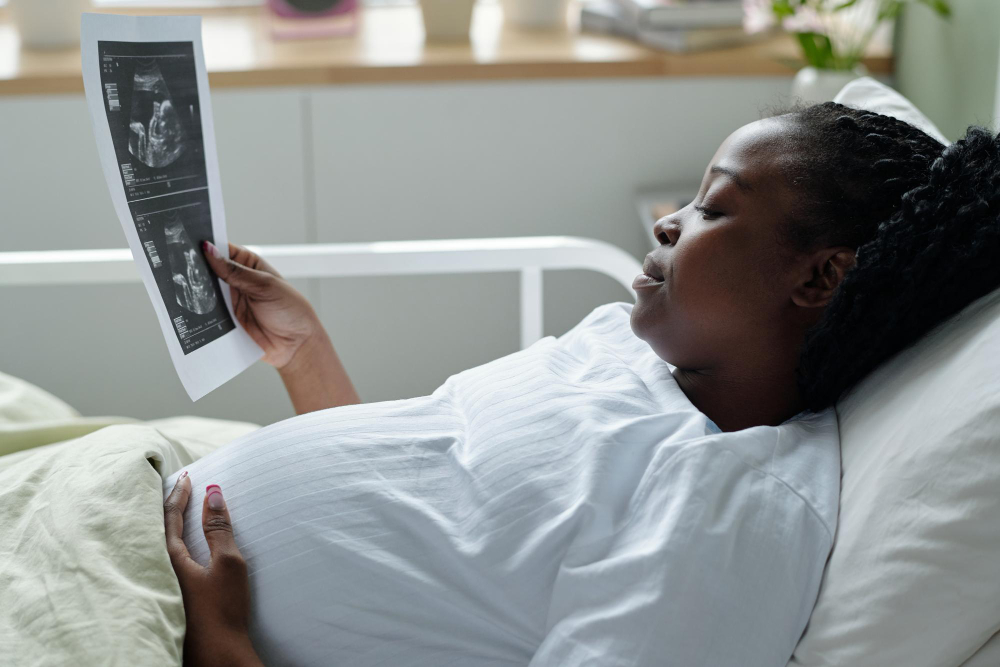
Every two minutes, a girl in Kenya leaves school because of pregnancy. Every hour, 27 girls lose the chance to finish their education. Every day, 657 girls’ lives are quietly reshaped by circumstances they did not choose.
These are not abstract statistics. They are classrooms interrupted. They are futures deferred. They are stories we keep choosing not to hear fully.
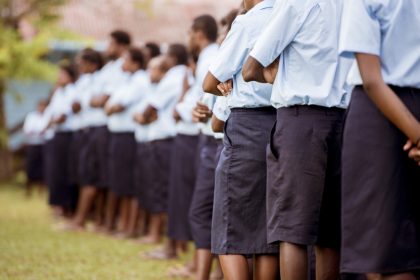
The numbers are staggering. Over 240,000 girls aged 10 to 19 become pregnant in Kenya every year. Each year, about 17,000 adolescents and young people are newly infected with HIV, and dozens of young lives are altered every single day. And beneath it all, often hidden in silence and stigma, sexual and gender-based violence affects at least 17 per cent of adolescent girls and young women annually, a figure widely acknowledged to be only the tip of the iceberg.
But the most dangerous part is not the numbers themselves. It is our growing comfort with them.
“We’ve institutionalised the problem,” observes Odylia Muhenje, a sociologist and PhD student at the University of Nairobi. “It’s now part of our landscape, like the rainy season or traffic jams. We complain about it, but we don’t act with the urgency it demands. We’ve forgotten that this isn’t inevitable, it’s a choice we make every day through inaction.”
Statistics are efficient. Clean. Easy to present in annual reports and media cycles. But they are terrible storytellers.
At school, we learnt about reproductive health, but the teacher kept saying it was ‘inappropriate’
They do not tell you about Jerono, a 15-year-old girl from Kabuti in Nandi County, who became pregnant after “confusing moments” with a 22-year-old neighbour. “My mother worked in Siret Tea Estates to support us,” she recalls. “There was no one to talk to about these things. At school, we learnt something about reproductive health, but the teacher kept saying it was ‘inappropriate.’ I wish we had a chance for life skills.”
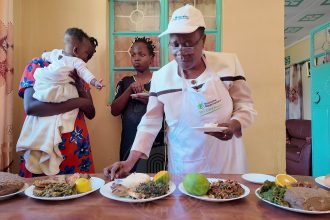
They do not tell you about 19-year-old Grace from Koisagat Tea Estate in Nandi Hills, who became a mother at 16. “I remember my mother telling me to ‘be careful’ with boys, but that was it,” she reflects. “No one explained what careful meant. No one told me I could say no. No one told me about protection.”
They do not tell you about fear. Or pressure. Or silence. And they certainly do not tell you about the moment everything changes.
The Kenya Demographic and Health Survey (KDHS) 2022 found that about one in seven adolescent girls aged 15 to 19 is already a mother or pregnant with her first child. About 12 per cent of women aged 20 to 24 reported having had sexual intercourse before 15, a figure that points not to experimentation but to environments where coercion, unequal power, and pressure shape first experiences.
This is what makes the silence so corrosive. In many Kenyan households, discussing sex remains taboo, despite consequences including unplanned pregnancies and preventable infections. Young people are expected to “know better”, but are rarely given the space to ask better questions. So, they turn to each other. To incomplete information. To myths. To assumptions. And sometimes, to decisions they are not fully prepared to make.
Teen pregnancy, HIV and sexual and gender-based violence are now the biggest “Triple Threat”
The consequences extend far beyond health. When a girl becomes pregnant, she is more likely to drop out of school, become economically vulnerable and thus increase exposure to risky relationships. And the cycle continues.
“The economic implications are substantial,” notes educationist Frender Cherono of Nairobi. “We’re not just losing economic output; we’re losing future doctors, teachers, innovators, leaders. When a 15-year-old becomes a mother instead of completing her education, we all lose. The cost is borne not just by her but by our entire society.”

The links between teenage pregnancy, HIV, and sexual and gender-based violence are what policymakers now call the “Triple Threat.” But for many communities, this is not a new discovery. It is a lived reality. Research shows that girls who experience sexual violence face a significantly increased risk of unintended pregnancy. In Kenya, adolescent girls and young women aged 15 to 24 are disproportionately affected by HIV, accounting for a substantial share of new infections each year. Experiences of violence, including intimate partner violence, are closely associated with both increased HIV risk and adverse reproductive health outcomes.
“These aren’t separate issues requiring separate solutions,” says Dr Ruth Laibon, former director at the National Syndemic Disease Control Council and a renowned public health specialist. “They’re interconnected manifestations of the same underlying problems: gender inequality, limited access to comprehensive health services, and social norms that disempower young people, especially girls.”
There is also a structural dimension that too often goes unnamed. In Kenya, about one in eight girls is married before her 18th birthday, particularly in marginalised communities. Child marriage limits girls’ autonomy and education, and is closely associated with early pregnancy, violence, and poor health outcomes.
The 240, 000 teen pregnancies represent a human being with hopes, dreams, and potential
Power imbalances are at the core of all of this. Who has the power to say no? Who has the power to seek help without fear? Who has the power to speak at all? For many Kenyan girls, the answer, still too often, is no one.
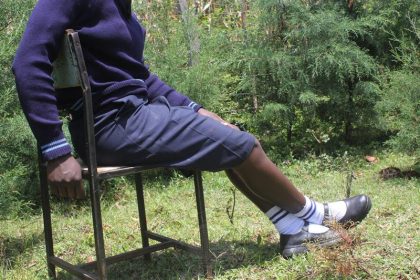
These numbers represent 240,000 opportunities to connect with a girl before she becomes pregnant. They represent 17,000 chances to educate a young person about HIV prevention. They represent countless moments to intervene before violence occurs.
“Every number represents a human being with hopes, dreams, and potential,” reflects Dr Laibon. “When we see them as opportunities rather than just problems, our entire approach changes. We move from reacting to preventing. From treating to healing. From despair to hope.”
But hope requires honesty. And honesty begins with refusing to be comfortable with numbers that should never feel ordinary.
Obwiri Kenyatta is a global health expert in community-led health equity, climate justice, SRHR, and HIV programmes.