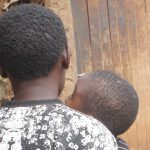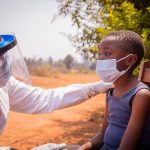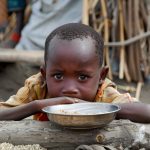



Child deaths are expected to rise from 4.6 million in 2024 to 4.8 million in 2025, an increase of more than 200,000 deaths from preventable causes
For the first time in the 21st century, the world is on the brink of a deadly reversal in child survival.
After two decades of progress that saved millions of young lives, the Gates Foundation now warns that 2025 will mark a historic rise in preventable child deaths; an outcome driven not by a lack of scientific tools or medical knowledge, but by deep and accelerating cuts to global health funding.
According to the Gates Foundation’s 2025 Goalkeepers Report, child deaths are expected to rise from 4.6 million in 2024 to 4.8 million in 2025, an increase of more than 200,000 preventable deaths. This stark projection shatters the steady downward trend that began in 2000 and signals that decades of progress may be unravelling.
“If global health funding falls by 20 per cent, an additional 12 million children could die by 2045,” the report warns. “Cuts of 30 per cent could push that number to 16 million.”
Bill Gates, chair of the Gates Foundation, writes in the report that “The death of a child is always a tragedy, but there’s something especially devastating about a child dying of a disease we know how to prevent.”
Speaking to journalists on Tuesday, December 3, 2025, CEO of the Gates Foundation Mark Suzman called the projections a wake-up call for high-income countries and global policymakers.
“We saw a halving of preventable child mortality from nearly 10 million deaths a year in 2000 to under five million by 2020,” Suzman said. “But sadly, this year we are likely to see the first increase in preventable child mortality this century. That is something we hoped never to report.”
More than 60 nations now spend more on debt servicing than on health and education combined
Suzman attributed the reversal to a “perfect storm” of conflict, climate shocks, fragile health systems, and most critically, shrinking international development budgets from major donors including the United States of America, the United Kingdom, France and Germany.
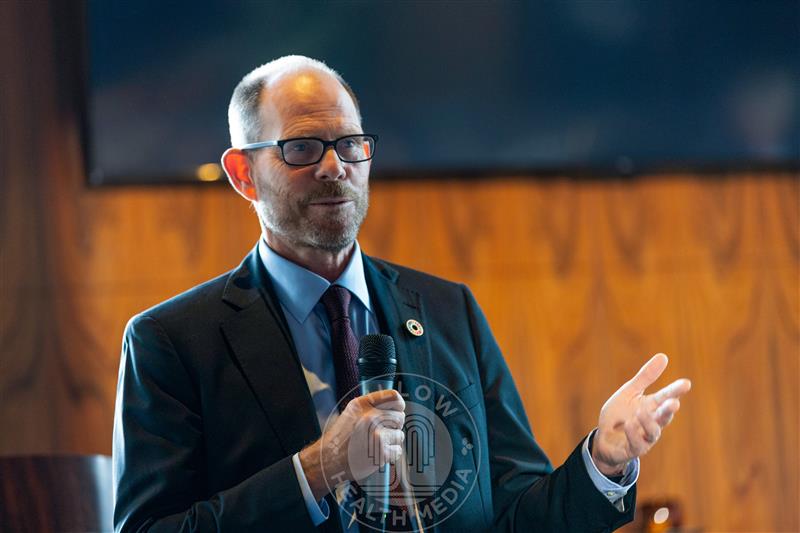
“If cuts continue,” he warned, “we will see many more preventable deaths in the next 20 years. The difference between flat funding and cuts of 20-30 per cent is 12 to 18 million additional deaths, yet we know how to save these children’s lives.”
Even as funding declines, the tools needed to prevent child deaths have never been more powerful, from next-generation malaria interventions to maternal vaccines that protect newborns from day one. At the foundation of all progress lies primary healthcare, the most cost-effective yet consistently underfunded part of health systems.
“For less than $100 (about Ksh12,930) per person per year, a robust primary healthcare system can prevent up to 90 per cent of child deaths,” the report states.
But health systems in low-income countries are stretched thin; more than 60 nations now spend more on debt servicing than on health and education combined.
“These countries are facing the greatest fiscal crisis in 25 years,” Suzman said. “They simply don’t have the resources to make up the difference.”
Since 2000, childhood deaths have been cut nearly in half , largely thanks to vaccines, with data showing that every dollar invested in immunisation generates $54 (about Ksh7,000) in economic and social returns.
Malaria continues to kill over 400,000 children annually, mostly in sub-Saharan Africa
Yet new challenges arise. Pneumonia, driven by the pneumococcus bacteria, remains the leading infectious killer of children under five. In 2024, the World Health Organization (WHO) approved a reduced two-dose pneumococcal vaccination schedule for countries with established programs. This shift could save $2 billion (Ksh259 billion) by 2050.

“Vaccines requiring fewer doses free up resources,” Gates noted. “That means more money to reinvest in health systems and protect more children.”
Malaria continues to kill over 400,000 children annually, mostly in sub-Saharan Africa. Climate change and mosquito resistance have complicated control efforts, pushing countries to adopt subnational tailoring, a data-driven approach that deploys the right interventions in the right places.
Emerging tools fall into three categories, namely next-generation vaccines that promise longer-lasting protection for repeatedly exposed populations, including older children.
Second is stronger vector control in the form of dual-insecticide nets, now used in 17 African countries, that have already prevented 13 million cases. There are also affordable spatial repellents with simple wall-mounted sheets that offer year-round protection for just over $1 (Ksh129) per person.
Third are single-dose cures, including future treatments that could be delivered in one pill, making adherence easier. Together, these innovations could save 5.7 million children by 2045 and move the world closer to malaria eradication.
Jennifer Gardy, Deputy Director of Malaria at the Gates Foundation, said: “Getting rid of mosquitoes is the single best thing you could do to drive down malaria quickly.”
The report also highlights breakthroughs against HIV. The long-acting drug Lenacapavir could transform prevention by reducing dosing from daily pills to two injections a year, and eventually possibly one.
“Rolling out the twice-a-year injection to just 4 per cent of people in high-incidence areas could prevent up to 20 per cent of new infections,” Gates said.
Nearly half of all child deaths now occur in the first month of life
This would significantly protect infants, as mother-to-child transmission remains a major cause of early childhood deaths. New oral pre-exposure prophylaxis (PrEP) pills taken monthly, and AI-supported risk-management tools are expected to strengthen prevention further.
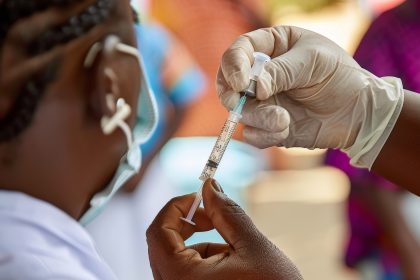
Nearly half of all child deaths now occur in the first month of life, when traditional infant vaccines are too slow to protect newborns. Two major infections, Respiratory Syncytial Virus (RSV) and Group B Streptococcus (GBS), strike within days of birth, but maternal vaccination is the breakthrough solution.
The RSV maternal vaccine, rolled out in wealthy countries in 2022, is now set to reach low-income countries with the support of Gavi, the Vaccine Alliance. It has already reduced pneumonia hospitalisations among infants by 80 per cent in some regions.
Further, a GBS vaccine, currently in late-stage development, could prevent a leading cause of newborn sepsis. The Gates Foundation is investing in multi-dose vials to reduce costs and improve distribution, with rollout expected in Gavi-supported countries by 2027.
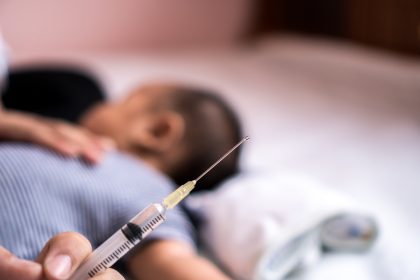
Health experts reviewing the Goalkeepers Report said the numbers confirm a grim trend: global child mortality is rising because overseas health investment is falling.
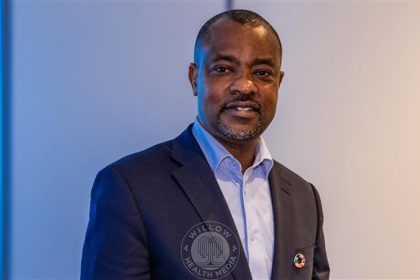
“If global health funding is reduced by 20 per cent, 12 million more children will die by 2045. At 30 per cent, 16 million could die. This proves that cuts triggered by global uncertainty and debt are reversing decades of progress,” said Dawda Jobarteh, Deputy Director of Goalkeepers.
Yet Dawda remains cautiously optimistic: “We must do more with less. For less than $100 per person, strong primary healthcare can prevent over 90 per cent of child deaths.”
“The price of budget cuts shouldn’t fall on the world’s poorest and most vulnerable”
The Global Fund, which has saved 70 million lives, recently announced $11.4 billion (Ksh1.5 trillion) in new commitments, including $912 million (Ksh117.8 billion) from the Gates Foundation.
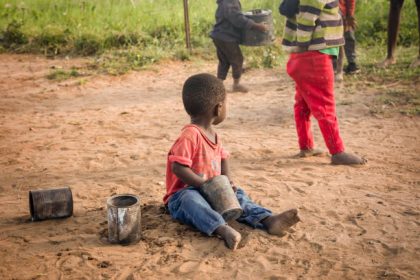
Stephen Lim, Senior Director of Science and Engineering at the Institute of Health Metrics and Evaluation (IHME) warned that overseas health investment has already dropped from $49 billion (Ksh6.3 trillion) in 2024 to $46 billion (Ksh5.9 trillion) in 2025, with low-income countries, especially in Africa, the most vulnerable.
“If the world recommits to funding health, we would not only avoid these deaths, but gain new opportunities to save millions more,” Lim said.
To underscore the urgency, the Gates Foundation earlier this year announced a historic pledge of $200 billion (Ksh25.9 trillion) over the next 20 years, representing Bill Gates’ remaining fortune and the foundation’s endowment.
“We feel this is the critical moment,” Suzman said. “Global health has been a success story for 25 years, but this year faces significant setbacks.”
Still, the foundation stresses that philanthropy cannot replace government funding.
“The price of budget cuts shouldn’t fall on the world’s poorest and most vulnerable, and no one is more vulnerable than a child who could live and instead dies,” Suzman said. “We cannot stop at almost ending preventable child mortality; we need to redouble our efforts.”
We believe in the free flow of information
Republish our articles for free, online or in print, under Creative Commons licence.