



Kenya loses 355 mothers for every 100,000 live births, a stark contrast from the global average of 70 per 100,000. According to experts, most of these deaths are preventable.
The government plans to scale up implementation of the Maternal and Perinatal Death Surveillance and Response (MPDSR) system to strengthen data-driven interventions aimed at reducing maternal and newborn deaths in Kenya.
Speaking during a National Webinar on Strengthening Maternal and Perinatal Death Surveillance and Response in the counties on November 5, 2025, Principal Secretary for Medical Services Dr Ouma Oluga said, despite progress over the last decade, which includes increased skilled deliveries, Kenya continues to record preventable maternal and neonatal deaths.
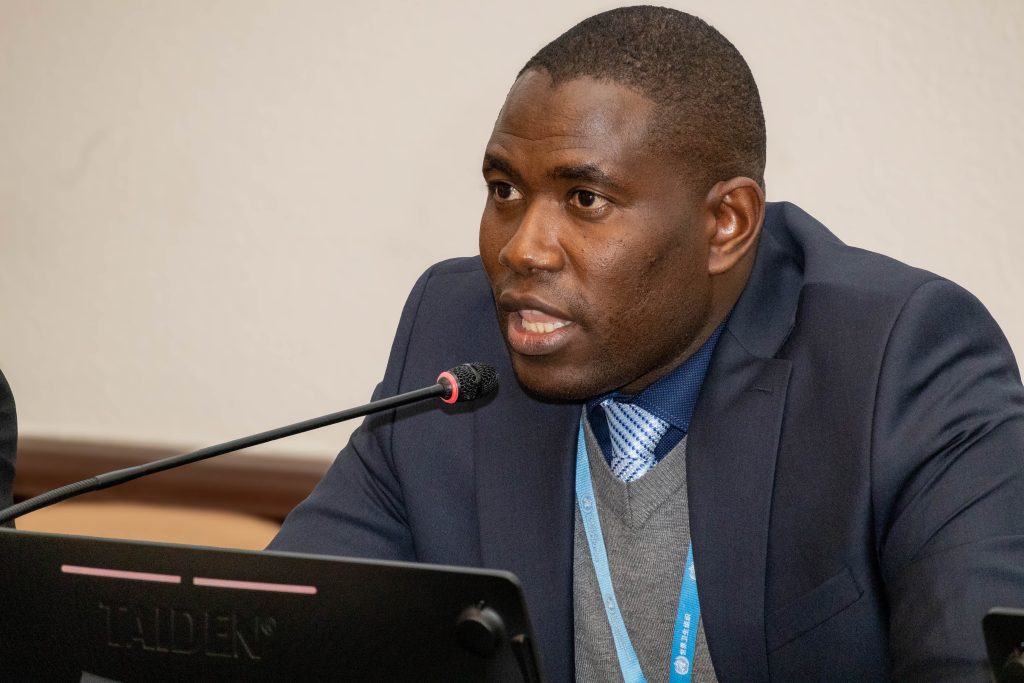
“Our unfinished business is that there are still too many preventable deaths, too many families bereaved, and too many babies lost before their first 28 days,” said Dr Oluga. “It is our duty to ensure that no mother dies giving life and no baby is left without a mother.”
The World Health Organisation (WHO) describes MPDSR as an essential quality improvement intervention which permits the identification, notification, quantification and determination of causes and avoidability of maternal and neonatal deaths and stillbirths, with the goal of orienting the measures necessary for their prevention.
The approach evolved from WHO’s push to reduce preventable maternal and neonatal deaths with five key steps, including documenting every maternal and newborn death, reviewing what caused the death(s), identifying avoidable factors, taking action to prevent recurrence, and tracking whether the actions taken were effective.

Kenya first introduced maternal death notification as a policy in 2004. Later in 2016, it strengthened it into a full MPDSR system aligned with the WHO 2013 global guidelines. At the time, maternal deaths in Kenya were too high, many of the deaths were preventable, and many mothers and newborns could have been saved with proper interventions.
Moreover, many deaths that occurred were poorly reported, and data were not used for action due to a lack of structured health systems. There is evidence that MPDSR, when implemented with strong leadership and alongside training, works to reduce maternal and neonatal deaths.
Globally, Sri Lanka is recognised for recording immense success in improving maternal health outcomes using the MPDSR system. In 2023, the country recorded an estimated 18 deaths per 100,000 live births, a decline from the initial 32 deaths per 100,000 live births in 2014. Other successful countries are South Africa, which has seen a decrease from about 310 deaths per 100,000 live births in 2009 to 118 deaths per 100,000 live births in 2023.
For the system to work effectively, deaths must be reported within 24 hours for maternal deaths and 48 hours for perinatal deaths
In Kenya, the MPDSR system is expected to work in a five-tier reporting structure from the facility level to national-level committees. The five MPDSR committees begin at the community level, then facility, sub-county, county and the national MPDSR committee, which is the highest.

The system is designed to review every maternal and newborn death, identify what went wrong, and implement corrective actions. Dr Oluga noted that for the system to work effectively, deaths must be reported on time, with maternal deaths reported within 24 hours and perinatal deaths within 48 hours.
“When MPDSR functions well, we count every death, review without blame, and act immediately to protect the next mother and newborn,” he said.
Kenya’s MPDSR structure operates from the community level up to the national level, with defined roles and escalation pathways at each administrative tier.
Council of Governors CEO, Mary Mwiti, emphasised that while progress has been made, more investment is needed to strengthen county-level MPDSR structures.
“It is not just about numbers, it is about the lives of women and newborns,” she said.
Mwiti highlighted counties such as Kiambu and Homa Bay, which had reported zero maternal deaths for seven and six months, respectively, as examples of the impact of collaborative efforts among stakeholders.

Kenya’s maternal mortality ratio currently stands at 355 deaths per 100,000 live births, translating to about 6,000 preventable deaths every year or roughly 16 mothers losing their lives daily.
Major causes include postpartum haemorrhage, pregnancy-related hypertension, sepsis, malnutrition, anaemia, HIV, and challenges such as inadequate oxygen, blood supply, and essential medicines.
Mombasa Governor Abdulswamad Nassir, who chairs the Council of Governors’ Health Committee, acknowledged progress of the Inter-County MPDSR initiative as the cornerstone in the county’s efforts to address preventable deaths amongst the most vulnerable population of mothers and newborns.
“Notable successes have been realised through activation of MPDSR committees, as evidenced by facilities in counties such as Machakos, Mombasa, Garissa, Kisumu, and Homa Bay,” he noted.
In Kilifi County, outcomes for preterm babies have improved by up to 75 per cent, thanks to successful interventions
He noted that challenges persist, including limited health financing for county governments triggered by donor transitions in strategic disease programs. Other challenges are inadequate human resources for health, scarce distribution of specialists across counties, and a shortage of specialists in maternal and newborn health.

Nassir called upon stakeholders to invest in innovative strategies to strengthen the supply and demand of maternal and newborn services.
He emphasised the need for national and county governments to work together to strengthen primary healthcare systems, ensure equitable distribution of skilled health workers, and increase domestic financing for maternal and newborn programs.
Dr Mary Maina, Chair of the Kiambu MPDSR Committee, said the inter-county peer learning network, which has existed for nearly a decade now, has contributed to notable improvements.
The committee is a voluntary peer-to-peer learning initiative which was formed by a group of frontline workers drawn from different counties with the aim of strengthening the implementation of MPDSR in counties. Additionally, it aims to promote inter-county collaboration to eliminate preventable maternal and newborn death in all counties.

Dr Maina said the initiative has already recorded positive results in the various counties where it is working.
“In Kilifi County Referral Hospital, outcomes for preterm babies have improved by up to 75 per cent,” she said. “We need to scale such successful interventions across counties.”
Experts proposed key recommendations, among them strengthening the supply of essential maternal and newborn commodities, ringfencing funds for maternal and newborn health programs, and hiring more skilled health workers.
Other recommendations are to enhance county-to-county collaboration, digitisation of MPDSR systems for real-time data use, and adoption of multi-sectoral approaches involving the education, labour, and social protection sectors.
With these, stakeholders averred that it is possible to make preventable maternal and newborn deaths in Kenya a thing of the past.
From Grams to Kilos: How Kangaroo Mother Care is saving Kenya’s smallest fighters
Kangaroo Mother Care in Kenya, a low‑cost practice of prolonged skin‑to‑skin contact, is helping fragile premature babies survive and steadily gain weight despite high neonatal mortality and limited resources.