
As aid shrinks and debt rises, Kenya has committed $58 million (Ksh7.5 billion) to maternal and newborn care, seeking to shield them from funding cuts.
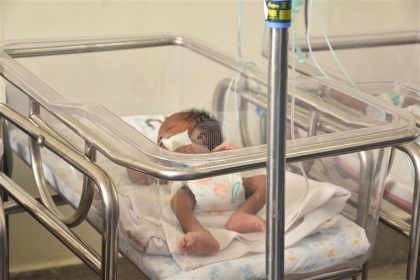
Kenya has committed $58 million (Ksh7.5 billion) from its own domestic revenue to protect maternal, newborn and reproductive health, as global leaders warned that women, children and adolescents cannot afford another funding squeeze.
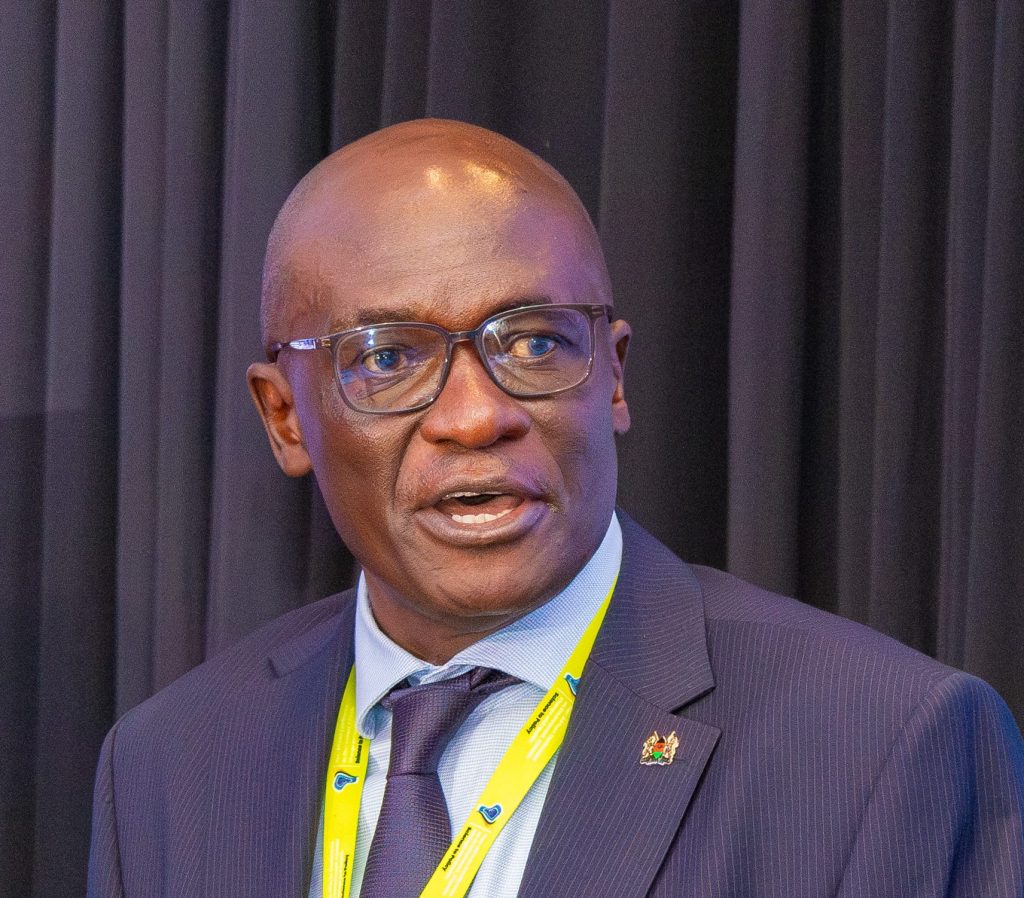
Director General for Health Dr Patrick Amoth announced the funding at the 81st United Nations General Assembly (UNGA 81) in New York this week, under the Ewene Acceleration Plan (2026-2028) launched in May 2026. It includes $31 million (Ksh4 billion) for health insurance financing for pregnant women, including free delivery services, alongside plans to recruit 5,000 additional nurses and midwives.
The pledge comes as development assistance shrinks, debt rises, and humanitarian needs grow. Official development assistance has fallen by 23.1 per cent, according to trends and statistics published in 2025, and more than 3.3 billion people live in countries where governments spend more on debt servicing than on health or education.
World Health Organization (WHO) Director-General Dr Tedros Adhanom Ghebreyesus urged governments to shield health budgets from cuts and to return with numbers rather than intentions.
The stakes are high. When money becomes scarce, governments are forced to decide what can wait. For millions of women, children and adolescents, very little can safely be postponed. A delayed maternal health service can turn a pregnancy complication fatal. A health worker who is not available can determine whether a child survives a treatable illness. For an adolescent girl, losing access to sexual and reproductive health services can have consequences that extend into education, employment and adulthood.
Teenage pregnancy can interrupt education, deepen poverty, expose young mother and child to additional risks
For Kenya, the debate is particularly relevant as the country continues to reshape how healthcare is financed under its Universal Health Coverage reforms. Dr Amoth outlined how Taifa Care, Kenya’s Universal Health Coverage framework and financing model, places women, children and adolescents at the centre of health system transformation.
He described the Ewene Acceleration Plan as a comprehensive mechanism for protecting maternal, newborn and reproductive health and said Kenya is working towards its full implementation. The $31 million (Ksh4 billion) for pregnant women will cover free delivery services in Level 2, 3 and 4 hospitals and private health facilities across the country’s 47 counties.
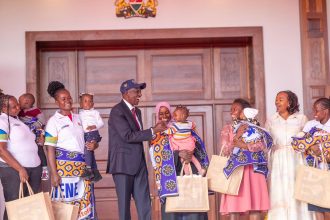
“Another $7.6 million [Ksh988 million] is allocated to essential maternal and newborn health commodities, while $19 million [Ksh2.5 billion] will support procurement of family planning commodities,” he said.
Dr Amoth placed particular emphasis on adolescents, especially teenage girls, whose health and social circumstances can determine whether they remain in school and enter adulthood with their opportunities intact. Teenage pregnancy, he noted, can interrupt education, deepen poverty and expose both the young mother and her child to additional risks. “A healthy, empowered adolescent girl is not only a beneficiary of employment. She is the author of Africa’s future,” he said.
With external financing becoming less predictable, such domestic commitments matter more, provided they translate into services that women and children can actually access. “For us, the principle is simple: every preventable death must be reviewed, every lesson must lead to action, and every commitment must be visible to the public,” Dr Amoth said.
Fall in development assistance hits hardest in low-income and fragile countries long depended on external support
Domestic ownership, however, should not mean countries working alone, he argued. He called for a shift from dependency towards co-investment, from fragmented projects towards stronger national systems, and from short-term funding cycles towards predictable, measurable outcomes. He challenged the Global Leaders Network (GLN) to push for credible debt-for-health arrangements, reforms to concessional financing, innovative and blended financing models, and predictable multiyear support for women, children and adolescents.
The session, titled “Financing for Women’s, Children’s and Adolescents’ Health in a Time of Austerity,” was convened by the GLN. Established in 2023 to keep the health of women, children and adolescents high on the political agenda, the network brings together Kenya, South Africa, Tanzania, Sierra Leone, Liberia, Ethiopia, Senegal, Nigeria, Malawi, Somalia, Denmark and Spain. It now operates in a very different financial environment from the one in which it was launched.
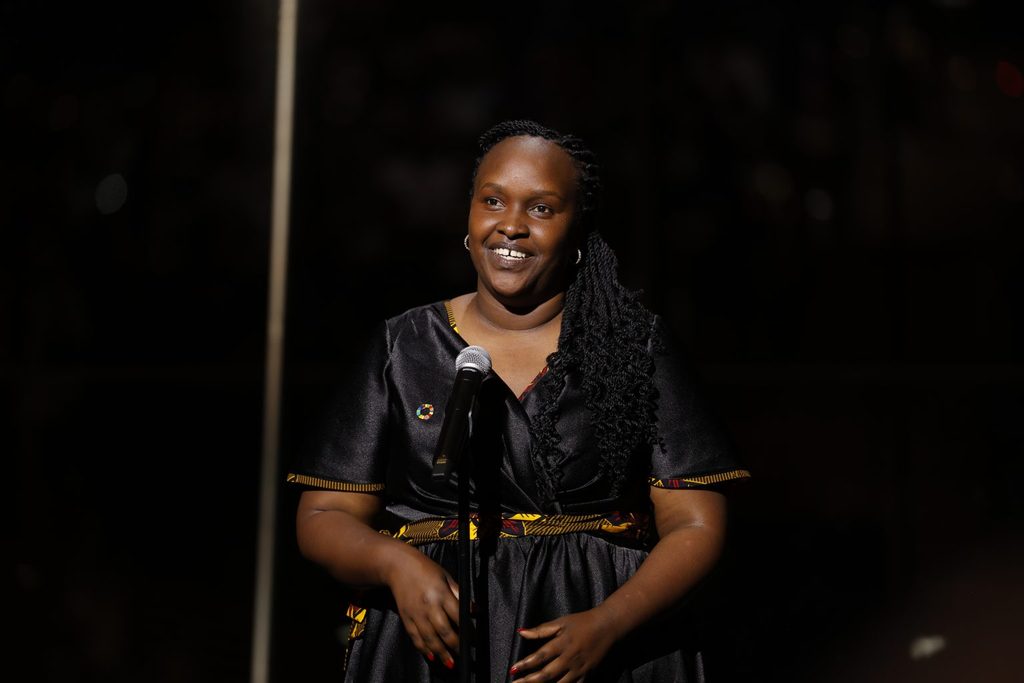
The fall in development assistance hits hardest in low-income and fragile countries that have long depended on external support to sustain health programmes. Ronald Lamola, South Africa’s Minister of International Relations and Cooperation, who represented GLN chair President Cyril Ramaphosa, said the decline had compounded existing challenges in health workforce development and was affecting service delivery.
Debt is also eating into money for public services. Of the 3.3 billion people living in countries that spend more on debt servicing than on health or education, Lamola said, 700 million are in Africa. The squeeze is felt not only in budgets but in health systems already struggling with shortages of workers and essential commodities.
Governments must now protect what already works, spend available resources more effectively and find new ways to finance services that cannot afford to be interrupted. Dr Tedros said the world has made significant gains over the past quarter century. Maternal mortality has fallen by 40 per cent, while child mortality has more than halved. But progress has slowed. “Every year, 260,000 women still die while giving birth. 4.9 million children die before reaching their fifth birthday. More than one million adolescents also die every year, with road traffic crashes, suicide and violence among the causes of the deaths,” he said.
A policy without a budget is a press release. A commitment without financing is a promise already broken
“Protect these budget lines,” he urged leaders, warning that women, children and adolescents should not be first in line when cuts are made. He also called on governments to finance areas that are often politically difficult to defend, including sexual and reproductive health and services in humanitarian settings.
On accountability, he was blunt. “A policy without a budget is a press release. A commitment without financing is a promise already broken,” he said.
The warning goes to the heart of the financing problem. Commitments do not deliver medicines or train nurses. They do not keep maternity wards open or pay for the family planning commodity a woman needs when she walks into a health facility. Money does.
For Lamola, this is why the GLN is broadening the financing conversation beyond traditional donor support. As a sign of political commitment, he reported that 4 member states, Kenya, Sierra Leone, Liberia and South Africa, had engaged potential investors and partners during the General Assembly, with financing plans for women’s, children’s and adolescents’ health under development.
Countries financing own health systems when fiscal space is shrinking, debt is high, external assistance declining
The network has also worked on domestic resource mobilisation and innovative financing with ministries of health and finance, development finance institutions, the private sector, academia and civil society. The ultimate measure, however, will not be the number of meetings held or financing mechanisms announced. It will be the number of women, children and adolescents reached.

UNGA 81 exposed a tension at the heart of global health. Countries are being asked to finance more of their own health systems precisely when fiscal space is shrinking, debt is high and external assistance is declining. Yet health needs have not diminished.
Leaders closed the session by reaffirming their commitment to women, children and adolescents and pledging to explore more diversified financing mechanisms.
For Kenya, the $58 million (Ksh7.5 billion) and the 5,000 nurses and midwives are concrete attempts to protect priority services. Their true test will come not in policy documents but in maternity wards, health centres and communities. The question now is whether governments and their partners can protect the progress already made and find the money to continue the work.