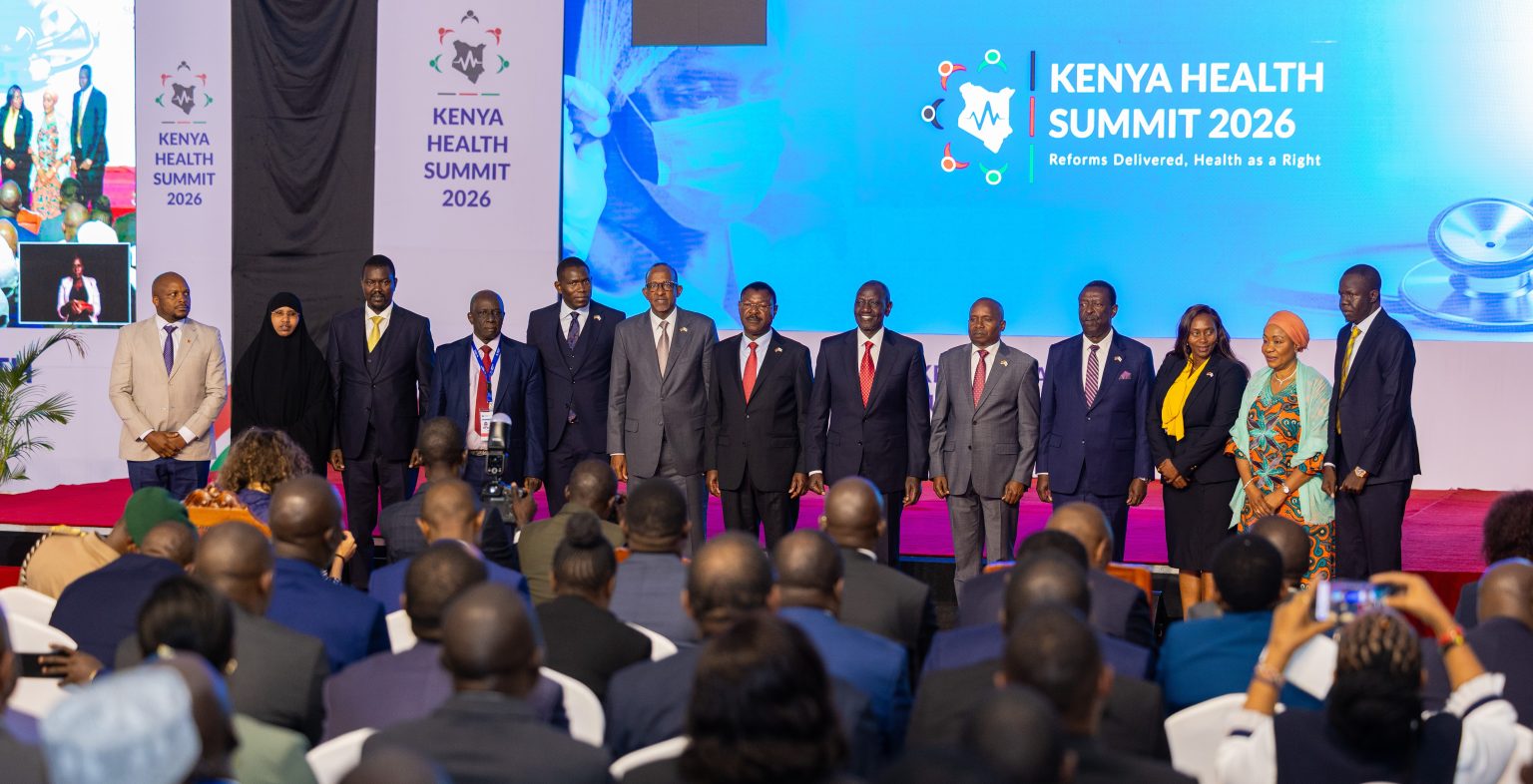

The two-day summit will close with the adoption of a Joint UHC Acceleration Plan and Summit Communique, laying out new commitments to fast-track Kenya’s progress toward Universal Health Coverage.
The Kenya Health Summit 2026 opened today at the Kenyatta International Convention Centre (KICC), bringing together national and county governments, Parliament, development partners, the private sector, civil society and communities to review four years of health sector reforms and agree on the next phase of Kenya’s push toward universal health coverage (UHC).
Convened by the Ministry of Health, the two-day summit running from August 18-19 is expected to close with the adoption of a Joint UHC Acceleration Plan, alongside a Summit Communique laying out new commitments to fast-track Kenya’s progress toward Universal Health Coverage.
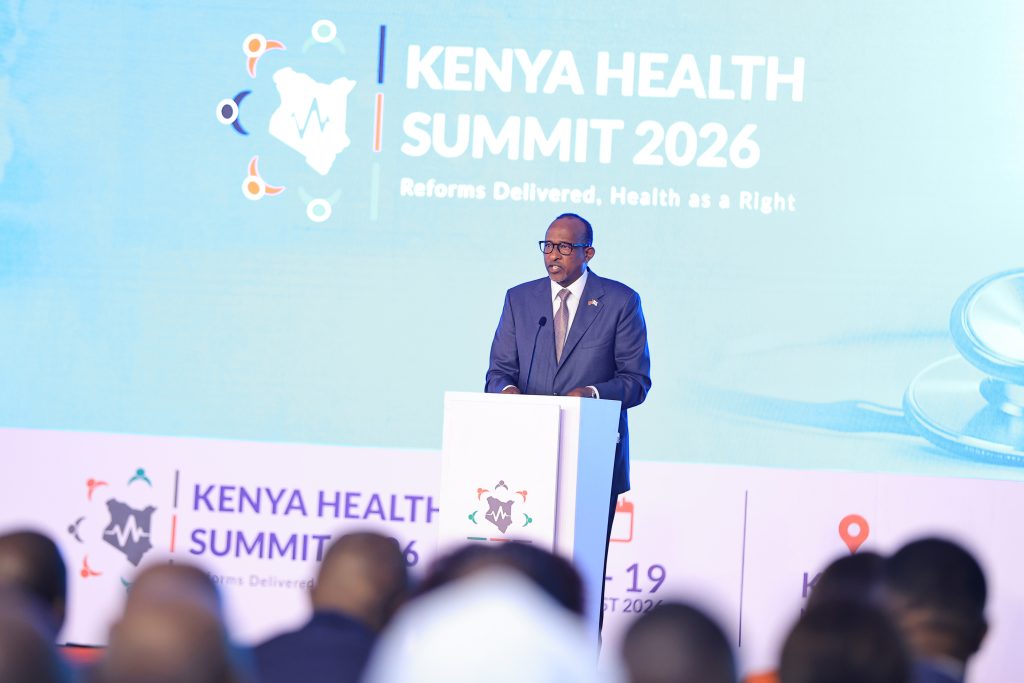
“This is the largest gathering of Kenya’s health sector ever convened in this Republic, and it is fitting that it takes place under a theme that is a statement of fact rather than a wish: Reform Delivered; Health as a Right,” said Health Cabinet Secretary Aden Duale at the opening ceremony.
The UHC Acceleration Plan is anchored in the healthcare pillar of the Bottom-Up Economic Transformation Agenda (BETA), the government’s 2022 to 2027 commitment to deliver universal coverage through reforms to health insurance, primary care, the health workforce, the medical supply chain and health information systems.
Duale said over the past four years, Kenya has recorded significant progress in key areas including health financing, medical supplies and specialised care.
“When this administration came into office, the national order fill rate at the Kenya Medical Supplies Authority stood at 35 per cent. In plain language, a facility that ordered ten essential commodities received fewer than four,” he said. “Today that rate stands at 95 per cent.”
The CS said the Authority’s balance sheet was restored, recapitalising KEMSA through a Ksh10 billion credit facility arranged with the Kenya Commercial Bank. Further, the Embakasi Supply Chain Centre has been operationalised, and regional distribution hubs in Kisumu and Mombasa strengthened.
“And we have moved the entire chain from paper to platform: demand forecasting, order processing, track-and-trace and electronic proof of delivery,” he said. The chain now runs on the Integrated Loan Management Information System (ILMIS) and a new enterprise resource planning backbone.
Primary Care Networks have increased from just two in 2022 to 278 in 2026, strengthening links between communities and health facilities
According to data from the Ministry of Health, enrolment to the Social Health Authority (SHA) has reached 32.2 million Kenyans, with the proportion of households protected from catastrophic health costs rising from 6 per cent to 24 per cent, while Ksh23.3 billion has been disbursed to health facilities through the Primary Healthcare Fund.
Primary healthcare has also undergone significant expansion. Kenya now has 107,831 Community Health Promoters equipped with smartphones to support the electronic Community Health Information System. Primary Care Networks have increased from just two in 2022 to 278 in 2026, strengthening links between communities and health facilities.
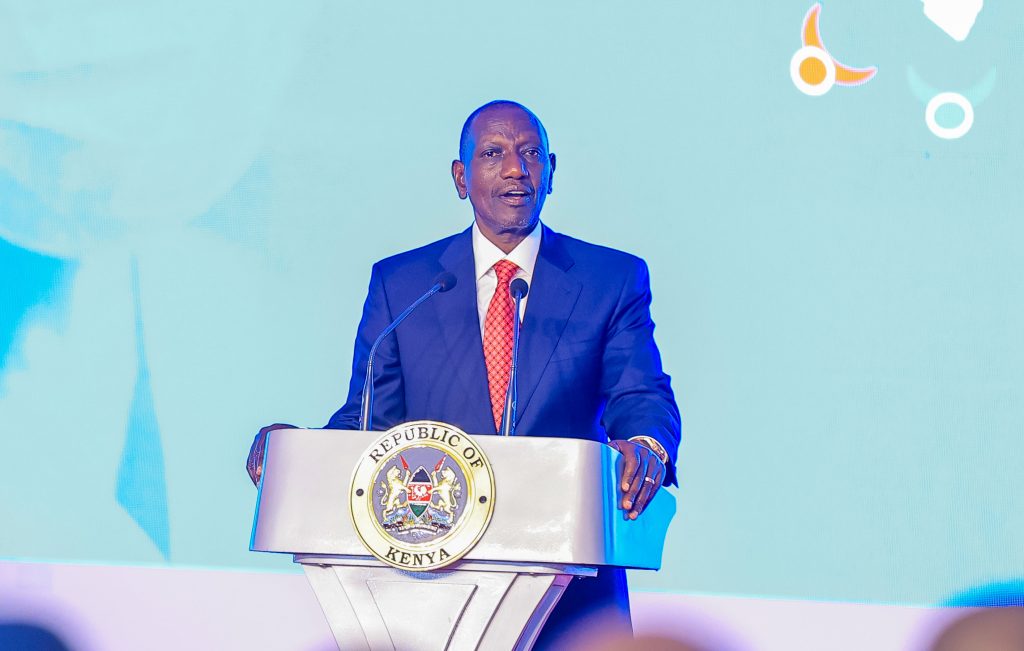
President William Ruto, speaking at the opening ceremony, said more than nine million households have been reached and over 750,000 people referred for further treatment.
“For the first time, we have built a nationwide health network whose first point of contact is not necessarily a hospital bed, but the doorstep of a Kenyan home,” said the president.
The president noted that the government has sponsored nearly 560,000 vulnerable households, covering approximately 2.2 million Kenyans, while Lipa SHA Pole Pole enables families in the informal economy to contribute progressively according to their circumstances.
“These are significant numbers, statistics as some would say, but behind every number is a human being; an anxious patient, a worried parent, a frightened child, a health worker doing everything possible, and a life to be restored or saved,” he said.
The reforms have extended to the health workforce, with 24,573 healthcare interns deployed across all 47 counties since 2022, and 262 medical registrars sponsored for specialist training since 2023. The government has ring-fenced Ksh19.05 billion to sustain the healthcare internship programme through the 2026/27 financial year.

Duale noted that annual internship placements have risen from 3,373 in the 2022/23 financial year to 6,801 in the current financial year, “Very nearly a doubling within a single administration. These are young Kenyans who, four years ago, would have completed their training and gone home to wait.”
Kenya has also accelerated the digitisation of healthcare. A total of 6,171 facilities, representing 91.9 per cent of public facilities, are now digitised while portability of patient information through the Shared Health Record has reached 58 per cent of facilities.
Improvements have also been reported in the availability of medicines and health products. The Kenya Medical Supplies Authority’s order fill rate has increased from 41 per cent to more than 85 per cent, while 63 per cent of products supplied by the Kenya Medical Supplies Authority (KEMSA) are sourced from local manufacturers.
Health spending still falls well short of the Abuja Declaration target of 15 per cent of the national budget
The country has also recorded gains in key health outcomes. Fully immunised child coverage has risen from 78 per cent to 97 per cent, while new HIV infections have declined by 37 per cent since 2022, including a 41 per cent reduction among young people aged 15 to 24.
The National Equipment Support Programme has equipped 443 health facilities and enabled the delivery of 1.43 million specialised services that were previously inaccessible.
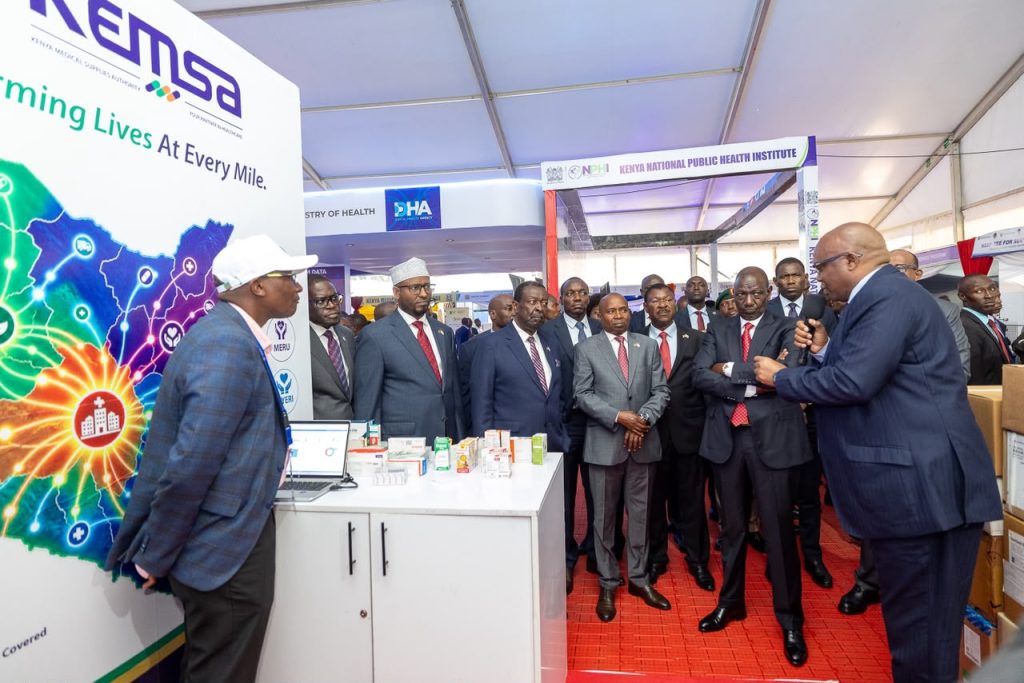
“Behind every number is a Kenyan mother who delivered safely, a child who was immunised, a grandfather who received dialysis he could not previously afford, and a frontline health worker who is, for the first time in years, being paid what they are worth. That is the true measure of this reform,” said Duale.
Officials are equally direct about what remains unfinished. Health spending still falls well short of the Abuja Declaration target of 15 per cent of the national budget, 14 counties have yet to reach optimal community health coverage, and donor-funded HIV, TB, malaria and family planning programmes face transition pressure that will require new domestic financing to sustain.
The Joint UHC Acceleration Plan to be adopted at the Summit’s closing session sets specific, time-bound targets to close those gaps.
These include growing SHA enrolment beyond 45 million people, bringing out-of-pocket health spending below 15 per cent of total health expenditure, closing the community health coverage gap in the remaining counties by June 2027, resolving the long-pending framework for managing the health workforce, and lifting local pharmaceutical manufacturing to 75 per cent of KEMSA-supplied products by 2028.
The Kenya Health Summit 2026 runs through August 18 and 19 at the Kenyatta International Convention Centre (KICC) in Nairobi.
We believe in the free flow of information
Republish our articles for free, online or in print, under Creative Commons licence.