


High blood pressure during pregnancy doesn’t just go away after delivery; rather, it can be a sign of lifelong heart problems, and it’s worse for African mothers.
Hypertensive disorders of pregnancy are among the most dangerous complications facing expectant mothers, yet experts warn they are still being treated as temporary conditions rather than the long-term cardiovascular threat they truly are.
Affecting between five and 10 per cent of pregnancies globally, conditions such as chronic hypertension, gestational hypertension and pre-eclampsia are a leading cause of maternal and newborn illness and death. Increasingly, clinicians are calling for a fundamental shift in how these conditions are understood, managed and followed up, from delivery room to decades beyond.

Speaking during a webinar on April 21, 2026, titled “From Placenta to Pressure: A Cardio-Obstetric Update on Hypertensive Disorders of Pregnancy,” consultant cardiologist Dr Yubrine Moraa set out the scale of the problem. “We know that cardiovascular disease is a leading cause of maternal mortality. And we know that hypertensive diseases in pregnancy are causing a lot of maternal and newborn mortality and morbidity,” she said.
Hypertension affects up to 40 per cent of people globally, and screening data from the May Measurement Month initiative reveals that prevalence sits at around 25 per cent, and that even among those already diagnosed, 70 per cent are not well controlled. When this burden intersects with pregnancy, the risks multiply considerably.
In Kenya, the picture is particularly concerning. A 2025 cohort study published on PubMed estimates a 14.5 per cent prevalence of hypertensive disorders of pregnancy in some populations, suggesting that more than one in ten pregnancies may be affected.
If placental development is not properly done, it becomes a low-volume, high-resistance system
To understand why these disorders are so serious, it helps to start with the placenta. Consultant obstetrician and maternal-fetal medicine specialist Dr Moses Lagat explained that the condition begins with abnormalities in placental development. “If placental development is not properly done, it becomes a low-volume, high-resistance system. That leads to ischaemia, and the placenta releases inflammatory mediators into the maternal circulation,” he explained.

These inflammatory signals trigger a cascade of changes in the mother’s body, including endothelial dysfunction, where blood vessels fail to function normally. The result can be high blood pressure, organ damage and complications affecting both mother and baby.
In a healthy pregnancy, blood vessels in the uterus remodel to allow high-volume, low-resistance blood flow to the placenta. When this process fails, the consequences include preterm birth, intrauterine growth restriction, stillbirth and neonatal death.
Beyond the placenta, pregnancy places considerable strain on the cardiovascular system. Dr Moraa described it plainly. “Pregnancy is a cardiovascular stress, like a stress test throughout 40 weeks. It tends to unmask underlying cardiovascular disease,” she said. For women with undiagnosed heart conditions, pregnancy can reveal problems that might otherwise remain hidden for years.
For decades, the prevailing assumption was that conditions like pre-eclampsia resolved after delivery, but “We no longer view hypertension in pregnancy as a self-limiting condition cured by delivery,” Dr Lagat said.
Up to 50 per cent of women who were hypertensive in pregnancy tend to remain hypertensive
Clinical follow-up has shown that many women continue to experience elevated blood pressure after pregnancy or develop it later in life. “Some patients followed up at six to 12 weeks are found to still have high blood pressure, others are diagnosed when they return for postnatal visits,” he explained.

Dr Moraa reinforced this with striking data as “Up to 50 per cent of women who have had hypertensive diseases in pregnancy tend to remain hypertensive. It disappears and then shows up a few months or years later.”
The long-term implications include a fourfold increased risk of chronic hypertension, a twofold increased risk of stroke and ischaemic heart disease, and persistent vascular and endothelial damage that can lead to atherosclerosis. There is also emerging evidence that children born from affected pregnancies may face higher cardiovascular risks later in life.
Risk factors are varied and often overlapping. High-risk factors identified by Dr Moraa include pre-existing hypertension, diabetes, chronic kidney disease, autoimmune disorders and a previous history of pre-eclampsia. Moderate risk factors include first pregnancy, obesity, advanced maternal age, long intervals between pregnancies and family history.
Disparities in outcomes are also significant. “Black women have a three to four times higher risk of dying from cardiovascular complications than white women,” Dr Moraa noted, reflecting a combination of biological, social and systemic factors, including access to care.
Avoid automated blood pressure devices as they tend to under-record blood pressure, particularly in pre-eclampsia
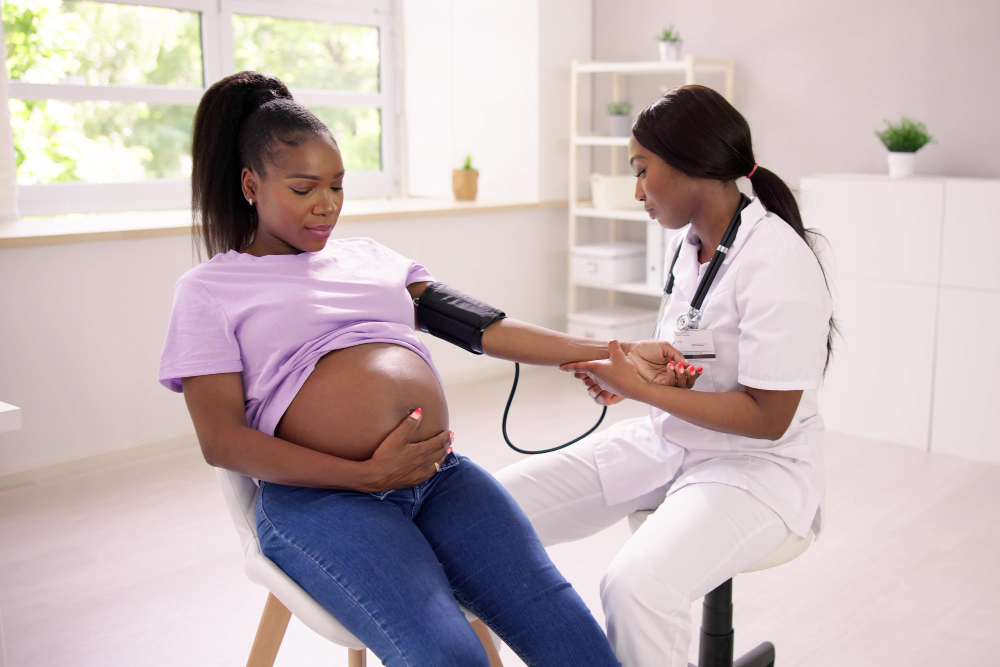
Early detection is central to preventing severe complications. Diagnosis typically relies on blood pressure measurements of 140/90 mmHg or higher after 20 weeks of pregnancy, alongside tests for proteinuria and organ dysfunction. However, accurate measurement is not always straightforward. “We should avoid automated blood pressure devices because they tend to under-record blood pressure, particularly in pre-eclampsia,” Dr Moraa cautioned.

Dr Lagat highlighted the role of combined early pregnancy screening approaches, including clinical risk assessment, blood pressure monitoring and uterine artery Doppler, which can detect up to 90 per cent of women at risk. Once identified, preventive measures can be introduced. “We need to initiate aspirin between 12 and 16 weeks and use higher doses where appropriate,” he said. Calcium supplementation is also recommended in populations with low dietary intake.
Clinical guidance recommends outpatient monitoring for moderate hypertension between 140 and 159/90 to 109 mmHg, and hospital admission for severe hypertension at 160/110 mmHg or above, alongside regular laboratory and fetal assessments. “It’s a rapidly evolving condition, things can change very quickly,” Dr Moraa said.
Treatment includes antihypertensive medications such as labetalol and methyldopa, as well as seizure prevention in severe cases. The ultimate goal is to balance maternal safety with fetal maturity, often requiring difficult decisions about the timing of delivery.
Both experts were clear that no single clinician should manage these cases alone. “We need a pregnancy heart team. Cardiologists, obstetricians, anaesthesiologists working together,” Dr Moraa said. Dr Lagat echoed this, stressing the importance of integrating ultrasound monitoring and cardiac assessment throughout pregnancy.
Pregnancy serves as an opportunity for early identification of women at risk
The period after delivery remains one of the most neglected aspects of care. Blood pressure often peaks after delivery, and without follow-up, many women go undiagnosed and untreated. “The fourth trimester should not be forgotten, it is a window of opportunity,” Dr Moraa said.
Dr Lagat stressed the importance of continuity. “Patients need long-term follow-up; we should hand them over to cardiologists or primary care for ongoing management.” This shift from short-term obstetric care to long-term cardiovascular monitoring is critical for preventing future complications.
Despite growing awareness, major gaps remain, particularly in low- and middle-income countries. A 2026 review in the International Journal of Women’s Health identifies key barriers including shortages of essential medicines, limited diagnostic tools, inadequate training, fragmented care systems and insufficient data.
Dr Moraa called for stronger evidence and better surveillance. “We don’t have enough data; we should be the data powerhouse,” she said.
Hypertensive disorders of pregnancy are no longer just an obstetric concern. “Pregnancy serves as an opportunity for early identification of women at risk,” Dr Moraa said. With better screening, preventive care and long-term follow-up, it is possible to reduce both immediate complications and lifelong cardiovascular risk.