
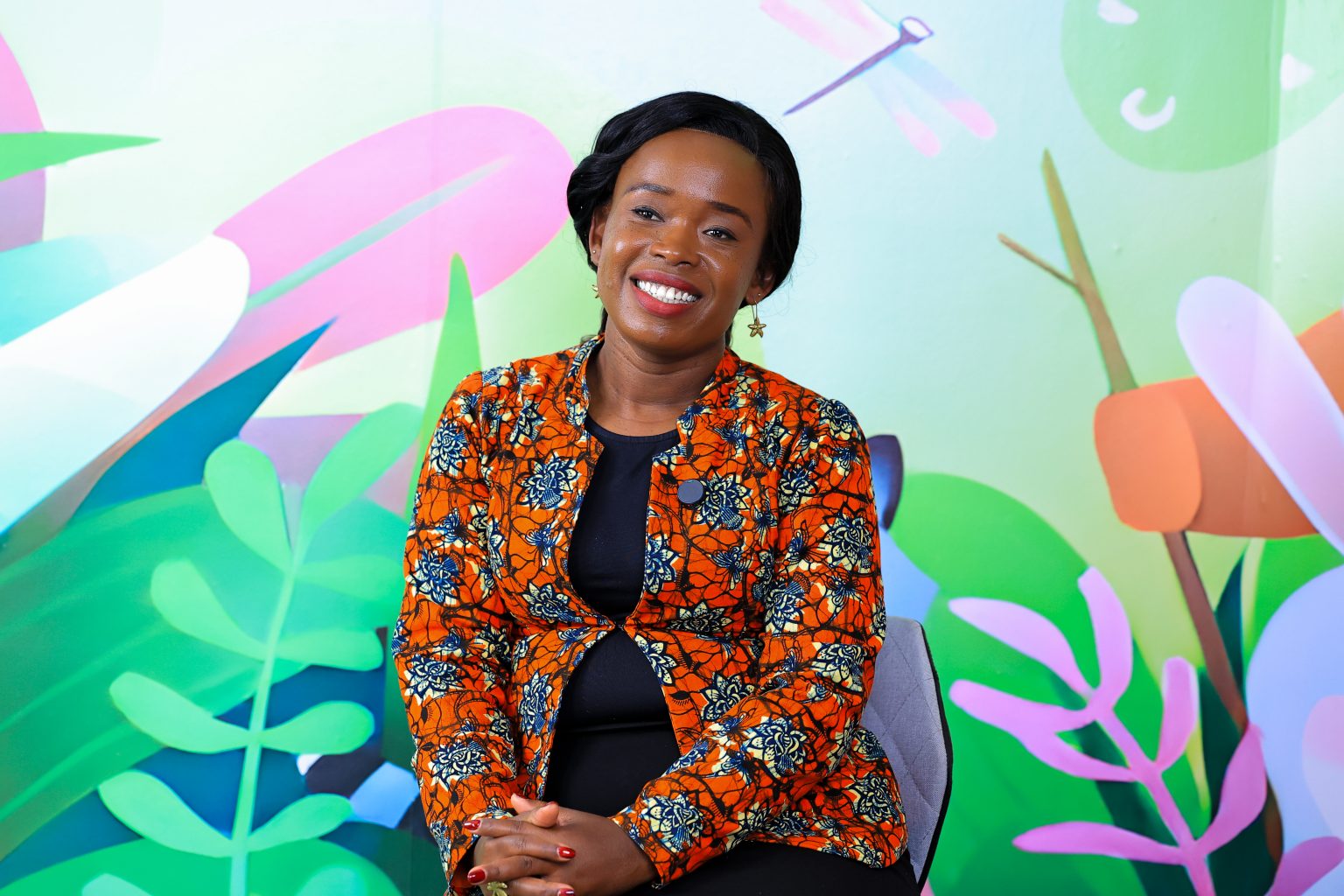

Dr Supa Tunje has spent her entire career demanding an answer to the question: “How can our children be safer?” from public wards, from policy rooms, and now, from the presidency of the Kenya Paediatric Association. She speaks to Willow Health Media Editor-in-Chief, Dr Mercy Korir, in our latest episode of White Coat Diaries.
Every morning, somewhere in Kenya, a baby dies from a complication that, with the right care, the right equipment, the right specialist in the room, was preventable.
According to national health records, Kenya loses about 850 children every month. This number has barely changed despite decades of effort.
Dr Supa Tunje is the President of the Kenya Paediatric Association (KPA). She is also a practising paediatric neurologist. She has built her entire career around one uncomfortable question: “If we already know what is killing our children, why are we not stopping it?”
“Difficult is an understatement for me,” says Dr Tunje. “Heartbreaking, that is the word.”
The Ministry of Health (MoH) data shows that Kenya’s neonatal mortality rate is 21 deaths per 1,000 live births. Infant mortality is 32 per 1,000. The under-five mortality rate is 41 per 1,000.
Progress has been made since 1990. Back then, the under-five rate was above 101 deaths per 1,000 live births. But the gains are now slowing.
As Kenya’s population grew, the actual number of newborn deaths rose
A 2025 UN Inter-Agency report tells a story of two Kenyas. One Kenya has cut under-five mortality by 62 per cent over three decades. The other Kenya has reduced neonatal mortality by only 22 per cent over the same period.
As Kenya’s population grew, the actual number of newborn deaths rose. In 1990, there were 27,000 newborn deaths. By 2024, that number had risen to 31,000.
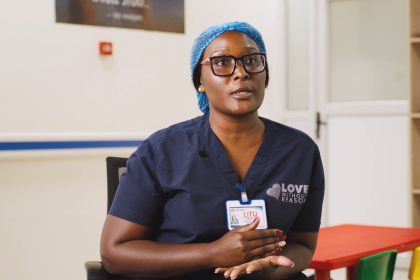
Dr Tunje’s path to paediatric neurology was deliberate. She spent nearly a decade as a general paediatrician. While working in her public clinic, she began noticing something in the steady flow of patients.
“Working in the public sector, I would come across quite a number of children with neurological problems like epilepsy and cerebral palsy,” she says. “And the number of neurologists is very, very low. I think we had maybe ten at most.”
Ten neurologists for a country of more than 55 million people.
“I always tell myself to go into a space where perhaps others are not,” she explains. “Go where I feel is underserved, so that I can add my experience and expertise. Most people say neurology is complex and difficult. But you need to break such barriers.”
The family was buckling under the weight of a diagnosis no one had given them
Dr Tunje recalls the story of a child with genetic epilepsy. She shares it with careful detail, which suggests it’s part of her living memory. The child’s father had given up. The family was buckling under the weight of a diagnosis that no one had given them.
Dr Tunje managed to link the family with a private facility. Through a foundation, the facility agreed to fund genetic testing. The results confirmed a hereditary condition. She explained this to the father. With proper management, the child’s seizures became better controlled.
“There is nothing really very big,” she recalls. “But it is so fulfilling to see that yes, the child is improving and is having a better life. The parents are now happier. Yes, the condition is still there, but it is more manageable now.”
Genetic testing in Kenya typically costs money that most families do not have. It takes a minimum of six weeks to return results. It also requires samples to be sent abroad.
The connection that made this family’s diagnosis possible was improvised. It was built relationship by relationship, entirely outside any formal system.
The medics want Kenya to develop in-country genetic testing capacity
This is precisely why the Kenya Paediatric Association has submitted formal recommendations to the Social Health Authority (SHA). They are calling for diagnostic coverage to be extended beyond treatment. They ultimately want Kenya to develop in-country genetic testing capacity. This would cut both the cost and the six-week wait.

SHA represents the most ambitious push yet towards universal health coverage in Kenya. Dr Tunje is not dismissive of this ambition. But she is precise about where it falls short. She names the most urgent gap with the directness of someone who has watched babies pay the price for policy delays.
Dr Tunje says the Kenya Paediatric Association raised concerns about the SHA benefits package even before it was officially released. She notes that a mother can deliver one, two, three or even five babies. Yet the package was structured simply as “mother, baby”, which is not sufficient.
She adds that the cover only extends to essential newborn care. But some babies, particularly those born prematurely, need advanced care within the first 24 hours of delivery. The essential newborn package does not account for this. A baby may need oxygen or to be put on a CPAP (Continuous Positive Airway Pressure) machine immediately.
“Sometimes you find there is a delay receiving the medication,” she says. “A delay in administering because of technical issues. That is why we said these babies should be covered immediately from the moment they arrive. All babies, regardless of where they are born.”
Vaccines have been one of the clearest drivers of decline in under-five mortality
KPA submitted formal recommendations for newborns to be treated as independent beneficiaries from birth. At least the first 28 days. That is the neonatal period when Kenya records its highest mortality.
At the Level 5 referral hospital where Dr Tunje works, the specialist outpatient clinic is not yet activated under SHA and thus, patients pay Ksh150 in cash, which is too much for some families.
On immunisation, the 2022 Kenya Demographic and Health Survey (KDHS) shows that vaccines have been one of the clearest drivers of decline in under-five mortality. UNICEF data shows that 88 per cent of Kenyan children are now fully immunised, up from 84 per cent in 2014. However, in some pastoralist and remote counties, coverage drops below 50 per cent.
“If you count the cost of many infections without those vaccines,” she says, “I think you will have many more visits to the hospital.”
When asked what Kenya’s health system truly needs to protect its children, Dr Tunje notes that there is already an investment case. This is a document prepared with the MoH and development partners. It maps out which interventions are needed, what they cost and what they would save in lives.
She saw newborns falling through the cracks and wrote recommendations to fix it
“It is not just a case that has been presented,” she says. “Now we need to move to action. Bring the money, bring the resources, and we are there ourselves to implement.”
Dr Tunje’s advice to young doctors cuts through in the same way her career has.
“There is no best field or worst field,” she says. “You just need to put in the hard work. But consider what drives you. Is it passion for the job, or simply money? Because money may come, and money may not be there. What is your goal? What is your purpose? What contribution do you have to society?”
She saw newborns falling through the cracks of a benefits package. So, she wrote recommendations to fix it.
“When I walk into a ward, I see the sense of relief on the mothers’ faces,” she adds. “That is a responsibility to do my best, to advocate for more, within whatever time and space I am in.”