

On data privacy, the Ministry of Health assured Kenyans that any shared data will fully comply with the Data Protection Act, 2019, the Digital Health Act, 2023 and all other relevant laws.
In a historic shift for Kenya’s healthcare system, President William Ruto witnessed the signing of a Ksh207 billion (USD 1.6 billion) investment deal with the United States government on December 4. The agreement on health and data fundamentally overhauls how American aid is delivered, moving funds away from non-governmental organisations (NGOs) and directly to Kenyan state institutions with a clear deadline for the country to achieve full financial independence.
Crucially, the new arrangement is designed to reduce donor dependency, cut waste, and strengthen Kenya’s national health sovereignty. It requires Kenya -the first country in Africa to sign it- to progressively take over and fully fund U.S.-supported health programmes by 2030, absorb thousands of health workers, and adopt international standards to prevent fraud, wastage and parallel systems.
Annual conditional U.S. funding will also rise steadily, from Ksh10 billion in 2026/2027 to Ksh50 billion in 2029/2030, even as Kenya assumes more responsibilities in staffing, procurement and commodities.
On data privacy, a concern for many Kenyans, the Ministry of Health assured that all shared data “will adhere to the Data Protection Act, 2019, Digital Health Act, 2023 and all other applicable Kenyan laws. “Only de-identified and aggregated data will be shared,” noted Health Cabinet Secretary Aden Duale, adding, “Approvals must go through the Digital Health Act and the Data Commissioner.”
The new five-year Cooperation Framework is part of the U.S Secretary of State Marco Rubio’s “America First” Global Health Strategy announced in September 2025 and is pegged on reducing donor dependency. Rubio argued that up to 60 per cent of global health aid was lost to administrative waste within implementing partners, as only 40 per cent of donor funds reached frontline workers to buy commodities.
The US shut down USAID in January shaking Kenya’s healthcare system
The Cooperation Framework also comes months after a major disruption in January 2025, when the U.S. issued financing stop orders which abruptly closed vital healthcare programmes supported by agencies like USAID, President’s Emergency Plan for AIDS Relief (PEPFAR) and the Centers for Disease Control (CDC), shaking Kenya’s health system.
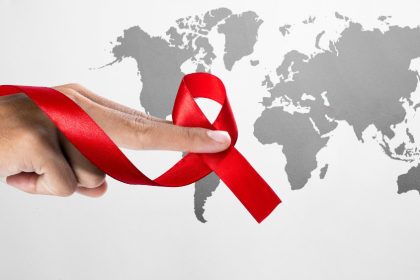
The halt disrupted up to 77 per cent of HIV prevention and treatment services for key populationsand left over98,000 orphaned and vulnerable children supported by the AMPATH programme facing an uncertain future.
Counties such as Uasin Gishu were forced to scramble for alternative sources of malaria bed nets. This disruption laid bare the fragility of a donor-dependent system and created an urgent impetus for change.
President Ruto described the pact as a significant step towards universal health coverage, prioritising medical equipment, workforce upscaling, and health insurance expansion. He noted it builds on a 25-year health cooperation with the U.S., backed by over Ksh905 billion ($7 billion) in past investment.
Duale said the deal grants Kenya “national health sovereignty by ensuring full ownership of health systems.” He explained that citizens will see better access to medicines, improved hospital services, stronger epidemic protection, and sustainable health services.
The health deal also guides the joint elimination of HIV, TB, and malaria
The framework thus aims to build a resilient, integrated health system. The U.S. will help Kenya grow its epidemic preparedness based on the 7-1-7 model-detecting an outbreak within seven days, notifying authorities within one day, and responding within seven days. The deal also guides the joint elimination of HIV, TB, and malaria.

The deal directly addresses long-standing criticisms of donor-led aid. An executive brief by Kenya’s Ministry of Health stated the framework introduces “a transition model from donor-driven systems to government-led, self-reliant and sustainable national health systems.” It was established that the old model, while building capacity, had caused “fragmentation and duplication” and was inefficient.
Under the new agreement, U.S. funding will flow directly to six Kenyan government bodies through government-to-government systems:
- Social Health Authority (SHA)
- Digital Health Authority (DHA)
- Kenya Medical Supplies Agency (KEMSA)
- Integrated Financial Management Information System (IFMIS)
- Ministry of Health
- National Public Health Institute
The core condition is that Kenya must gradually take over, fund, and fully run the programmes by 2030. The two nations will develop a multi-year co-financing plan for laboratory systems, surveillance, commodities, and workforce.
Key Transition timelines and Kenyan commitments
The agreement sets strict deadlines for Kenya to assume control:
- Procurement Sovereignty: By December 2026, KEMSA must be ready to take over the complete procurement and distribution of all health commodities currently managed by U.S. partners.
- Workforce Absorption: In 2028, the Kenyan government is required to formally absorb 515 laboratory workers and 13,293 health workers, totalling 13,808 personnel, onto its public payroll, assuming full financial responsibility for their salaries and benefits.
To finance this takeover, Kenya’s co-financing commitments will escalate sharply:
- 2027: Ksh 4.6 billion
- 2028: Ksh9.2 billion
- 2029: Ksh13.8 billion
- 2030: Ksh16.1 billion
- 2031: Ksh18.5 billion
Concurrently, conditional U.S. funding will increase annually from Ksh10 billion in 2026/2027 to Ksh50 billion in 2029/2030. By the end, Kenya is expected to take over health commodities and human resources worth Ksh18.2 billion ($141 million).
For a sector still reeling from the abrupt aid cuts earlier in the year, this direct investment offers a critical lifeline and a demanding roadmap to self-reliance.