
Between July 2025 and January 2026, Kenya paid out Ksh12.6 billion to hospitals. The funding formula is simple: more registrations, more visits, equals more money. Communities that enroll benefit; those that lag lose out, no matter how large their population.
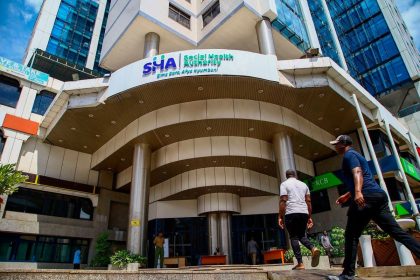
Kenya’s new Primary Healthcare financing system under the Social Health Authority (SHA) is paying hospitals based on the disease burden of the communities and how many people they treat – a radical departure from the flat-rate model under the now defunct National Hospital Insurance Fund (NHIF) that rewarded registration over care.
The latest data shows the transformative impact of the redesign, and for the first time, Kenya has mapped out exactly where its primary healthcare money is going, for what services and the data reveals that county health facilities are offering the biggest portion of primary healthcare services.

Between July 2025 and January 2026, SHA paid Ksh12.6 billion to 7,282 healthcare facilities across all 47 counties. County government facilities received 66.9 per cent of all PHC funds at Ksh8.4 billion. Private facilities received 28.5 per cent at Ksh3.6 billion. Faith-Based Organisations received 4.4 per cent at Ksh559 million. NGO facilities received 0.1 per cent at Ksh9.5 million.
Level 2 and Level 3 facilities – dispensaries and health centres – now collectively receive 80.9 per cent of the PHC budget, a significant redistribution from the NHIF era when Level 4 hospitals absorbed the dominant share. Level 4 facilities now receive just 19.1 per cent.
Under the new model, facilities only get paid for care they can document. Counties with poor digital infrastructure, low health insurance registration, and sparse facility networks end up submitting fewer claims and receiving less money as a result.
Kenya now knows, with precision, where the gaps are, which facilities are effectively invisible, and which communities are falling through the cracks of a model designed, in principle, to reach them.
To understand what SHA replaced, it helps to understand how the old model worked.
For over a decade, NHIF financed primary care through a flat-rate capitation model. Facilities received a fixed annual per-head payment of Ksh1,200 under the national scheme, up to Ksh2,850 for private facilities under the civil servants’ scheme. These sums were paid quarterly, regardless of whether a single patient walked through the door. No claims submission was required, no utilisation monitoring existed, and payment was triggered by registration, not by healthcare delivery.
Hypertension, diabetes and HIV patients consumed more resources but generated no extra revenue
The consequences were predictable. Healthcare providers had a financial motive to under-provide services and to avoid high-cost chronic patients with conditions like hypertension, diabetes and HIV. Such patients consumed more resources but generated no extra revenue. Preventive services – antenatal care screening, immunisation, health counselling, routine examinations – went entirely unreported because payment was never linked to documentation.

Level 4 sub-county hospitals absorbed the bulk of capitation funding despite Level 2 (dispensaries) and Level 3 health centres delivering most actual primary care contacts.
In January 2025, SHA replaced this with a disease-weighted global budget model built on a principle that sounds simple but represents a fundamental shift: money follows registered beneficiaries.
Each county receives Ksh900 annually per registered SHA member, meaning the size of a county’s funding envelope is directly tied to how many of its residents have enrolled.
At month-end, that budget is distributed across facilities using a weighted formula reflecting three dimensions: the number of patient visits, the complexity of conditions treated, and the type of services provided, all coded to the international ICD-11 diagnostic classification system. Facilities managing chronic and more complex caseloads receive proportionally more.
PHC package covers Level 2 dispensaries, Level 3 health centres, and Level 4 sub-county hospitals
Payment is only released after SHA conducts system checks, access-rule validation, and full adjudication, all within a 90-day payment timeline. SHA now pays monthly rather than quarterly, and daily outpatient volumes show lower variance under the new system, suggesting more predictable and sustained facility operations compared to the funding gaps that characterised the NHIF era.
The PHC package covers all Level 2 dispensaries, Level 3 health centres, and select Level 4 sub-county hospitals. It includes consultation and treatment of common conditions, maternal and child health services, management of acute and chronic illnesses, mental health counselling, screening and minor procedures and medicines dispensing.
Higher registration correlates with greater health awareness, which drives more facility visits
An instructive comparison sits at the top of the national disbursement table. Kitui County Referral Hospital received Ksh57.9 million – the highest PHC payout in the country – while Kapsabet County Referral Hospital in Nandi County received Ksh48.9 million, the second highest.

Nandi County has a 61 per cent SHA registration rate, translating to about 547,000 registered beneficiaries. Kitui’s rate sits at 42 per cent with roughly 477,758 registrations. Higher registration correlates with greater health awareness, which drives more facility visits, a compelling demonstration of how the model rewards engaged communities and penalises registration gaps, regardless of population size.
At the other end of the table, the three lowest-funded counties nationally were Tana River at Ksh41.5 million across 48 facilities, Samburu at Ksh49.6 million across 64 and Lamu at Ksh56.3 million across 47.
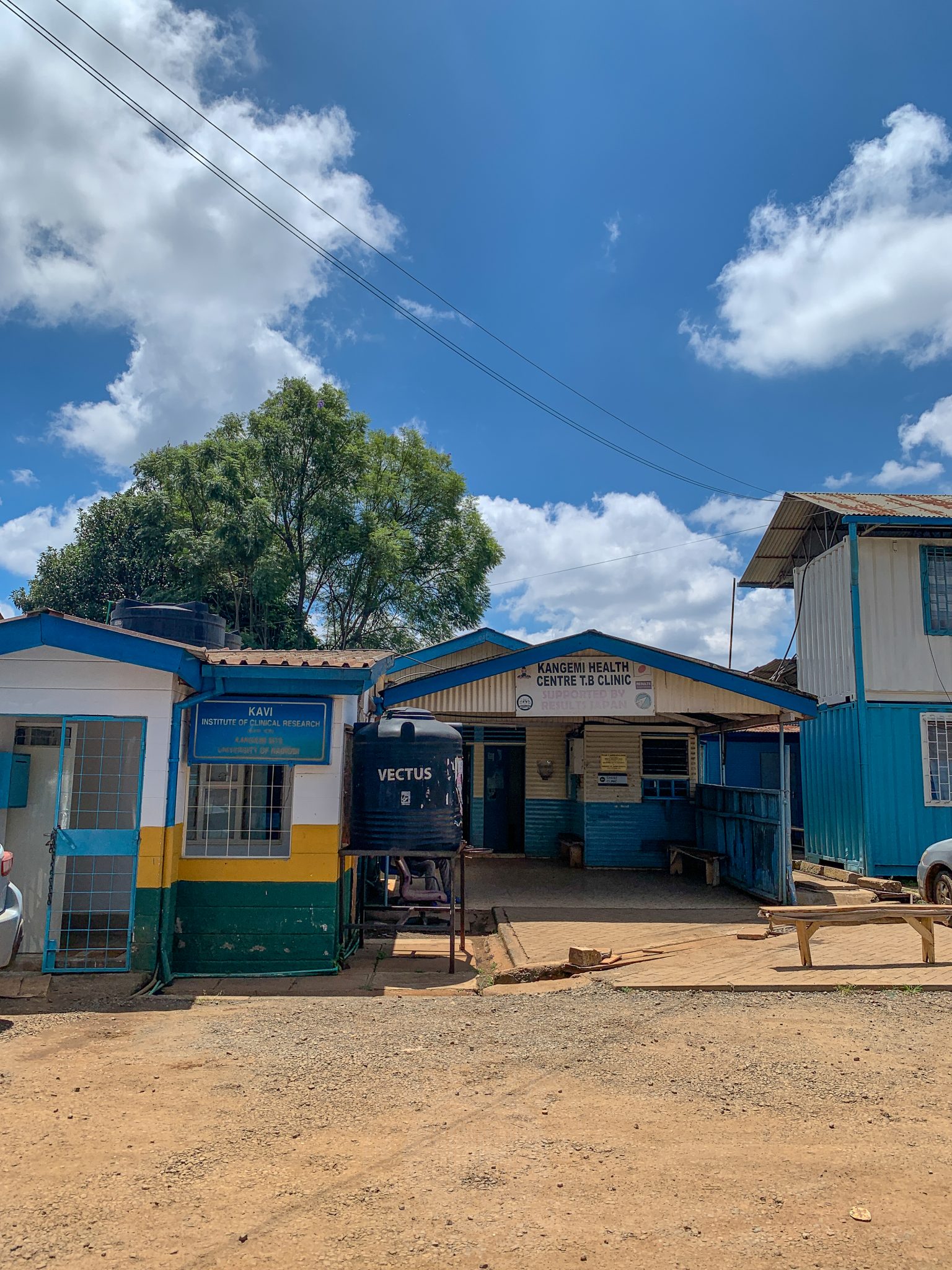
Perhaps the most striking illustration of the model’s structural blind spot is the payment gap between facilities of the same classification. Among Level 2 dispensaries, Magongo Dispensary in Mombasa received Ksh32.7 million. Facilities in Garissa and Samburu received payments as low as Ksh648. Magongo’s payment reflected a high volume of documented patient encounters.
The lowest-paid facilities submitted minimal or near-zero claims. But the contrast reveals the extent to which a facility’s administrative capacity and digital infrastructure now determine its financial outcomes – as much as the actual healthcare it delivers.
Among the 7,282 contracted facilities, 278 received less than Ksh10,000 for the entire period. Napeikar Dispensary in Turkana received Ksh570. Garabey Dispensary in Garissa received Ksh648. Twala and Lengusaka dispensaries in Samburu each received Ksh648. These are not facilities that delivered no care. They are facilities that seem not to have documented the care they delivered.
Every facility in Mandera’s top ten highest-paid list is private and not one county government facility appears
Only one community-owned facility appears in the data: Limuru Valley Med Diagnostic Centre in Kiambu County, which received Ksh407,710 for the period.
Mandera presents the most troubling case study in how the model plays out in practice. With 317 contracted facilities, more than counties like Nyeri with 122 or Trans Nzoia with 84, Mandera’s average payment per facility sits at just Ksh398,000, the lowest county average in Kenya. The county received a total of Ksh126 million, less than half of what Nakuru at Ksh555 million or Kakamega at Ksh545 million received, with comparable or smaller networks.
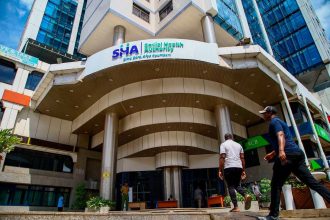
More revealing is who is doing the billing. Every single facility in Mandera’s top ten highest-paid list is a private provider. Not one county government facility appears. In most counties, public hospitals dominate the top of the disbursement table. In Mandera, the highest-paid county government facility does not feature in the top ten at all.
This points to one of two conclusions or both simultaneously. Either county health and digital infrastructure in Mandera is such that public facilities lack the administrative capacity to submit claims, or private providers – better resourced, better staffed and more familiar with billing systems – have learned to navigate SHA’s requirements in ways that public facilities cannot.
SHA does not pay for healthcare that goes undocumented. In counties where documentation capacity sits almost entirely in the private sector, the model may inadvertently be subsidising a two-tier system, one where private providers capture the funds while public facilities serving the most vulnerable remain financially stranded.
Malaria alone accounts for about 14 per cent of all unique patients, concentrated in western and coastal areas
One of the most significant – and underreported – achievements of the SHA transition is what is now visible in data that was never visible before. SHA utilisation data for the first half of 2025 reveals that roughly one in four patients treated at PHC facilities presented with infectious diseases.

Malaria alone accounts for about 14 per cent of all unique patients, concentrated in western and coastal transmission zones. Respiratory infections affect about 10 per cent of patients.
HIV represents about three per cent, consistent with national prevalence figures. Hypertension affects about 2.8 per cent of patients and diabetes 2.4 per cent, both concentrated in urban counties where lifestyle transitions are driving prevalence. NCDs collectively account for about six per cent of patients and are on the rise.
Under the old NHIF model, none of this was systematically captured. Kenya now has, for the first time, a national dataset of PHC utilisation linked to ICD-11 diagnoses, enabling genuine evidence-based planning at the county level and making the country’s dual disease burden visible in data for the first time.
The SHA model has made the previously invisible visible, rewarded complexity over volume, and brought monthly financial predictability to facilities that previously lurched from one funding gap to the next. The harder question – how to correct structural disadvantage that equal rules alone cannot fix - remains unanswered.