


Amid global uncertainty, Africa’s healthcare leaders chart a bold new vision for primary care as the cornerstone of resilient and inclusive health systems.
As the world grapples with a cascade of global shocks from pandemics and climate change to economic instability and widening inequities, Africa’s healthcare systems are being put to the test. Amidst this uncertainty, primary healthcare (PHC) is emerging as the essential foundation for building resilient and equitable care across the continent.
This was the central theme at the 2nd Primary Health Care Congress, held on March 4, 2026, at the Amref International University campus in Nairobi. Convening healthcare leaders, policymakers and innovators from across Africa, the congress explored bold new visions for transforming PHC to achieve Universal Health Coverage (UHC).

Key discussions focused on strategies to make PHC more resilient, inclusive, digitally enabled and firmly anchored within communities. Delegates examined how to harness technologies, including telemedicine, artificial intelligence, digital health records and community-facing mobile tools to extend PHC’s reach to underserved populations. Financing models, governance reform and multisectoral leadership were equally central to the congress agenda.
“The real story of PHC in Africa is in the communities,” said Dr Lucy Mazyanga, Director of the East Africa region for the Africa Centres for Disease Control and Prevention (Africa CDC). “Resilience begins in communities, and PHC is not just about the level of care, but the first line of response and support.”
This was echoed by Dr Amina Abubakar from the Aga Khan University, who challenged participants to look beyond the clinical aspects of PHC and consider the political determinants of health. “We need to unlock financing from local sources and the private sector,” she said. “And we must ask ourselves: How do leaders lead with purpose? Who owns and drives the agenda?”
The best Minister of Health is the woman at home with her children- Dr Githinji Gitahi, Group CEO, Amref Health Africa
In Kenya, the importance of community-owned and led PHC is enshrined in the country’s Primary Healthcare Act of 2023. Under the Social Health Act, Kenya has committed to strengthening PHC as the foundation for achieving UHC.
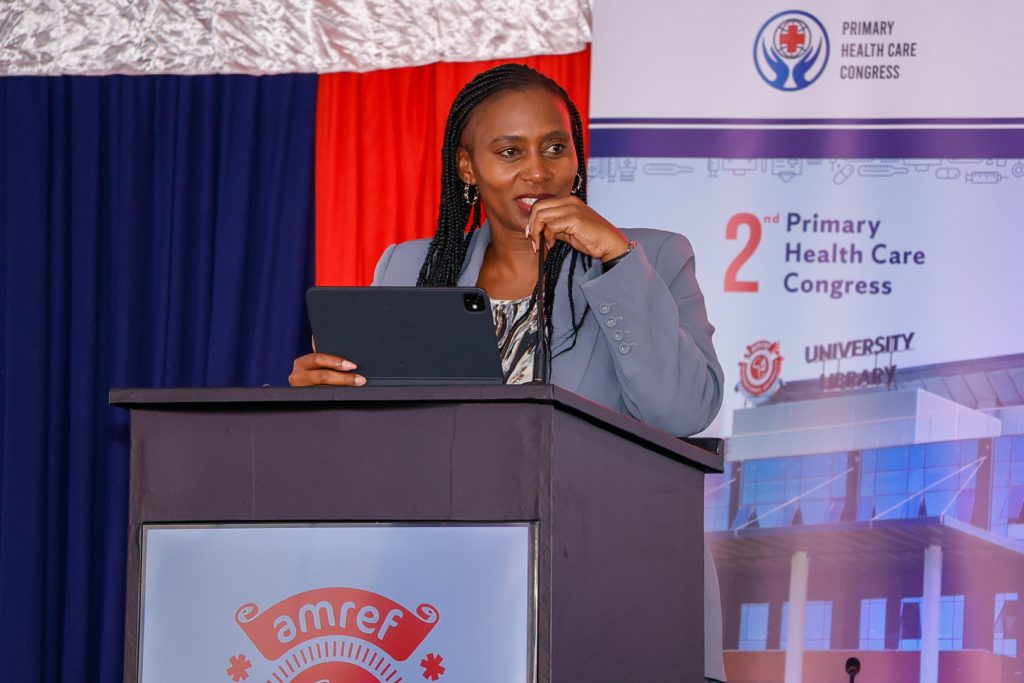
“When the PHC system is weak, the whole system trembles,” warned Mary Muthoni, Principal Secretary for the Kenyan Ministry of Health. “UHC is not just a policy document, it’s what happens when a person needs care, and it must be available, accessible and affordable, with quality at its core.”
For Prof Letlokwa Mpedi, Vice-Chancellor of the University of Johannesburg, integrating academic institutions into PHC planning is crucial for sustainability. “Development cannot be divorced from academic institutions,” he said. “They are key to developing the workforce and must be part of the PHC ecosystem.”
Dr Githinji Gitahi, Group CEO of Amref Health Africa, highlighted three pillars for transforming PHC: strengthening the supply side of primary care, fostering multisectoral collaboration, and empowering people as producers of health, not merely consumers of it.
“The best Minister of Health is the woman at home with her children, as she thinks about their wellness,” Gitahi said. He also emphasised the need for increased health financing, noting that the Abuja Declaration’s 15 per cent budget allocation for health should be the floor, not the ceiling.
Every shilling invested in PHC protects our referral hospitals, emergency services- Dr Matthew Owili, Deputy Governor, Kisumu County
The urgency of this call is underscored by the scale of the shortfall: more than two decades after the Declaration was signed, only three AU member states, Rwanda, Cabo Verde and South Africa, consistently met the 15 per cent target in recent years.

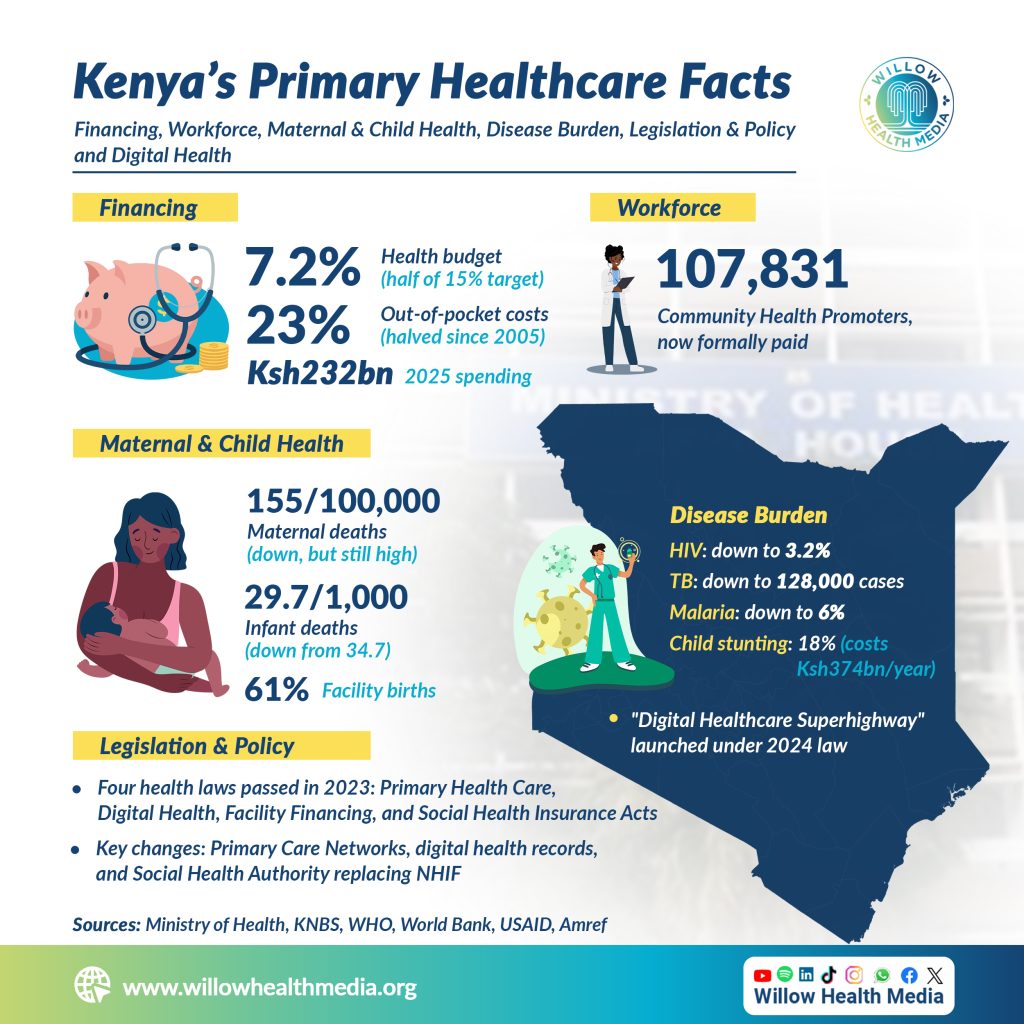
Over 30 countries remain well below even the 10 per cent mark, according to Africa CDC’s April 2025 data, which pegs Kenya’s allocation at about 7.2 per cent of its national budget to health as of the 2024/25 financial year.
“A US $4,000 problem cannot be solved with US$40,” Gitahi warned. “Ministries of Health should be coordinating health, chairing other ministries with a health component and therefore having more resources utilised for health.”
Dr Mathew Owili, the Deputy Governor of Kisumu County, echoed the importance of prevention over correction. “Every shilling invested in PHC is a shield that protects our referral hospitals and emergency services,” he said. “The cost of inaction is a debt that our children will pay.”
The 2nd Primary Health Care Congress was a platform to share evidence, innovations and practical solutions for strengthening PHC
PS Muthoni stressed the need to build resilience into the everyday lives of Kenyans, anchoring PHC in the community. “PHC is about dignity because all lives have equal value,” she said.
Across Africa, the COVID-19 pandemic laid bare the vulnerabilities of health systems, but it also sparked a renewed focus on the critical role of PHC. As Dr Mazyanga noted, resilience begins in communities, and it is at the community level that PHC must be strengthened first.

The 2nd Primary Health Care Congress provided a platform for leaders to share evidence, innovations and practical solutions for strengthening PHC systems across the continent. From harnessing digital technology and securing sustainable financing to enhancing leadership and governance, the congress charted a clear path forward for a more resilient, community-anchored and future-ready PHC in Africa.
The message is clear: primary healthcare must be the foundation for a sustainable and equitable healthcare system, one capable of withstanding global shocks and delivering quality care to all. The time to reimagine and reinvest in PHC is now.
Graphics by Brian Wekesa.