

Priority areas include maternal health, polio eradication, vaccine development, and use of artificial intelligence to improve health and learning systems.
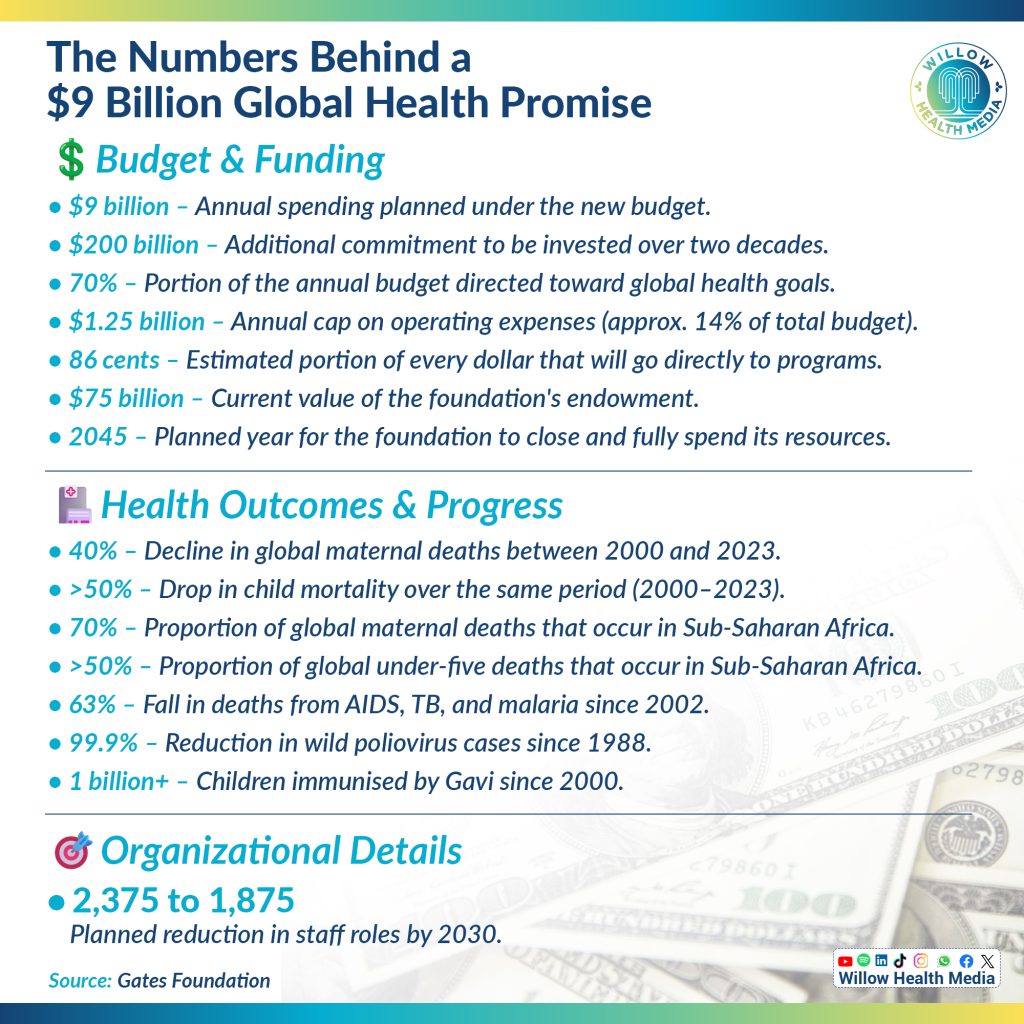
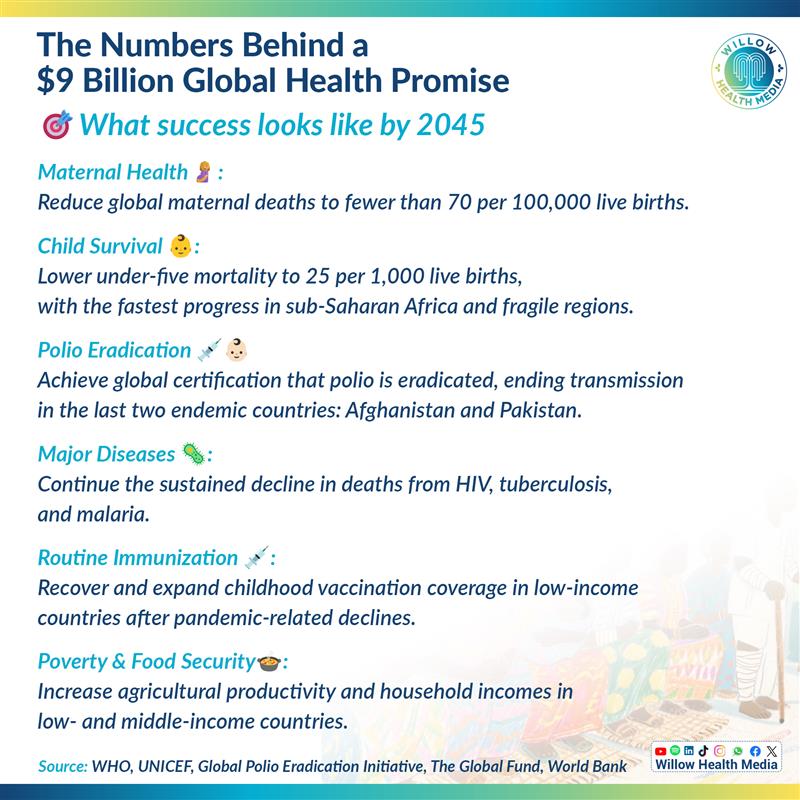
The Gates Foundation will spend $9 billion (Ksh1.16 trillion) annually on global health and poverty, with a new focus on urgent, high-impact results before its planned closure in 2045. The three new areas of renewed focus and achievable outcomes under a new four-year budget plan include maternal and child health, poverty and infectious-disease eradication.
This is part of a larger plan to invest $200 billion (Ksh25.8 trillion) over 20 years, doubling the foundation’s initial 25-year spending to save lives more quickly through effective tools and partnerships.
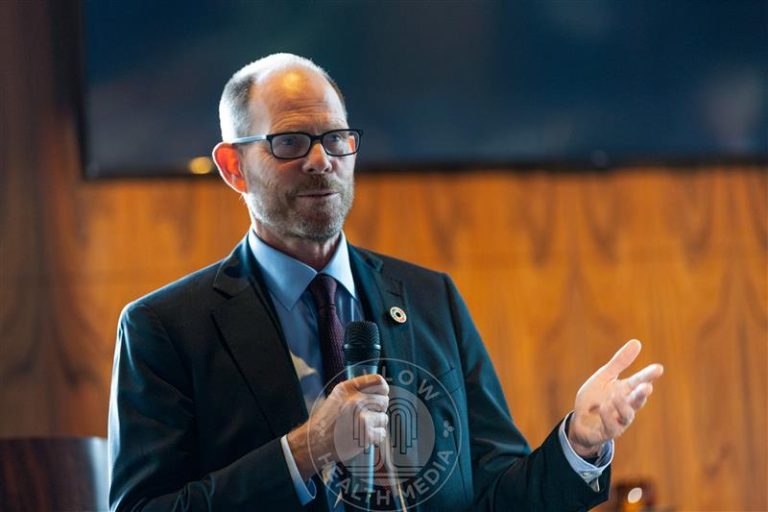
“This is a once-in-a-generation opportunity to make transformative progress,” said Gates Foundation CEO Mark Suzman. “But it requires relentless focus on outcomes and ensuring as much of every dollar as possible reaches the people we serve.”
The foundation has narrowed its mission to three outcomes, with about 70 per cent of the foundation’s annual budget currently directed towards the first two goals, which form the core of its global health work. The remaining funds support ‘powerful drivers of economic opportunity’, mainly agriculture in low- and middle-income countries and education reform in the United States.
Other priority investments this year include polio eradication, vaccine development and use of artificial intelligence to improve health and learning systems.
Gates Foundation reckons sustained polio funding could push the disease into history
Polio illustrates the endgame approach. The Global Polio Eradication Initiative reports a 99.9 per cent reduction in wild poliovirus cases since 1988.
Two of the three virus types are eradicated. Endemic transmission remains only in Afghanistan and Pakistan. The foundation reckons sustained funding over the next decade could push the disease into history.
Similar logic underpins its approach to malaria, HIV, and tuberculosis. New tools now exist that were not in existence a decade ago.
These include long-acting HIV treatments that replace daily pills with injections lasting months; next-generation malaria interventions that block parasite transmission in mosquitoes, and improved diagnostics for tuberculosis.
Sub-Saharan Africa bears a heavy and unequal burden and is the central focus of the Gates Foundation’s mission. The region suffers roughly 70 per cent of the world’s maternal deaths and more than half of all deaths in children under five.
Preventable diseases and complications, from malaria, HIV, diarrhoeal diseases and pneumonia to pregnancy-related issues, continue to take lives, even though effective treatments and interventions exist.
The $9 billion annual investment aims to accelerate progress on the face of a recent sharp decline in global development funding and donor aid for health as governments redirect spending towards debt servicing, conflict response and domestic pressures.
World Health Organisation (WHO) data show that external health financing fell between 2021 and 2024, widening gaps in immunisation, maternal care, and disease control across many low-income settings.
Global maternal deaths fell by about 40 per cent between 2000 and 2023, while child mortality dropped by more than half
Global maternal deaths fell by about 40 per cent between 2000 and 2023, while child mortality dropped by more than half, notes WHO, which, alongside UNICEF, attributes this progress to expanded access to vaccines, improved maternal care, and disease control programmes supported by multilateral partnerships.
The Foundation’s role includes partnerships with Global Fund to fight AIDS, TB and malaria, from which deaths have fallen by 63 per cent or about 70 million since 2002, according to Global Fund.
Multilateral partnerships backed by the foundation form the backbone of many African health systems. Gavi, the Vaccine Alliance, has helped immunise more than one billion children since 2000, with African countries accounting for the majority of coverage gains.
The Global Fund provides over 60 per cent of all international financing for HIV, tuberculosis, and malaria programs in Africa, according to its 2024 results report. This increased funding strengthens the existing systems African governments use to stock clinics, pay health workers, and contain outbreaks.
Yet WHO cautions that progress across the continent has slowed in recent years due to conflict, climate shocks, health worker shortages, and declining routine immunisation coverage following the Covid-19 pandemic. The Foundation’s accelerated timeline reflects recognition that without sustained investment now, decades of hard-won gains in Africa risk reversal.
Maternal immunisation is high-impact but underused, particularly in low-income settings
The Foundation has also outlined a pipeline of innovations it believes could halve child deaths again over the next 20 years if scaled up. These include maternal vaccines against respiratory syncytial virus (RSV) and Group B streptococcus, both major causes of newborn mortality. WHO has identified maternal immunisation as a high-impact but underused intervention, particularly in low-income settings.

Other investments focus on artificial intelligence (AI) to support frontline health workers, improve supply chains, and expand access to diagnostics in remote communities. While AI in health remains unevenly regulated, WHO guidance supports its cautious deployment where it strengthens systems rather than replaces human care.
Alongside higher program spending, the board approved a cap on operating expenditure. Annual operating costs will be limited to no more than $1.25 billion (Ksh161 billion), which is around 14 per cent of the Foundation’s total budget.
Operating expenditure covers staff, systems, facilities, and travel. Without intervention, internal projections showed these costs could rise to nearly 18 per cent of total spending by the end of the decade.
The cap is expected to reduce the Foundation’s headcount target from 2,375 roles to about 1,875 by 2030. Reductions will occur gradually, with annual reviews to ensure critical expertise is retained. Suzman framed the decision as essential stewardship. “Progress is fragile,” he said. “Our resources are finite. Discipline is not optional.”
Gates Foundation plans to deploy its entire $75 billion (Ksh9.6 trillion) endowment by 2045
By maintaining the cap, the Foundation estimates that roughly 86 cents of every dollar will flow directly to mission-driven work rather than administration.

At the 2025 Goalkeepers event in New York, Bill Gates underscored the urgency: “We know what works,” he said. “The question is whether we choose to deliver it at the scale required.”
The decision to spend down the Foundation’s endowment rather than exist in perpetuity sets it apart from many large philanthropies. The Gates Foundation plans to deploy its entire endowment, currently valued at more than $75 billion (Ksh9.6 trillion), by the end of 2045.
The approach draws inspiration from Warren Buffett, who has donated more than $43 billion (Ksh5.5 trillion) to the Foundation since 2006, and from Andrew Carnegie’s argument that wealth carries a moral obligation to be returned to society.