

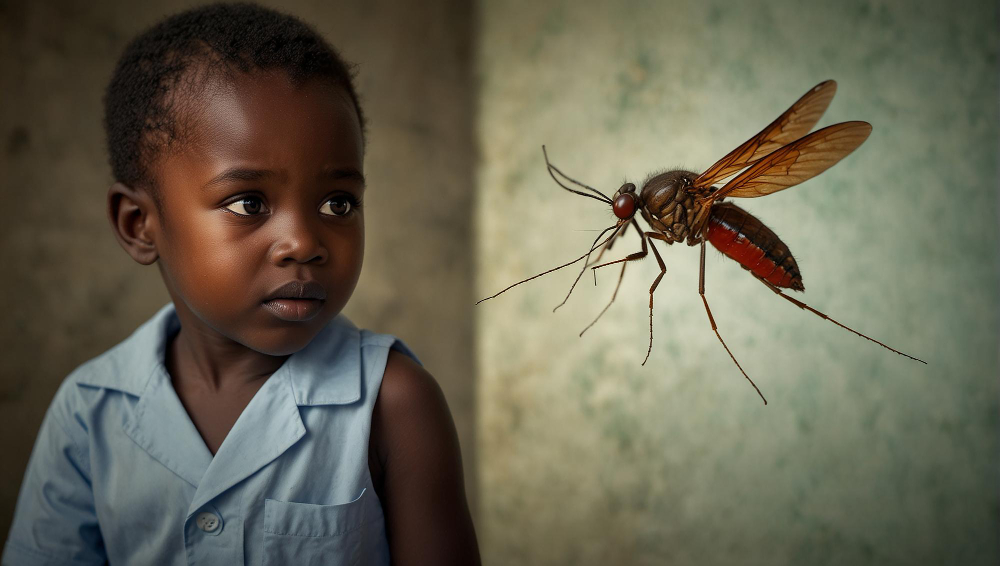
Think twice before popping a pill for every fever. Self-treatment and skipping doses are making malaria harder-and sometimes impossible to treat.
Malaria treatment in East Africa is under serious threat as the parasite causing the disease rapidly develops resistance to artemisinin, once considered a miracle drug, raising fears of a surge in deaths if urgent action is not taken.
Global stakeholders championing Protect the Cure, a public health initiative tackling antimalarial drug resistance, sounded the alarm as the World Malaria Report 2025 recorded 280 million cases and 600,000 deaths globally in a single year, with 95 per cent of those deaths occurring in African countries.

Prof Maciej Boni of Temple University, Philadelphia, and one of the founders of Protect the Cure, confirmed that artemisinin-resistant parasites have already been identified in Rwanda, Uganda, Tanzania, Kenya, Ethiopia, and Eritrea.
“In two of the countries, artemether-lumefantrine efficacy has dropped below 90 per cent, which is concerning. It is, however, a little bit difficult to know if the artemisinin-resistant parasites are responsible for this drop in efficacy,” said Prof Boni during a Parliamentarians and Civil Society Africa Dialogue webinar on Tuesday, 27 January.
Dr Arnaud Le Menach, lead author of the World Malaria Report, identified antimalarial drug and insecticide resistance, weak health systems, conflicts, and dwindling funding as the key threats in the fight against malaria. He called for stronger political commitment and sustained investment in new tools.
Drug resistance a driving force behind the rise in global malaria cases
“We need to strengthen political commitment and community engagement and sustain the development of new tools to fight malaria,” Le Menach said, urging parliamentarians and civil society to ensure WHO treatment guidelines are fully actualised in their respective countries.
Drug resistance has emerged as a driving force behind the rise in global malaria cases. Dr André Marie Tchouatieu of Medicines for Malaria Venture (MMV) traced the crisis to its origins, noting that the first resistance against antimalarial drugs was reported in Cambodia in 2001, with the first African case recorded in 2013.
“Sulfadoxine/pyrimethamine, lumefantrine, chloroquine – all recorded resistance, with the latest case in 2024. Malaria parasites evolve in ways that reduce the efficacy of current antimalarials, highlighting the urgent need for new therapies,” he said.
To counter the growing resistance, MMV experts are developing multiple new first-line treatments. These include Triple Artemisinin Combination Therapy (ACT) – Artemether-Lumefantrine-Amodiaquine (ALAQ) – adding a single low dose of primaquine to ACT, and Ganaplacide-Lumefantrine, a three-day regimen that is the first non-artemisinin malaria drug since the discovery of ACT in 1999.
Tchouatieu offered some reassurance, noting that artemisinin remains effective in 80 to 90 per cent of malaria cases and that the new developments would ease pressure on its continued use. He called on countries and global regulatory agencies to streamline the registration of new drugs and urged timely community engagement to prepare populations for the incoming first-line antimalarials.
There is no single bullet to eliminate malaria -we should use all tools, including nets
“Countries and global registration agencies should ease the registration of new drugs. Communities need timely engagement to be ready for, and embrace, the forthcoming first-line antimalarials,” he added.
Vaccines were also highlighted as a vital tool in managing resistance. Tchouatieu noted that while their use is currently restricted to younger age groups, wider uptake would reduce the number of new infections exposed to drugs of diminishing efficacy. “There is no single bullet to eliminate malaria -we should use all tools, including nets,” he said.
The campaigners called on African leaders to plan for rotating between different ACTs every few years, and hinted that two or three new antimalarial drugs could be introduced within the next five years. They urged civil society and parliaments to legislate with a deliberate focus on slowing the spread of artemisinin resistance.
Le Menach reinforced the need to shift thinking from the health sector to the broader community. “Not every fever should be met with antimalarial drugs. One must be tested and, if they test positive for malaria, they should take the full dosage. We are shifting from a health to a community perspective to have everyone participate,” he said.
Dr Charles Adekunle, CEO of the Roll Back Malaria (RBM) Partnership, echoed this message, calling on the wider African public to complete their prescribed malaria doses – a simple but critical step in slowing resistance.
You may have nets, but haven’t trained locals on how to maintain them to keep mosquitoes off
Krystal Birungi, a malaria advocate and entomologist at Target Malaria who was named a 2025 Goalkeepers Champion by the Gates Foundation, stressed the need for homegrown innovation. Feted for her work on gene drive – a technology aimed at modifying mosquito genetics to limit the number of eggs they lay and reduce their population -Birungi argued that local solutions, or innovations adapted to suit local contexts, were essential to reducing cases.
“New tools should factor in the specific dynamics of target populations. You may have nets but haven’t trained locals on how to maintain them to keep off mosquitoes, or people may lack trust and not use the tools, dragging behind efforts to eliminate malaria,” she observed.
Funding gaps are already hampering progress. Deus Ishengoma of the National Institute for Medical Research in Dar es Salaam, Tanzania, disclosed that a lack of funds had delayed the implementation of new strategies, including the rollout of new drug combinations in the country.
He closed with a broader challenge to the continent’s leaders. “The sure way to eliminate malaria in Africa is to eliminate poverty. African leaders should not run away from this reality and should start optimally utilising available tools as they empower the people to be able to responsibly play a role in fighting malaria,” Ishengoma said.