


With 250 children still dying daily, proposed funding cuts now risk erasing three decades of hard-won progress in the fight against HIV.
Catastrophic funding shortfalls threaten to reverse decades of progress against paediatric HIV, potentially leading to an additional 1.1 million new child infections and 820,000 child deaths by 2040, according to a new report from UNICEF and UNAIDS. This grim future would effectively erase the hard-won gains of the global AIDS response.
The report, The Cost of Inaction on HIV for Children, warns that current funding cuts are already unravelling systems that saved millions. The human toll is starkly illustrated by daily figures: about 712 children still become infected with HIV globally, and around 250 die from AIDS-related causes.
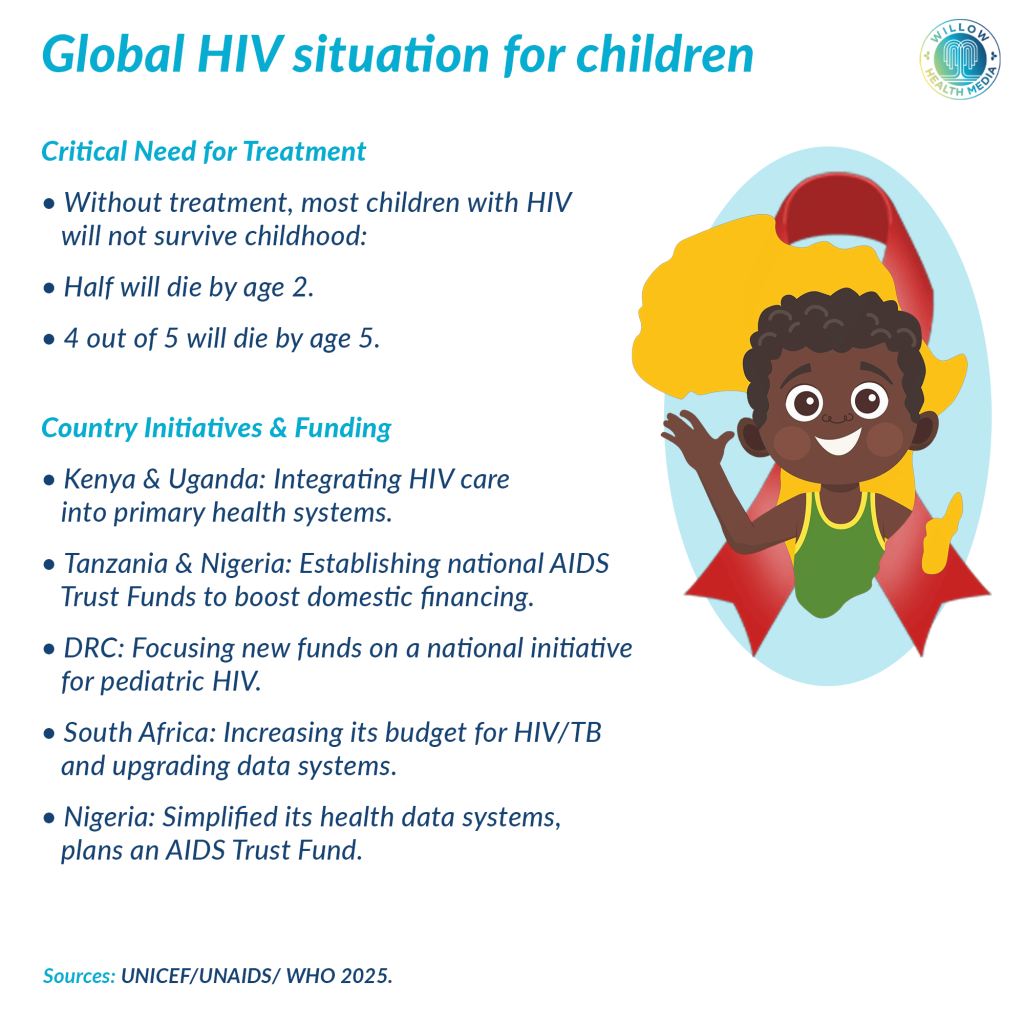
Nowhere were past gains more significant than in Eastern and Southern Africa, home to 86 per cent of children living with HIV. This region saw an 85 per cent reduction in new child infections between 2010 and 2024.
However, this progress is now in jeopardy. In Kenya, for example, a “substantial proportion” of the 82,917 children living with HIV are not reaching viral suppression, with paediatric treatment coverage lagging at 72.1 per cent. The report notes this “gap in paediatric treatment is concerning,” leaving a vulnerable population at risk.
The crisis stems from sudden cuts to external funding, particularly from major bilateral donors in early 2025. The United States government, through the President’s Emergency Plan for AIDS Relief (PEPFAR), has been the largest bilateral funder, with analysis showing it primarily funds about 60 per cent of HIV testing and 80 per cent of prevention programs in 22 low- and middle-income countries.
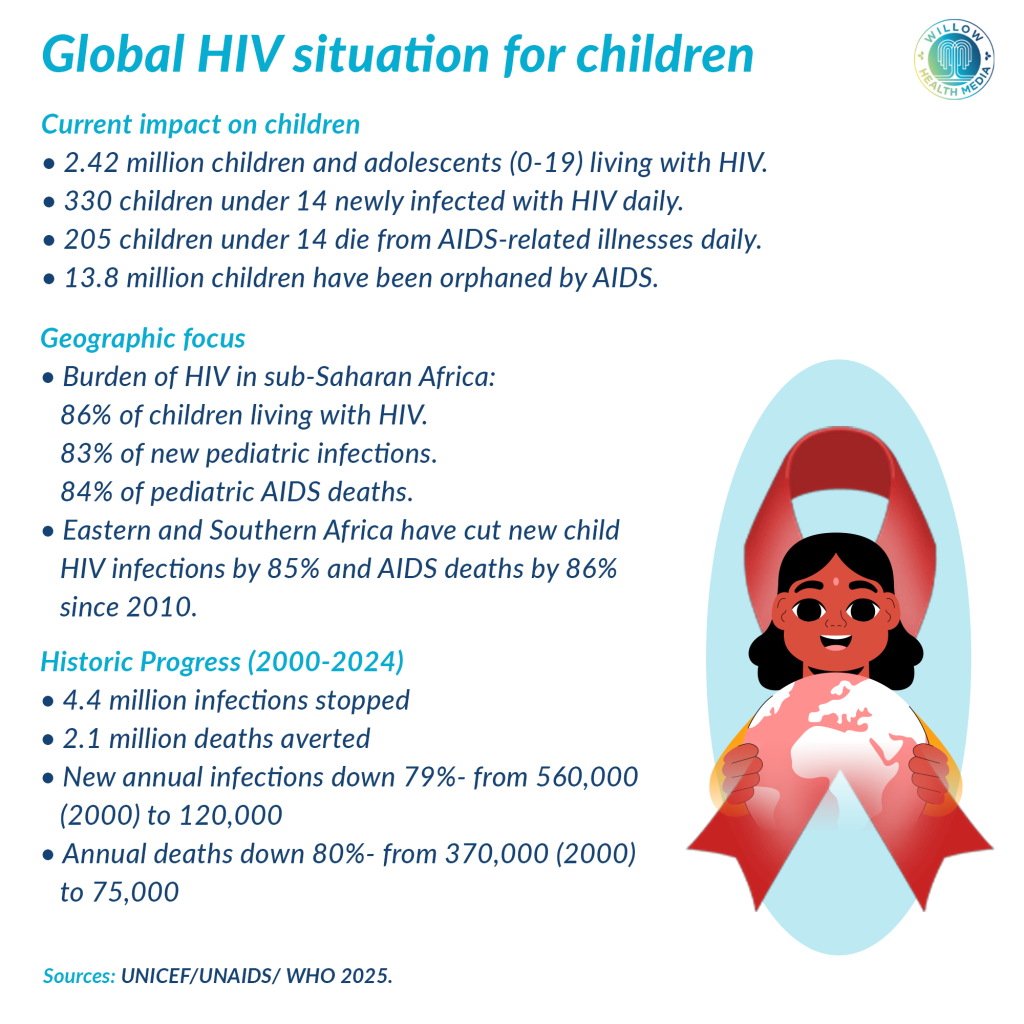
Children are uniquely vulnerable, as without treatment, half of the infected die by age two
The ripple effects have been swift: drops in staffing, scaled-back services, and disrupted supply chains for antiretroviral medicines. Community-based peer support programs, vital for helping mothers and children, have been widely curtailed.
The report models three scenarios, with the worst-case being a 50 per cent drop in intervention coverage-predicting the additional 1.1 million infections and 820,000 deaths by 2040. These are conservative estimates, as they do not fully account for secondary consequences like health facility closures and loss of public confidence.
Children are uniquely vulnerable; without treatment, half of perinatally infected children will die by age two. Paediatric treatment coverage, at 55 per cent, already pales in comparison to the 78 per cent coverage for adults.
In response, African nations are demonstrating leadership to protect these gains. Kenya committed about $9 million for commodities and $60 million to bridge gaps, while also integrating HIV services into primary healthcare. The Democratic Republic of the Congo launched a National Initiative to End Paediatric AIDS, mobilising $18 million. Uganda secured government commitments totalling over $174 million and is integrating HIV into chronic care platforms.
Amidst the crisis, a ray of hope exists in new long-acting injectable PrEP, Lenacapavir
Other countries are also taking decisive action. Nigeria approved $3.12 million for HIV treatment and plans to establish an AIDS Trust Fund. Tanzania committed to raising more than half of its HIV funding domestically, directing new revenue to an AIDS Trust Fund. South Africa increased its HIV/TB budget and is upgrading patient information systems.

Amidst the crisis, a ray of hope exists in new prevention tools. The long-acting injectable PrEP, Lenacapavir, showed 100 per cent efficacy in preventing HIV acquisition among pregnant and breastfeeding women in clinical trials.
However, the report stresses that this scientific promise depends entirely on the sustained funding and implementation that are currently under threat. The World Health Organization (WHO) has issued urgent warnings, noting that funding cuts have especially affected roles in faith-based and civil society organisations, and that “years of investment in trained personnel may be lost” without timely mitigation.