

Withdrawal of donor funding will affect healthcare delivery and sustainability in Kenya unless the government finds alternative health financing models.
When President William Ruto went for a $1.6 billion (Ksh208 billion) health deal with the United States, the additional funding sounded like a lifeline. However, behind the deal lies a troubling story. After years of underinvesting in its own health system, Kenya has become heavily dependent on foreign aid. The country’s poorly funded public healthcare system spends only $38 (Ksh4,800) annually for each of its people – a far cry from the $86 (Ksh10,900) recommended by health economists and public health experts, resulting in persistent poor care in public health facilities and an unhealthy donor dependence cycle.
Our analysis of key data points reveals a system that lacks financial prioritisation for its ever-rising population, resulting in a persistent lack of medicine and proper equipment in hospitals, very few doctors attending to patients, and patients paying huge out-of-pocket costs.
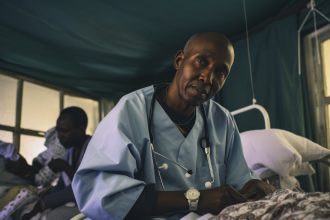
This has led to an increasing shift to private medical care, which is often expensive, plunging millions into poverty every year. Meanwhile, the Social Health Authority (SHA), which was billed as one solution to Kenya’s health financing, alongside its three health insurance schemes, the Primary Healthcare Fund, the Social Health Insurance Fund, and the Emergency, Chronic and Critical Illness Fund, has been nursing teething challenges since it was unveiled in October 2024.
Indeed, dependency on donor aid and subsequent U.S. Agency for International Development (USAID) funding freeze in January 2025 had a devastating aftermath on health programmes in Kenya and around Africa. Consider the case of Vincent Omondi from Sarang’ombe in Kibra, Nairobi.
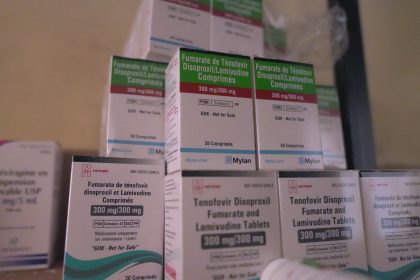
He has been under Anti-retroviral drugs for over ten years, has always taken his medication from Ushirika, a community-owned clinic. But freezing funding for USAID was devastating.
His wife, who is also HIV positive, gets her ARV medication from the Tabitha Clinic. While he still gets his medication from Ushirika, he sometimes misses some medication, unlike in the past. “Right now, I don’t have Septrine and Zidocin. When I don’t have some of the medication, my wife shares hers, and when she doesn’t have any, we use mine,” he told Willow Health Media.
USAID supported patients with drugs, counselling, follow-up assistance, and structures
Dr Abidan Mwachi, the chairman of the Kenya Medical Practitioners, Pharmacists, and Dentists Union (KMPDU), told Willow Health Media that the country has many patients suffering like Omondi after the withdrawal of donor funding in health.
“We are likely to get an upsurge of people who are non-compliant with HIV medication. Because one, USAID used to not just support in the giving of these drugs, it used to support in a wholesome way, including counselling and follow-up assistance and structures,” he said.
Kenya’s health system depends heavily on foreign aid, which provides nearly a third of the national budget, amounting to about Ksh21.5 billion, according to the National and County Health Budget Analysis for the 2023-2024 financial year. The analysis report gives a detailed examination of how public health sector resources are distributed. The trend has continued for years.
The government allocates far less than needed for healthcare. The 2025/2026 budget of Ksh4.29 trillion is below the Ksh643.5 billion recommended by the Abuja Declaration of 2001, in which governments were to scale health budgets to 15 per cent of total budgetary allocation.

Dr Mwachi argues that the budget of Ksh138.1 billion in the 2025/26 financial year translates to Ksh2,600 per citizen. While the government has increased operational (recurrent) expenditure, this has come at the expense of development investments.
For instance, in the 2023-2024 financial year, the Ministry of Health (MoH) spent Ksh80.6 billion on recurrent expenditures, which translates to 57 per cent of its budget, according to the 2023/2024 National and County Health Budget Analysis report.
Dr Mwachi decries the state of health financing at both national and county levels, as our national health budget is merely an aspirational figure, way below the Abuja Declaration, over which Kenya has been flip-flopping so much so that our health allocation now stands at seven per cent.
Kenya has about four times fewer doctors than it needs: one doctor for every 3,937 people
“In the counties, the total allocation of the national budget is just 15 per cent, though sometimes less. A bulk of it is actually allocated to health but goes into paying salaries, recurrent expenditures, and not development,” said Dr Mwachi.
Yet even with the rising operational investments, patients are still sent to purchase essential medicines from private pharmacies, besides a critical shortage of doctors and healthcare workers. Kenya has about four times fewer doctors than it needs: one doctor for every 3,937 people – according to 2024 Kenya National Bureau of Statistics (KNBS) data – which falls far below the one per 1,000 recommended by the World Health Organisation (WHO).
According to Anita Musiega, a health economist with Kemri-Wellcome Trust, the drivers of the shortage of healthcare include training and hiring gaps of key health workers, overpayment of some health worker groups relative to income, among others. “For those who are trained, most are either unemployed or underemployed,” she said. Dr Mwachi sums it up as a quagmire, “Something akin to starvation amidst plenty.”
The test for the healthcare financing system came in January 2025 when USAID, a major funder, withdrew its support. The government, through the treasury, responded by marginally increasing the budget from Ksh135.2 billion to Ksh138.1 billion (attribute figures), effectively failing to cover the gap.
In 2024 alone, figures from the United States Government note that USAID had contributed $278,516,057 (Ksh36.2 billion) – equivalent to 35.4 per cent of Kenya’s national health expenditure. Musiega believes “We should not be in that situation again, like we were in February 2024. The government should plan for transitions.”
The largest share of USAID’s support had gone to HIV/AIDS, with allocations amounting to $162,814,790 (Ksh20 billion), according to U.S. government data. The other areas were malaria, water supply and sanitation, family planning and reproductive health, and maternal and child health. These are the most aid-reliant areas of Kenya’s healthcare; therefore, the most vulnerable following the withdrawal.
Even after USAID’s withdrawal, Kenya continued to rely heavily on foreign aid. In the 2025/2026 financial year, the largest commitments for healthcare development came from donors including the Susan Thompson Buffett Foundation, the Global Fund, and the Global Alliance for Vaccines and Immunization (GAVI). However, these donors have shown inconsistent support in previous years, raising concerns about the sustainability of their funding.
Musiega believes wrestling down corruption can reduce donor dependence and that “The government should plan for transitions. It can also raise more funds through SHA if the government officials can demonstrate accountability.”
HIV/Aids testing rates nosedived to the lowest point in nearly a decade
Kenya is now experiencing the consequences of donor dependency, as evidenced by worrying health indicators screaming the impact of withdrawal. Like HIV/AIDS testing rates, which plummeted in 2025 as USAID-funded programmes shut down. The testing rates nose-dived to the lowest point in nearly a decade – aside from the COVID-disrupted years – according to data from the National AIDS and STI Control Programme (NASCOP).
Without regular testing, patients cannot monitor their viral loads, risking disease progression.
Dr Mwachi is optimistic about the prospects of the new aid from the US government, as it gives “A glimmer of hope with this new, similar deal that is even better. It will be run through government agencies, which are more efficient. They are likely to know where the need is.”
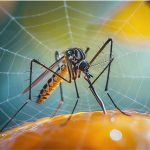
Malaria cases also tell the same story of worsening health outcomes in Kenya. In 2025, the WHO reported that Kenya recorded 4.2 million cases of malaria, up from 3.3 million the year before. This means that nearly a million people are now dealing with the preventable disease that was slowing down in previous years.
This means sick people are stuck at home because they cannot pay their medical bills, as documented by the Kenya Household and Health Expenditure and Utilisation Survey, 2018, which found that 19 per cent of sick people do not seek medical care due to high healthcare costs.
The proportion of inpatient admissions in private hospitals has been rising steadily
On the other hand, according to the same survey, more patients are turning to private healthcare – an option that is often expensive and driven by commercial interests. The proportion of inpatient admissions in private hospitals has been rising steadily, reaching 29 per cent in 2018, while admissions in government hospitals have been going down, standing at 45 per cent in 2018. Yet, the key goals of a functional health financing system are ensuring financial risk protection, but “If people are paying higher out-of-pocket costs, then this means the system is not meeting its goals,” argues Musiega.
Kenyans foot a quarter of healthcare costs out of pocket, while the government pays less than half
The poorest Kenyans – a cohort that forms the core consumers of government healthcare – are paying the highest price for a poorly resourced public healthcare. Data from WHO shows that a Kenyan foots roughly a quarter of healthcare costs from their pockets while the government pays less than half.
While out-of-pocket costs had been gradually decreasing, this progress halted in 2016.
With out-of-pocket costs stuck at around 25 per cent according to WHO, every hospital visit, every test, every prescription comes with a bill that many families cannot afford. A single serious illness can bankrupt a family. In 2018, it is estimated that at least one million Kenyans were pushed into poverty due to catastrophic health expenditure.
The government acknowledges the health financing challenge: in its Health Financing Strategy, 2020-2030, it admits that the current financing “falls short of international benchmarks to deliver basic and essential packages of health for the population.” The document, which stresses reliance on locally funded healthcare, charts a pathway to reducing out-of-pocket costs to 10 per cent by 2030 and eventually eliminating them.
President Ruto’s solution was to replace the scandal-plagued National Health Insurance Fund (NHIF) with a new SHA. A sustainable financial pool that would cushion Kenyans from high out-of-pocket costs and enable a locally funded Universal Health Coverage (UHC). SHA launched in October 2024, but the reality has fallen far short of the promise.
One challenge with SHA is that it favours the patient at the detriment of the hospital
SHA suffers from systemic failures, insufficient member contributions, delayed reimbursements, and major corruption scandals, including three million fictitious patients in the system flagged in July 2025 and a further Ksh10.6 billion in fraudulent claims identified in September, according to the Nation. Despite its broader mandate, many essential services still face exclusions or low limits, forcing patients to continue shouldering high out-of-pocket costs.

Vocal health stakeholders broadly agree that SHA is a good idea on paper. However, sentiments expressed by patients, doctors, hospital managers, and even government insiders suggest that the scheme is still far from delivering its mandate. Closing that gap will demand stronger governance, a broader contributor base, and a more rigorous financial management to ensure funds reach patients equitably.
One challenge that Dr Mwachi sees in SHA is that it favours the patient at the detriment of the hospital. Its sustainability, he says, is an issue because of adverse selection when a patient can register today and be eligible immediately, unlike NHIF, when one had to wait for six months. “Patients are increasingly happy, but that poses a risk of adverse selection,” he said.
This article by Odipo Dev, with the support of Africa Data Hub, was written by Felix Kiprono and Kelvin Ndiritu.
Additional Reporting by Anthony Lang’at from Willow Health Media.