
While the U.S. will gain early disease warnings and research access, Kenya will secure major investment and stronger health systems.
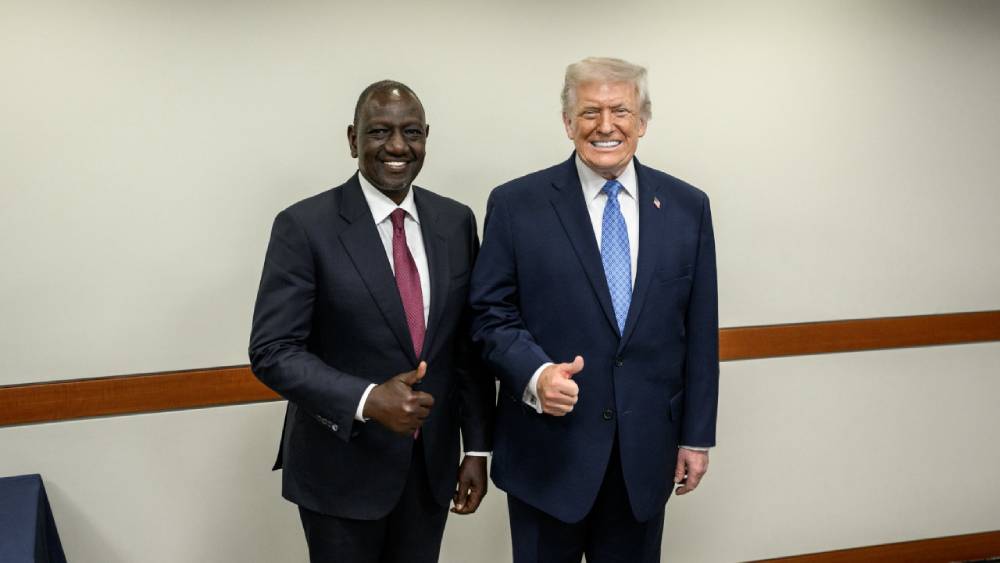
Kenya and the US signed a major health partnership agreement on December 4, 2025, witnessed by Presidents William Ruto and Donald Trump. While government officials hailed the deal as historic, some citizens worry that clauses granting the U.S. access to Kenyan health data could be risky and potentially unlawful.
In total, Kenya will contribute about Ksh850 million over the five years, with the U.S. providing $1.6 billion, which is not a loan but direct government-to-government support.
About the deal
- Investment: Ksh208 billion ($1.6 billion) over 5 years (2026-2030), plus 2 years for reporting
- Goal: Make Kenya’s health system self-sufficient by 2031
- How it’s different: Money goes directly from the U.S. government to the Kenyan government, bypassing NGOs
- Signed by: U.S. Secretary of State Marco Rubio and Kenya’s Prime Cabinet Secretary Musalia Mudavadi

Why Kenya was chosen first
- Strong and stable government institutions
- Commitment to Universal Health Coverage (UHC)
- Demonstrated capacity for health system reforms and digitisation
- Part of the U.S. Global Health Strategy unveiled in September 2025
What’s in it for the USA?
Data Access for 25 Years (beyond 5-year funding period):
- Real-time disease surveillance data from East Africa
- Pathogen samples for vaccine and treatment development
- Health information to monitor global disease threats
- Outbreak response system data for pandemic preparedness
- Right to audit up to five per cent of health facilities to verify programme effectiveness
What’s in it for Kenya?
- Stable, long-term health funding after earlier U.S. cuts disrupted HIV, malaria, and TB programmes
- Build a stronger, more independent healthcare system
- Continue 25+ years of U.S.-Kenya health cooperation (over $7 billion invested so far)
- Achieve “national health sovereignty” by 2030

Data Protection concerns: Why does the USA need Kenya’s health data?
The U.S. will have access to digital health systems and outbreak databases. The United States requires our health data for several critical reasons rooted in global health security and will be used for:
- Early Warning System: Kenya is a key location in East Africa for spotting new diseases. Tracking outbreaks there helps the U.S. detect global threats, like Ebola or new COVID-19 variants, much earlier.
- Scientific Research: Studying diseases in different populations helps scientists worldwide understand how they spread and affect people, leading to better treatments and vaccines for everyone.
- Example: Discoveries about HIV drug resistance in Africa have directly improved treatment guidelines used globally.
- Measuring Success: The U.S. needs data, like the number of people on life-saving drugs or malaria prevention rates, to ensure its investment is effective and saving lives.
- Improving Programmes: This information helps both countries see what’s working and fix what isn’t, making health programmes stronger.
Why 25 years?
Rationale for the Timeline: The U.S. argues that long-term access is necessary for effective long-term disease tracking and monitoring health trends over decades. But critics punched holes into the deal for the following reasons:
- Lopsided Terms: The 25 years of data access for the U.S. in exchange for 5 years of fundingare unequal.
- Extractive Concern: There is no guaranteed benefit-sharing; Kenya is not assured accessto vaccines or treatments developed from its shared pathogen samples.
- Lack of Collaboration: The agreement does not include co-authorship for Kenyan scientists on the resulting research.
- One-Sided Sharing: The text does not specify if the U.S. will reciprocate by sharing its pathogen specimens with Kenya.
Government assurances on data protection
- The Ministry of Health assures that all shared health data is protected by Kenyan law.
- Health Cabinet Secretary Aden Duale stated that Kenyan health data is officially recognised as a “strategic national asset”.
- Any data sharing will only happen to achieve the partnership’s health goals and must follow Kenya’s Data Protection Act (2019) and Digital Health Act (2023).
Key Protections Include:
- Only de-identified, aggregated data will be shared – no names, ID numbers, addresses, or individual medical records
- Data shared will focus on totals, trends, performance indicators, and system-level outcomes
- All data exchange must be approved by both the Directorate of Health Analytics (DHA) and the Office of the Data Protection Commissioner
- The Data Sharing Agreement is time-bound to the Health Cooperation Framework duration
- Kenya retains full ownership of all health data and intellectual property
Why shift from donor-led support to government-to-government (G2G)?
Previous U.S. health aid through outfits like USAID, PEPFAR and the Global Fund achieved good results against HIV, malaria, and TB in Africa. However, the new “America First” strategy identified and fixed major flaws in the old model:
- Inefficiency: Up to 60 per cent of funds were spent on administration, with only 40% reaching actual healthcare.
- Fragmentation: Programmes operated separately from Kenya’s national health system, creating long-term dependency.
- This fragmented system also led to duplicated efforts and misuse of funds.
How new partnership will work
Instead of funding NGOs, the U.S. will send money directly to Kenyan government agencies, including the Social Health Authority (SHA), Digital Health Agency, Kenya Medical Supplies Agency (KEMSA), health authorities and ministries to eventually fully fund and run all the health programmes itself by 2030, achieving “national health sovereignty.”
Key benefits of the deal
- More Jobs: Kenya will hire over 13,800 new permanent health and lab workers by 2028, with annual hiring commitments.
- Centralised Supply System: By December 2026, a single national agency, KEMSA, will manage all medical supplies to cut waste and improve accountability.
- Faster Outbreak Response: The U.S. will help Kenya adopt the rapid “7-1-7” outbreak response model (Detect in 7 days, Report in 1 day, Respond in 7 days).
- Modern Digital Systems: National digital systems will be upgraded for better disease tracking and preparedness.
- Stronger Partnership: The deal deepens US-Kenya ties, boosts investor confidence, and supports Kenya’s goal to be a regional health leader.
The financial plans in the deal
The U.S. funding depends on Kenya gradually increasing its own contributions. The goal is for Kenya to fully take over the costs by 2031.
Takeover Target: By 2031, Kenya will fully fund the health supplies and workers currently paid by the U.S., at a total cost of Ksh18.2 billion that year.
U.S. Funding Increment in Phases:
- 2026/2027: Ksh40 billion
- 2027/2028: Ksh40 billion
- 2028/2029: Ksh42 billion
- 2029/2030: Ksh42 billion
- 2030/2031: Ksh42 billion
Kenya’s Co-Financing Plan:
- 2027: Ksh4.6 billion
- 2028: Ksh9.2 billion
- 2029: Ksh13.8 billion
- 2030: Ksh16.1 billion
- 2031: Ksh18.5 billion
Similar agreements are expected to be signed with 16 other African countries, including Uganda, Rwanda and Ethiopia, though Nigeria and South Africa are not expected to participate due to political differences with the Trump administration.












Good read. well explained and simplified.