

Kenya records about 44,726 new cancer cases every year, with approximately 29,317 deaths. An estimated 102,152 people in Kenya have been living with cancer in the past five years.
Stomach infections, alcohol, and smoking are driving a large share of Kenya’s cancer burden, with new global data showing that many cases linked to Helicobacter pylori (H. Pylori), Human Papillomavirus (HPV) infection, and tobacco use could be prevented, according to a study by the World Health Organization (WHO).

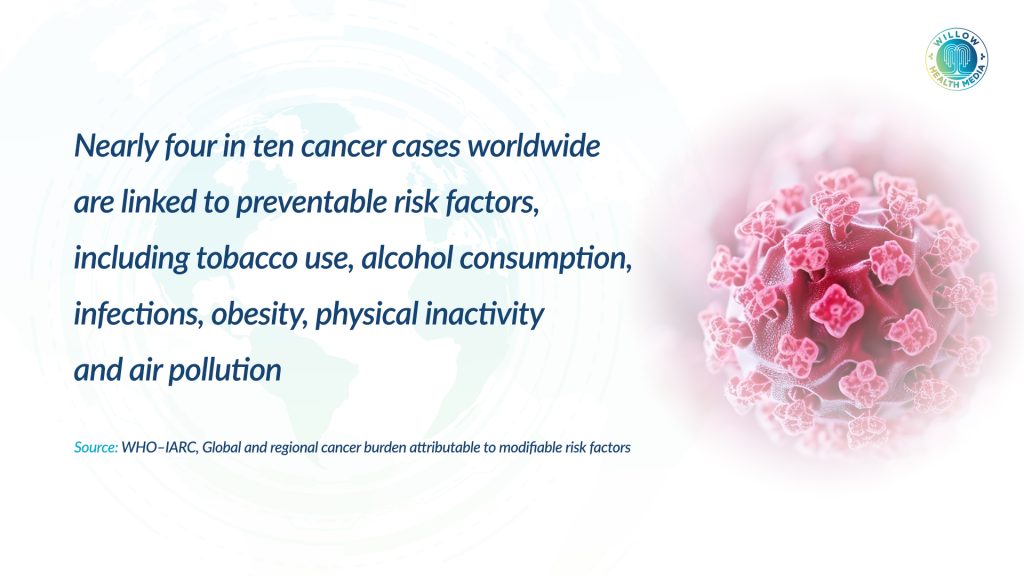
The global analysis by the International Agency for Research on Cancer (IARC) and titled Global and regional cancer burden attributable to modifiable risk factors to inform prevention found that nearly four in ten cancers worldwide are linked to preventable causes, including Kenya, where stomach, cervical and lung-related cancers remain major contributors to illness and death.
Stomach cancer has been linked to H. Pylori, a bacterial infection caused by enzymes that kill stomach lining cells, causing painful peptic ulcers. Seven in every ten Africans carry H. pylori, making it extremely common in Kenya’s crowded communities, where poor sanitation creates ideal breeding grounds.
Cervical cancer is the second most common cancer among women in Kenya, causing over 3,200 to 3,591 deaths annually and over 5,000 new cases yearly. It heavily impacts women aged 30-59 years, with 13.1 – 19.7 per cent of all female cancer cases linked to HPV, often due to late detection.
Globally, tobacco was identified as the single largest preventable cause of cancer
The WHO study examined 30 preventable causes of cancer and found that 37 per cent of all new cancer cases diagnosed globally in 2022 (about 7.1 million cases) were attributable to modifiable risk factors.
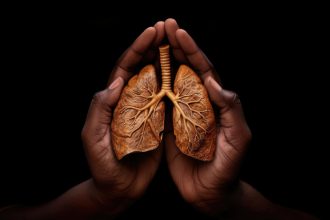
These include tobacco use, alcohol consumption, high body mass index, physical inactivity, air pollution, ultraviolet radiation, and nine cancer-causing infections analysed for the first time in a global assessment.
Drawing on data from 185 countries and 36 cancer types, the research provides the most comprehensive estimate to date of how much of the global cancer burden could be avoided through prevention.
“This is the first global analysis to show how much cancer risk comes from causes we can prevent,” said Dr Andrew Ilbawi, WHO Team Lead for Cancer Control and an author of the study. “By examining patterns across countries and population groups, we can provide governments and individuals with more specific information to help prevent many cancer cases before they start.”
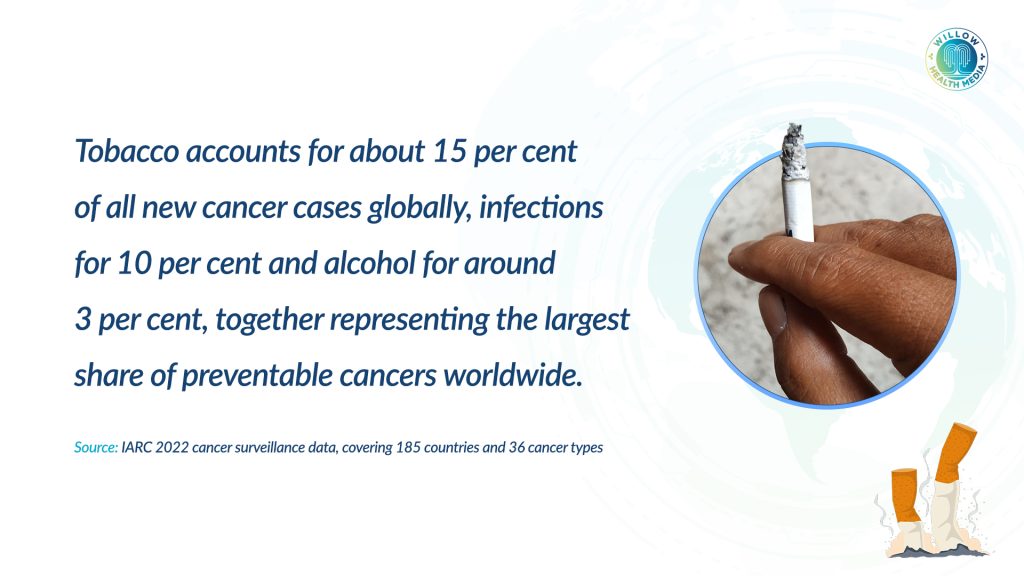
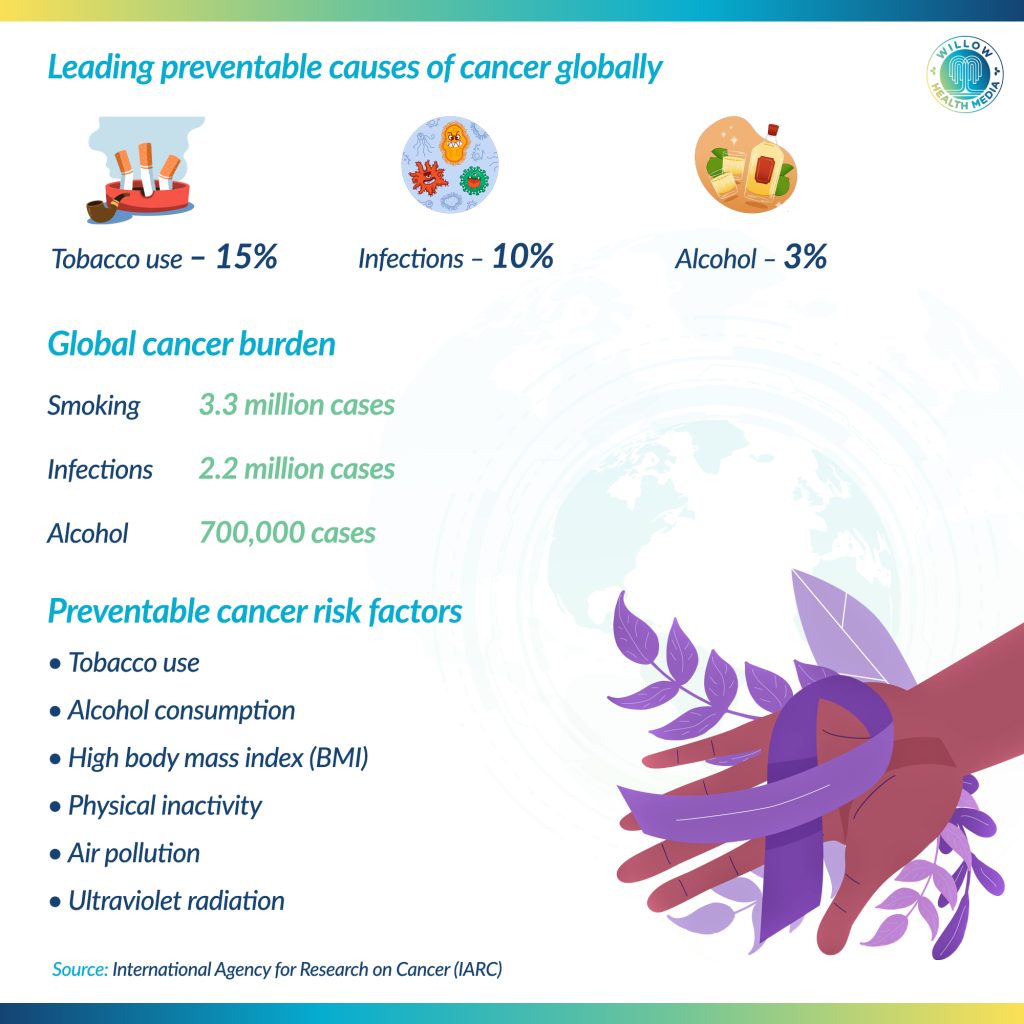
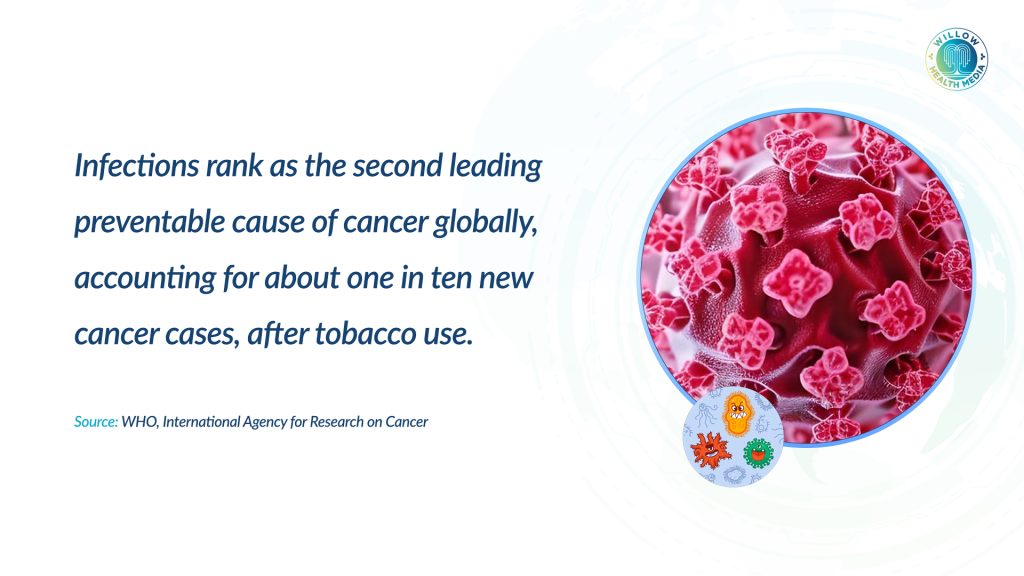
Globally, tobacco was identified as the single largest preventable cause of cancer, responsible for 15 per cent of all new cancer cases. Infections ranked second, accounting for 10 per cent, while alcohol contributed about 3 per cent.
Three cancers, namely lung, stomach and cervical cancer, together accounted for nearly half of all preventable cancer cases worldwide among both men and women. Lung cancer was mainly linked to smoking and air pollution; stomach cancer was largely associated with H. Pylori infection; and cervical cancer was overwhelmingly caused by HPV.
“In 2022 alone, approximately 7.1 million of the 18.7 million new cancer cases diagnosed among adults were attributable to these 30 risk factors that we examined,” said Dr Isabelle Soerjomataram, Deputy Head of the IARC Cancer Surveillance Unit and senior author of the study. “This represents 37.8 per cent of the total cancer burden, a very substantial proportion.”
Breaking the figures down further, smoking accounted for about 3.3 million cases globally, infections for 2.2 million cases and alcohol for roughly 700,000 cases. “These three factors alone represent the majority of the preventable global cancer burden, highlighting where prevention efforts could have the greatest impact,” Dr Soerjomataram said.
An estimated 102,152 people have been living with cancer in Kenya in the past five years
The global patterns mirror Kenya’s cancer profile, where infection-related and tobacco-linked cancers remain a major public health challenge. According to The Global Cancer Observatory (GLOBOCAN) 2022 estimates, Kenya records about 44,726 new cancer cases every year, with approximately 29,317 deaths. An estimated 102,152 people have been living with cancer in the past five years.
Among women, cervical cancer is one of the leading causes of both cancer cases and deaths. Among men, cancers of the oesophagus and lung, which are strongly associated with smoking, contribute significantly to mortality. Stomach cancer, linked to H. pylori infection, also remains a concern.
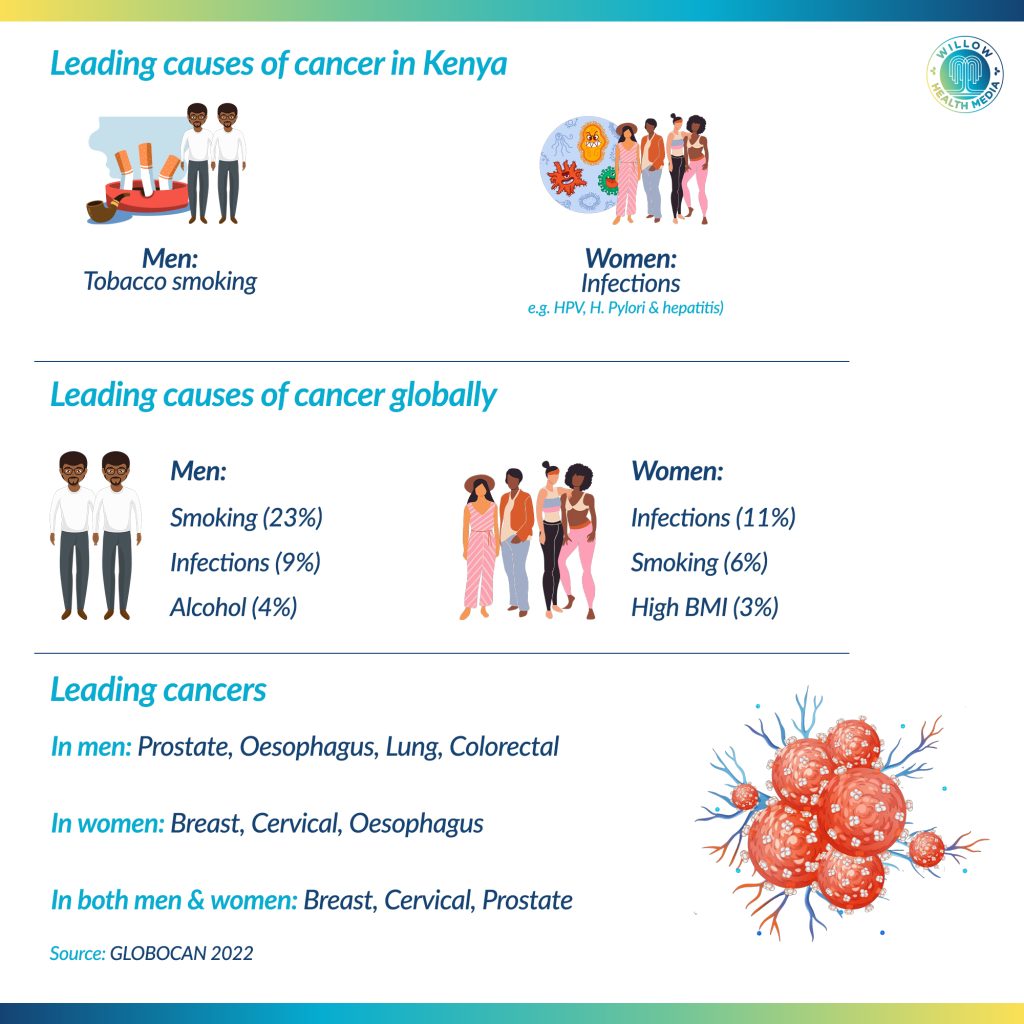
The most common cancers in men are prostate, oesophageal and colorectal cancer. Among women, the leading cancers are breast, cervical and oesophageal cancer. For both sexes combined, breast, cervical, and prostate cancers account for the largest share of cases.
In terms of deaths, the leading cancers among men are prostate, oesophageal and colorectal cancer, while among women they are cervical, breast and oesophageal cancer. Overall, cervical, breast and oesophageal cancers cause the highest number of cancer deaths in the country.
The study showed marked differences between men and women in the burden of preventable cancers. Globally, 45 per cent of new cancer cases in men were linked to preventable risk factors, compared with 30 per cent in women. Among men, smoking was the dominant risk factor, accounting for an estimated 23 per cent of all new cancer cases, followed by infections at 9 per cent and alcohol at 4 per cent. Among women, infections were the leading cause, responsible for 11 per cent of cases, followed by smoking at 6 per cent and high body mass index at 3 per cent.
Tobacco smoking ranked as the most important cause of cancer in men in 126 of the 185 countries analysed
“One of the most striking findings is the significant difference between men and women in terms of cancer causes and ultimately prevention priorities,” Dr Soerjomataram said. “For men, nearly one in two cancer cases are linked to these risk factors, while for women it is about one in three.”

She added that tobacco smoking ranked as the most important cause of cancer in men in 126 of the 185 countries analysed. For women, infections were the leading cause in 141 countries. “This striking difference reflects distinct epidemiological patterns, cultural and social norms and underscores why tailored, sex-responsive prevention strategies are essential to reduce the burden of cancer,” she said.
In sub-Saharan Africa, infections accounted for more than three-quarters of all preventable cancers in women, largely driven by HPV-related cervical cancer.
“These comparisons demonstrate why a one-size-fits-all global prevention strategy is not sufficient,” Dr Soerjomataram said. “Each country and region needs to adapt prevention priorities to its specific cancer burden profile.”
Current projections paint an even more worrying picture for Kenya. Based on existing trends, the country is expected to record about 58,000 new cancer cases by 2028, rising to more than 95,000 cases by 2040. Population growth, longer life expectancy, urbanisation and increasing exposure to risk factors such as tobacco use, unhealthy diets, and physical inactivity are driving the rise.
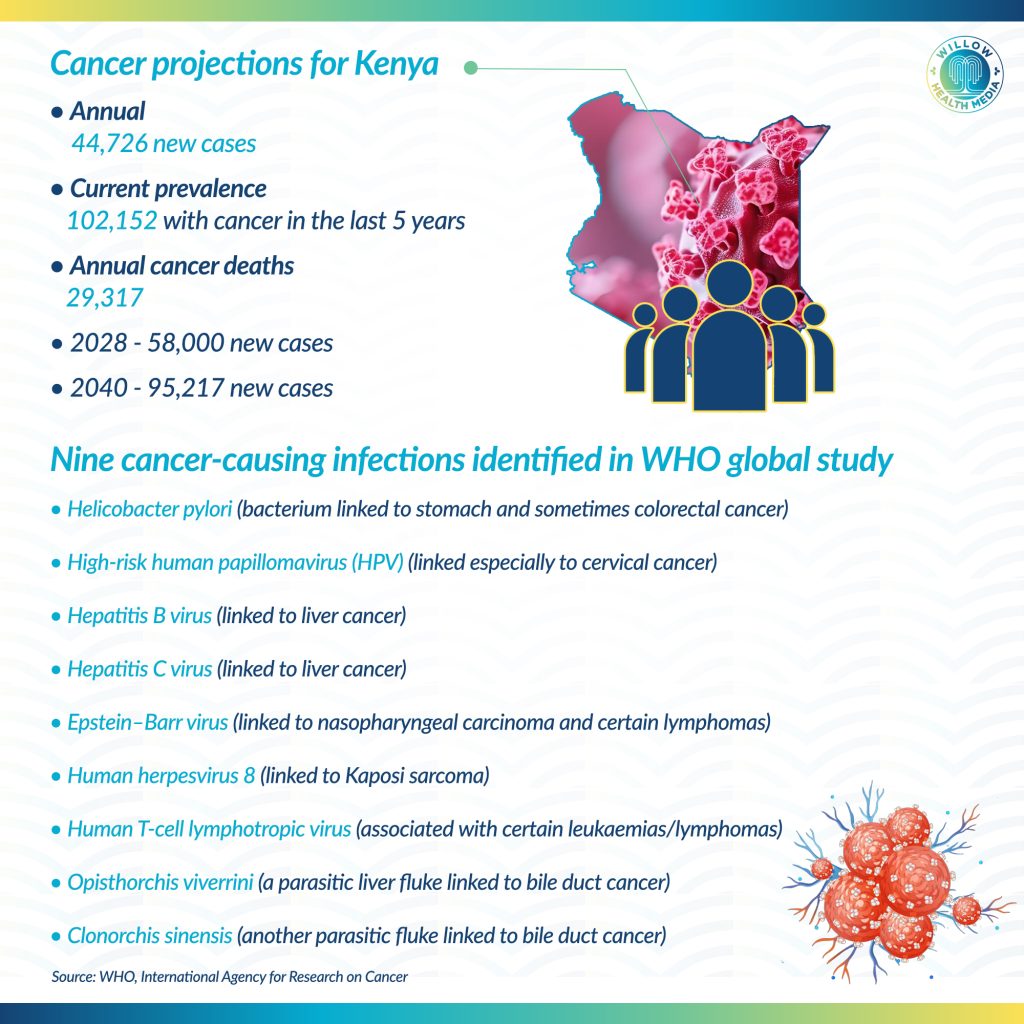
These projections underscore the urgency of addressing preventable risks, especially smoking, HPV infection and H. pylori, before cancer cases nearly double. The WHO and IARC stress that reducing cancer risk requires action well beyond hospitals and clinics.
The study calls for strong tobacco control policies, alcohol regulation, vaccination against cancer-causing infections such as HPV and hepatitis B, improved air quality, safer workplaces and healthier food and physical activity environments.
“Addressing these preventable causes represents one of the most powerful opportunities to reduce the global cancer burden,” Dr Soerjomataram said.
Dr Ilbawi emphasised that prevention messaging must avoid blaming patients. “There is one key message to recall: prevention must be communicated carefully, focusing on risk reduction, not blame,” he said. “Guilt and blame harm mental health, delay care and reduce quality of life for people affected by cancer.”
For many people, cancer remains a death sentence compounded by devastating social and financial hardships
He noted that the same risk factors driving cancer, including tobacco, alcohol, air pollution, unhealthy diets, physical inactivity and infections such as HPV and hepatitis, are also responsible for many other chronic diseases.
“Investing in cancer prevention therefore delivers wide-ranging health, societal and economic benefits,” he said.

Despite advances in cancer treatment globally, access remains highly unequal. “For a privileged few, access and innovation are driving survival rates beyond 70 per cent,” Dr Ilbawi said. “But for far too many, cancer remains a death sentence, often compounded by devastating social and financial hardships.”
WHO has launched three global cancer initiatives, now active in more than 100 countries, aimed at expanding access to prevention, early detection, diagnosis, treatment, and palliative care. These initiatives focus on cervical, breast and childhood cancers, which together account for a large proportion of avoidable deaths in low- and middle-income countries.
“At WHO, we have listened to more than 4,000 people in 125 countries and reviewed the experience of nearly one million people diagnosed with cancer globally,” Dr Ilbawi said. “Each story is unique, yet all reflect a shared call for action from prevention to palliative care.”
As countries mark this year’s World Cancer Day under the theme “United by Unique”, experts say the new data gives governments clearer guidance on where to focus limited resources.

“Using this data, we now have the information to prevent cancer before it starts and help populations enjoy a healthier life,” Dr Soerjomataram said.
For Kenya, a big proportion of the killer cancers are largely preventable with tools that already exist. Yet gaps in vaccination coverage, limited screening for infection-related cancers, weak tobacco enforcement and late diagnosis continue to fuel avoidable illness and death. As cancer cases are projected to nearly double by 2040, the country faces a narrowing window to shift its response upstream, from costly treatment to sustained prevention.
The WHO findings propose that solutions such as expanding HPV vaccination, strengthening detection and treatment of H. pylori, enforcing tobacco control laws and integrating prevention into primary healthcare could spare tens of thousands of Kenyans from cancer in the coming decades.
When Swallowing Hurts: Signs, risks and realities of oesophageal cancer
Oesophageal cancer often begins quietly, with early symptoms such as difficulty or pain when swallowing, persistent indigestion and unexplained weight loss that can be easily overlooked. The disease’s risk is increased by factors including tobacco use, heavy alcohol consumption and chronic acid reflux, making awareness and early diagnosis critical to improving outcomes.
Graphics by Arthur Mbuguah.