



Humans, animals, and the environment share microbes, medicines, and health outcomes; fixing one sector alone will fail.
Experts have warned that Kenya’s rising imports of veterinary medicines could accelerate Antimicrobial Resistance (AMR), a growing global health threat that undermines the treatment of infections in both animals and humans.
According to Volza, a global trade intelligence platform and market research company that provides comprehensive import-export data for over 203 countries worldwide, Kenya imported 115 shipments of veterinary medicines between May 2024 and April 2025.
These imports came from 16 foreign exporters and were received by 13 Kenyan buyers, representing a 283 per cent increase compared to the previous 12 months. In April 2025 alone, 42 shipments entered the country.
Most of these medicines, imported primarily from India, China, and France, are used in poultry, dairy, and pig farming. Globally, Uzbekistan, Russia, and Vietnam are the top importers of veterinary medicines, with Uzbekistan leading at 25,649 shipments, followed by Russia with 25,250 and Vietnam with 18,398.
But while the surge reflects expanding food production systems, experts are now warning that without stronger safeguards, rather than highlighting a growing livestock sector, it signals a critical public health challenge at the intersection of animal, human, and environmental health.
In Kenya, nearly 60 per cent of imported veterinary antibiotics end up in smallholder farms. Backyard poultry keepers, small-scale dairy farmers, and informal pig producers sustain millions of livelihoods and supply much of the country’s meat, milk, and eggs. Yet, many operate without professional veterinary oversight, making them a critical “last mile” in the fight against AMR.
Most rural farmers rely on neighbours, agro-vet shops, or past experience to decide what medicines to use
Commonly used livestock antibiotics including tetracyclines, aminoglycosides, sulfonamides, macrolides, and fluoroquinolones are also essential in human medicine. Their misuse in animals can therefore compromise treatments for people.

Speaking during the Kenya National AMR Conference 2026 in Mombasa last week, Africa Continental Lead and Office Director at DNDi Prof Sam Kariuki said the major concern is how these products are used once they get to the people who are actually treating livestock.
“That last mile is where the biggest concern lies,” he said.
Research published in Frontiers in Veterinary Science in April 2024, titled Mapping the flow of veterinary antibiotics in Kenya, examined how antibiotics move through the country. Dr Dishon Muloi, a molecular epidemiologist and veterinarian at the International Livestock Research Institute (ILRI), was among the study’s researchers.
“Most rural farmers rely on neighbours, agro-vet shops, or past experience to decide what medicines to use,” Prof Kariuki explained. Surveys show that 14 per cent of poultry farmers share antibiotics, while pig and dairy farmers in Ruiru, Ngong’, and Gatundu South report similar practices. Some even use antibiotics meant for humans to treat animals.
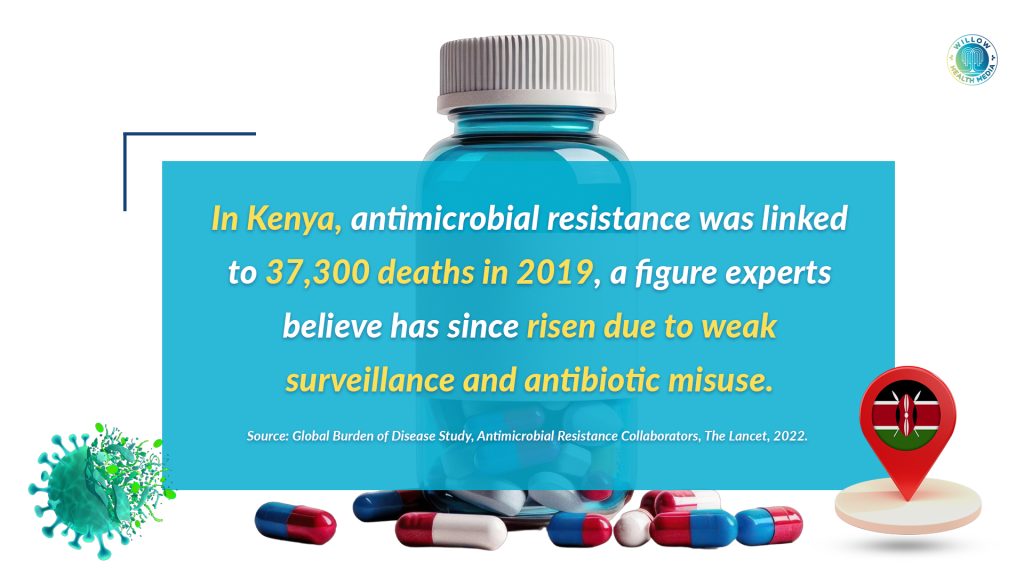
Much of the misuse stems from limited access to information and diagnostics. Many livestock illnesses, particularly in poultry, are viral, meaning antibiotics are ineffective. Yet antibiotics are often administered preventively or unnecessarily.
Over time, this overuse allows bacteria to adapt and survive, rendering medicines ineffective. Farmers are then forced to buy stronger, more expensive drugs, increasing production costs while fuelling a cycle that threatens public health.
Improving farm hygiene and biosecurity can reduce disease outbreaks by up to 40 per cent
The problem is compounded by the presence of substandard or falsified veterinary medicines. Studies show that up to 44 per cent of antibiotics in Kenya may contain insufficient active ingredients, accelerating resistance while offering little therapeutic benefit.

Strengthening quality control and pharmacovigilance from importers to agro-vet shops and farms is therefore essential to protect animal health, safeguard farmers’ investments, and reduce risks to consumers and the environment.
Research shows that improving farm hygiene and biosecurity can reduce disease outbreaks by up to 40 per cent. Measures include maintaining clean housing, managing waste, separating sick animals, and controlling the movement of people and animals between farms.
“When you reduce infections, you reduce the need for antibiotics,” Prof Kariuki said.
Vaccination is another underused but effective strategy. Dr Muloi stressed the importance of adhering to established vaccination schedules, especially in poultry.
“If you are a poultry farmer, there’s a clear schedule of vaccines including what to use on day zero, day five, day 14, all the way to the end,” he said.
Vaccines against Newcastle disease, Gumboro, and infectious bronchitis are proven to reduce disease burden and antibiotic use, but diagnostics remain a major gap as most farmers cannot distinguish between bacterial, viral, or parasitic infections without laboratory testing. Samples often travel long distances, discouraging testing due to cost and delays.
Developing rapid, affordable diagnostic tools similar to pregnancy or HIV test kits could allow farmers to identify diseases accurately before treatment, protecting animal health while preserving antibiotic effectiveness for both veterinary and human medicine.
Traditional remedies could become cost-effective alternatives that reduce antibiotic reliance
Across rural Kenya, farmers also rely on traditional remedies such as neem, aloe vera, and chilli extracts. Many of these plants have antibacterial, antifungal, and antiparasitic properties, and resistance tends to develop more slowly than with synthetic drugs.

“These natural products can work,” Dr Muloi said. “But we need research to determine safe dosages, efficacy, and potential toxicity.”
Prof Kariuki agreed, cautioning that incorrect dosing can harm animals. “You may be giving an underdose or overdose without knowing it. They are good for treatment, but they also have side effects if you overdo them,” he said, adding that resistance develops far more slowly than with synthetic antibiotics.
If properly studied and regulated, traditional remedies could become cost-effective alternatives that reduce antibiotic reliance while protecting ecosystems and food safety.
Resistant bacteria do not stay on farms; they move through soil, water, food systems, and communities. Climate change intensifies these risks: flooding spreads pathogens between farms, while drought weakens animals, making infections more likely.
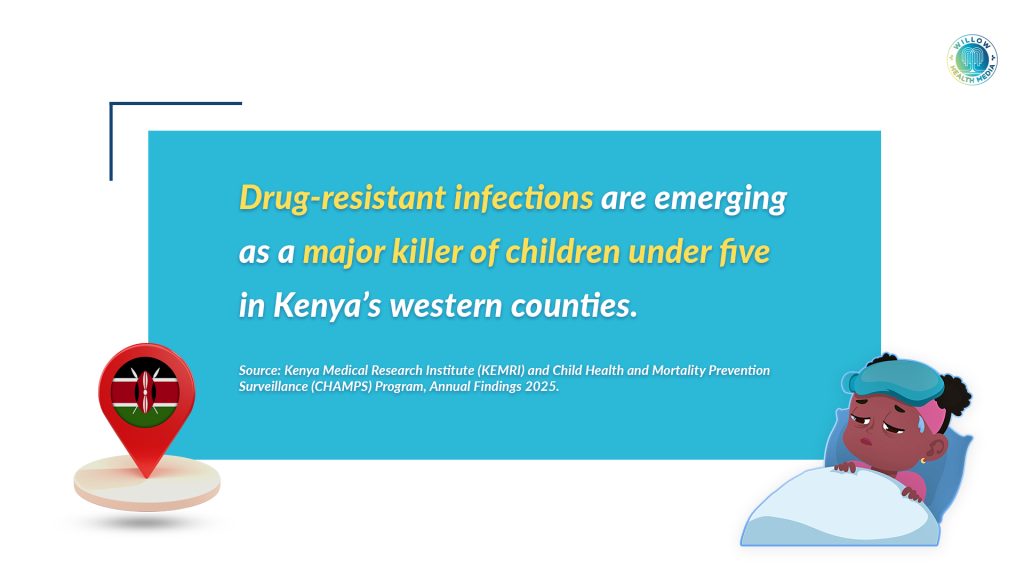
“This is a One Health problem,” Dr Muloi emphasised. “Humans, animals, and the environment share microbes, medicines, and health outcomes. Fixing one sector alone will fail.”
By addressing animal health, environmental protection, and human medicine together, Kenya has an opportunity to slow AMR, protect farmers’ livelihoods, and safeguard public health.
“If we act now,” Prof Kariuki said, “we save money, protect farmers, reduce environmental contamination, and preserve medicines for future generations.”
Graphics by Arthur Mbuguah.