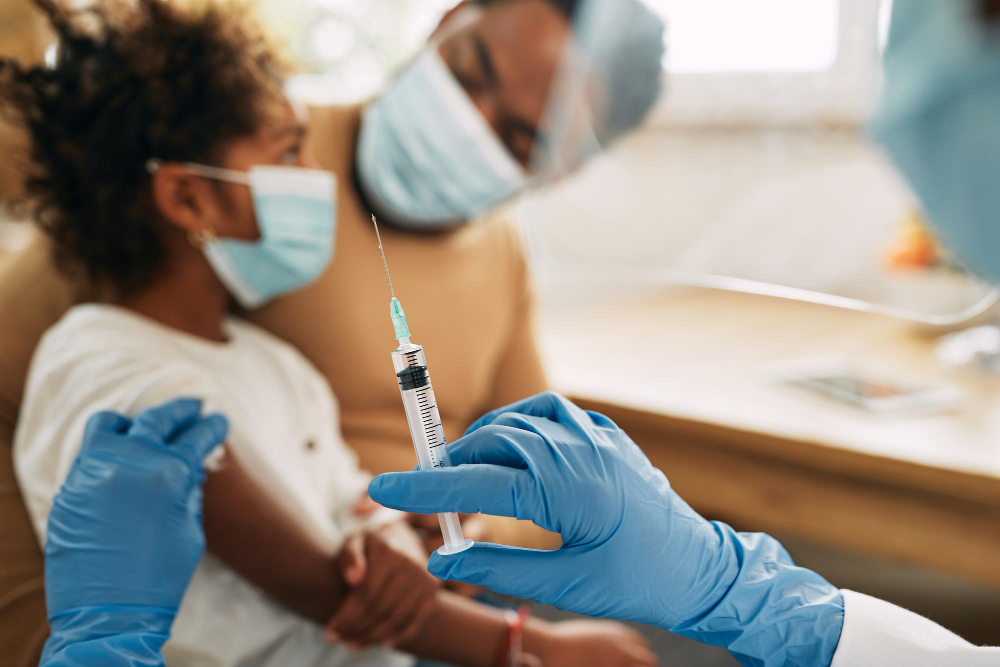
Vaccines are protecting the world’s most vulnerable children with Gavi-backed campaigns reaching 62 million children in 24 countries in 2024 alone.
Routine immunisation remains one of the most effective health investments in reducing child deaths globally.
A new report by the World Health Organisation (WHO) indicates that global measles cases have fallen by 71 per cent in the past two decades, reducing from 38 million in 2000 to 11 million in 2024, due to improved coverage of vaccination.
The report shows that deaths caused by measles have reduced by 88 per cent in the same period, reducing from 777,000 in 2000 to 95,000 in 2024. According to the WHO, the 2024 death estimates are the lowest in decades.
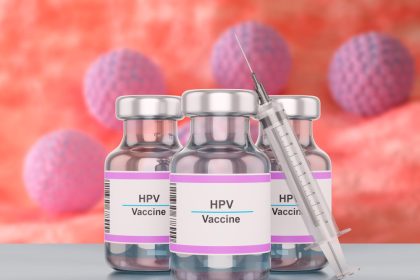
The WHO report resonates with global health experts who have applauded the impact of investment in primary healthcare and routine immunisation in saving millions of lives, especially among children.
The WHO report indicates that measles vaccination has prevented 58.7 million deaths worldwide between 2000 and 2024. “Beyond its public health impact, the measles vaccine also delivers tremendous economic returns, yielding up to 58 US dollars for every dollar invested,” the report inferred.
Lives of vulnerable children in lower-income countries have been significantly impacted by the vaccines through routine immunisations and prevention campaigns to counter outbreaks.
Preventive campaigns in 57 lower-income countries reached over 1.3 billion children
The campaigns have been largely supported by Gavi, the Vaccine Alliance, which has invested 2.2 billion US dollars in the measles and Rubella immunisation efforts, including 1.1 billion US dollars in the last five years.
The routine immunisation and preventive campaigns in 57 lower-income countries have reached over 1.3 billion vulnerable children globally. In 2024 alone, Gavi supported 24 countries to roll out catch-up and follow-up campaigns that reached 62 million children.
Another 6.8 million children were vaccinated in outbreak responses in five countries in 2024, with Gavi supporting over 20 countries with preventive campaigns through finding and vaccines in 2025.
The report lauds Africa’s resilience and progress in the fight against measles, courtesy of enhanced routine immunisation and catch-up efforts to cover unimmunised and underimmunized children.
“Despite competing health priorities, resource constraints and a rising birth cohort, Africa has steadily increased coverage of the first dose of measles-containing vaccine (MCV1) over the past 25 years,” the report indicates.
Africa’s measles cases reduced by 40 per cent and deaths came down by 50 per cent
The reported noted an increased coverage of MCV1 from 50 per cent in 2000 to 71 per cent in 2024. The second dose (MCV2) coverage increased from 5 per cent in 2000 to 39 per cent in 2019, and 55 per cent in 2024.
Africa’s measles cases reduced by 40 per cent, and deaths came down by 50 per cent in the same period.
Globally, the coverage of MCV1 increased from 83 per cent in 2023 to 84 per cent in 2024, which is lower than the 86 per cent attained pre-COVID-19. The coverage was 71 per cent in 2000. This means, in 2024 alone, 20.6 million children missed their MCV1 dose. More than half of those who missed are from Africa.
Global health experts say these immunity gaps have fuelled a resurgence of outbreaks in 59 countries in 2024, the highest number since 2003. Encouragingly, MCV2 global coverage has increased from 17 per cent in 2000 to 76 per cent in 2024. Many countries have introduced it to their national immunisation schedules.
“Measles remains a serious threat as one of the most contagious viruses and requires at least 95 per cent coverage with two doses,” the report indicated.
Such a coverage is recommended for interruption of transmissions and countering outbreaks in both low- and high-income countries.
Rebecca Casey, Head of the Measles and Rubella Vaccine Programme at Gavi said that over 25 years of partnerships with lower income countries helped save millions of lives and called for sustained efforts to contain the disease.
Kenya switching from 10-dose Measles and Rubella vials to five to curb vaccine wastage
“The rise in measles cases and outbreaks around the world is a clear warning that we must not be complacent in our efforts to reach and maintain high coverage rates needed to prevent outbreaks and deaths,” she said.
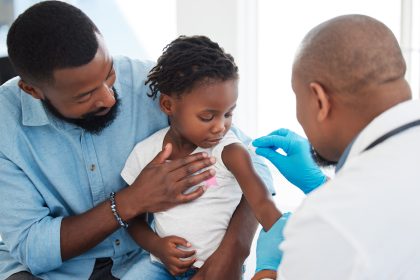
In Kenya, government and health stakeholders are piloting the switch from the 10-dose Measles and Rubella vials to five-dose vials in a bid to curb wastage of vaccines.
The piloting of the five-dose viols is being conducted in Vihiga, Kiambu and Homa Bay counties.
Initial findings indicated that some health workers were hesitant to open a 10-dose vial before getting the number of children to be immunised within six hours, before the vaccine was rendered useless.
This, in turn, made health workers keep mothers and caregivers waiting until they got the required number of children, which discouraged them from returning for vaccines.
“There are missed vaccination opportunities as health workers are hesitant to open 10-dose vials, knowing that they’ll not get 10 children to be vaccinated within six hours. We want to establish if the five-dose option will encourage nurses to open vials and vaccinate children without fearing they’ll cause wastage,” the lead investigator, Professor Apollo Maima of Maseno University, explained.
The government of Kenya procured 35,000 vials of five-dose vaccines valued at Ksh40 million to facilitate the piloting aimed at guiding the switch.
The researchers had recorded a 60 per cent MR vaccine wastage, at a time when global health funding has been experiencing worrying cuts.